As architects, we are often asked to design spaces that look beautiful, function efficiently, and reflect culture or brand identity. But increasingly, clients are also asking us to create something deeper: interiors that feel alive. This is where biophilic design steps in not as an aesthetic trend, but as a way of designing interiors that …

As architects, we are often asked to design spaces that look beautiful, function efficiently, and reflect culture or brand identity. But increasingly, clients are also asking us to create something deeper: interiors that feel alive. This is where biophilic design steps in not as an aesthetic trend, but as a way of designing interiors that truly breathe with nature. It’s not about putting a potted palm in the corner and calling it a day. It’s about shaping spaces where light, air, materials, and greenery come together as a living system.
Biophilia is a word you’ve probably heard tossed around in design circles. But for those of us working on the drawing board every day, it is both science and poetry. The science is backed by evidence people are calmer, happier, more productive, and healthier when they spend time in spaces that echo natural systems. The poetry is the moment when a client walks into their new office or home and says, “This place just feels right.” That’s when you know the space is not only designed it’s alive.
Why Biophilic Interiors Matter Now
The modern human spends almost 90 percent of their time indoors. That means most of our lives unfold under artificial light, surrounded by drywall, laminated finishes, and recycled air. No wonder we crave the balance of natural environments. Biophilic interiors bring that balance back, making the indoors feel restorative instead of draining.
But here’s the catch: biophilia is not about decoration. It’s not a matter of styling a plant shelf for Instagram. As architects, we must approach it as a holistic system that integrates daylight, air movement, material honesty, acoustic quality, and spatial psychology. Done well, it creates interiors that aren’t just visually green but actually healthier to live and work in.
The Architect’s Toolkit for Breathing Interiors
Every project starts with an orientation not just of the site, but of the sun, wind, and human behaviour. Biophilic interiors depend first on light. Natural daylight is the primary design material; it should shape the plan from the earliest sketch. Skylights, clerestory windows, deep reveals, and light shelves aren’t add-ons but tools for softening and diffusing light deep into interiors. When light is handled well, plants thrive, energy use drops, and people instinctively feel more connected to nature.

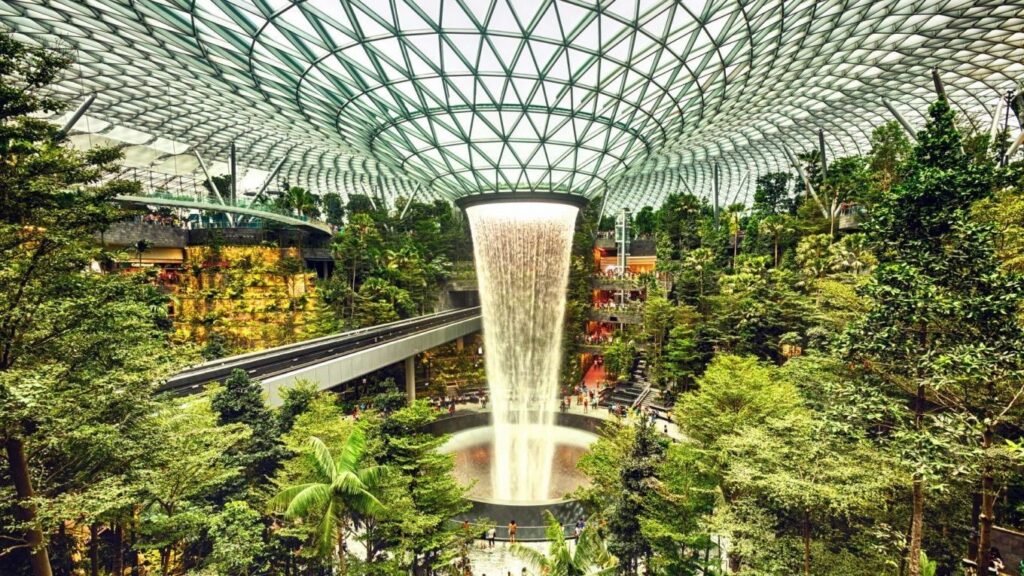
Collected Rainwater Powers the World’s Tallest Indoor Waterfall at Singapore’s Jewel Changi Airport
Air is the next invisible but essential material. A breathing building does not just recirculate mechanically chilled air. It uses cross-ventilation, stack effect, and operable windows to create air movement that feels alive. Even in highly controlled mechanical environments, displacement ventilation or mixed-mode systems can make interiors more comfortable and energy-efficient while keeping that sense of freshness.
Materials are the skin and bones of biophilic design. Think of clay plaster that regulates humidity, timber that ages gracefully, or stone that carries the imprint of its geological story. Bio-based, low-VOC finishes like bamboo, cork, and natural fibres don’t just reduce environmental impact they also give interiors textures that invite touch and age with dignity. The honesty of material is critical; a fake wood laminate will never carry the same grounding presence as solid timber.
Beyond the tangible, there is the psychology of space: prospect and refuge. Humans instinctively seek open sightlines balanced with sheltered nooks. Biophilic interiors allow us to stretch our gaze across a bright atrium, then tuck ourselves into a plant-filled alcove to focus. Add subtle elements of sound and scent like the trickle of a small water feature or the earthy freshness of real plants and you’re working with the full sensory palette of design.
From Concept to Construction: How Interiors Learn to Breathe
When approaching a project, I often begin by studying not just the client’s brief but the climate itself. Is this a hot, humid environment that craves shade and airflow? Or a cool climate where low winter sun must be harnessed for warmth? Biophilic interiors respond first to place, then to program.

Unwind In The Latest Green Oasis At Singapore Changi Airport
The next step is establishing what I like to call a daylight spine. This is the organizing feature whether a courtyard, a skylight run, or a sawtooth roof that brings in light and air, around which the rest of the interior can flow. Instead of scattering greenery randomly, we think in layers, much like a natural ecosystem. A canopy of taller planting or overhead trellises, an understory of mid-height greenery, a groundcover of ferns or moss all integrated with the architecture itself. This layering creates depth, intimacy, and microclimates even within a single room.
Material palettes are then curated to complement these natural systems. Clay, lime, wood, stone, and metals that patinate create interiors that feel warm and organic. These surfaces also bounce or absorb light in subtle ways, reinforcing the dynamic quality of daylight. Lighting design is key here as well; instead of blasting interiors with uniform artificial light, we layer it soft grazing lights on textured walls, warm pools of light in refuge corners, and tunable fixtures that follow circadian rhythm.
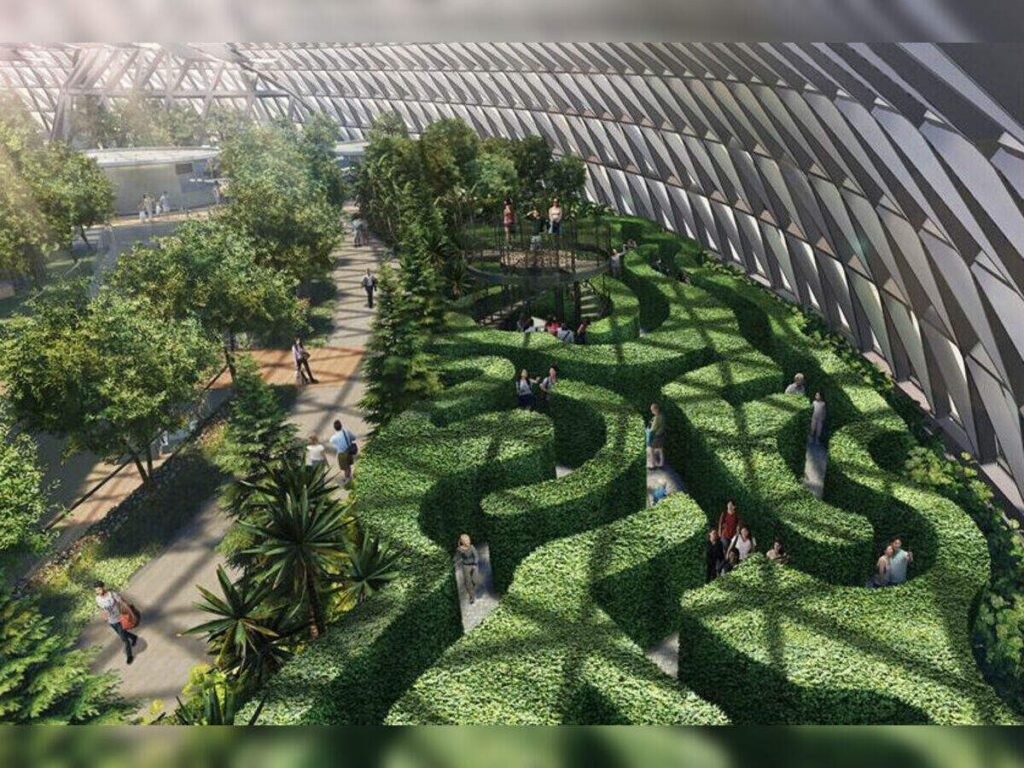
Singapore’s Jewel Changi Airport gets the world’s tallest indoor waterfall
Perhaps the least glamorous but most important detail? The green infrastructure itself. Planters must be detailed with drainage, root barriers, and waterproofing. Irrigation should be automated and sustainable, ideally connected to filtered greywater systems. Plant lighting needs to be subtle but effective, ensuring greenery thrives long-term. And yes, you must design in storage and maintenance access for gardeners because there is nothing biophilic about dead plants.
Typologies That Come Alive
In residential projects, biophilia often takes the form of courtyards, skylit bathrooms with lush plantings, or kitchens that double as greenhouses with herb walls and operable clerestories. A small lightwell can transform even the tightest urban home into a sanctuary.

Pasona Urban Farm by Kono Designs
In workplaces, biophilia is increasingly tied to productivity and well-being. Offices with plant-dense focus pods, moss walls for acoustics, and strategic natural zoning see measurable boosts in performance and employee retention. Biophilic wayfinding using different planting types to signal different work zones is becoming a quiet but powerful design tool.
Hospitality and retail interiors lean into the theatrical side of biophilia. Dramatic indoor groves at entrances, dappled light filtered through patterned canopies, and local natural materials tell a story that connects guests instantly to place. Here, biophilia is not just comfort but brand identity.
Five Global Examples of Interiors That Truly Breathe With Nature
Biophilia is not a concept; it’s a built reality across the world. Here are five examples that embody interiors “breathing with nature.”
- The Amazon Spheres, Seattle, USA- NBBJ (2018)

Perhaps the most famous workplace biophilia experiment, the Amazon Spheres house more than 40,000 plants in a trio of glass globes. Inside, employees don’t just work near plants they inhabit an ecosystem. The space demonstrates how planting, daylight, and structure can fuse into an entirely new kind of interior environment.
- Khoo Teck Puat Hospital, Singapore- CPG Consultants (2010)

This hospital is practically a rainforest in disguise. Its interiors open into lush, multi-story courtyards filled with vegetation. Natural ventilation strategies, daylight-filled wards, and therapeutic gardens reduce patient stress and recovery times, proving that biophilia isn’t decorative it’s medicinal.
- Bosco Verticale, Milan, Italy- Stefano Boeri Architetti (2014)

Though better known as a residential tower, its interiors reflect the presence of hundreds of trees integrated into balconies. Apartments are bathed in filtered daylight and the sound of rustling leaves. The interiors “breathe” not through mechanical systems alone, but through the foliage that forms part of the building’s skin.
- Khoo Teck Puat National Library, Singapore- Ken Yeang (2005)

Ken Yeang has long been a pioneer of ecological architecture, and the library integrates greenery on multiple interior terraces. Reading rooms are oriented toward planted walls and shaded light courts, where users experience a blend of refuge and prospect quiet study within a living, breathing interior.
- Pasona Urban Farm, Tokyo, Japan- Kono Designs (2010)

This office building doubles as a farm. Inside, employees literally work among rows of vegetables, fruit trees, and hydroponic installations. The greenery not only provides food but also regulates humidity, purifies air, and softens acoustics. It’s perhaps the most literal example of interiors designed to breathe with nature.
The Future of Breathing Spaces
As we look to the future, biophilic design is no longer optional it is fundamental. Climate change, urban density, and wellness demand mean we cannot keep designing sealed boxes with artificial light and air. Buildings must act more like ecosystems: filtering, breathing, and adapting.
As architects, we are uniquely positioned to make this shift. We already think in sections, in layers, in systems. Biophilia simply asks us to apply that thinking with greater humility to design as if buildings are not objects, but habitats.
And maybe that’s the ultimate point. Biophilic design doesn’t just make interiors beautiful; it reminds us that we, too, are part of nature. When interiors breathe with light, air, and life, they invite us to breathe a little deeper ourselves.