In architecture, every line we draw is a promise: a promise to shelter, to inspire, and, increasingly, to sustain. As conversations about climate change intensify, the idea of the Net-Zero Home has moved from experimental prototypes to aspirational reality. These homes do not just consume less they produce as much energy as they use. For …
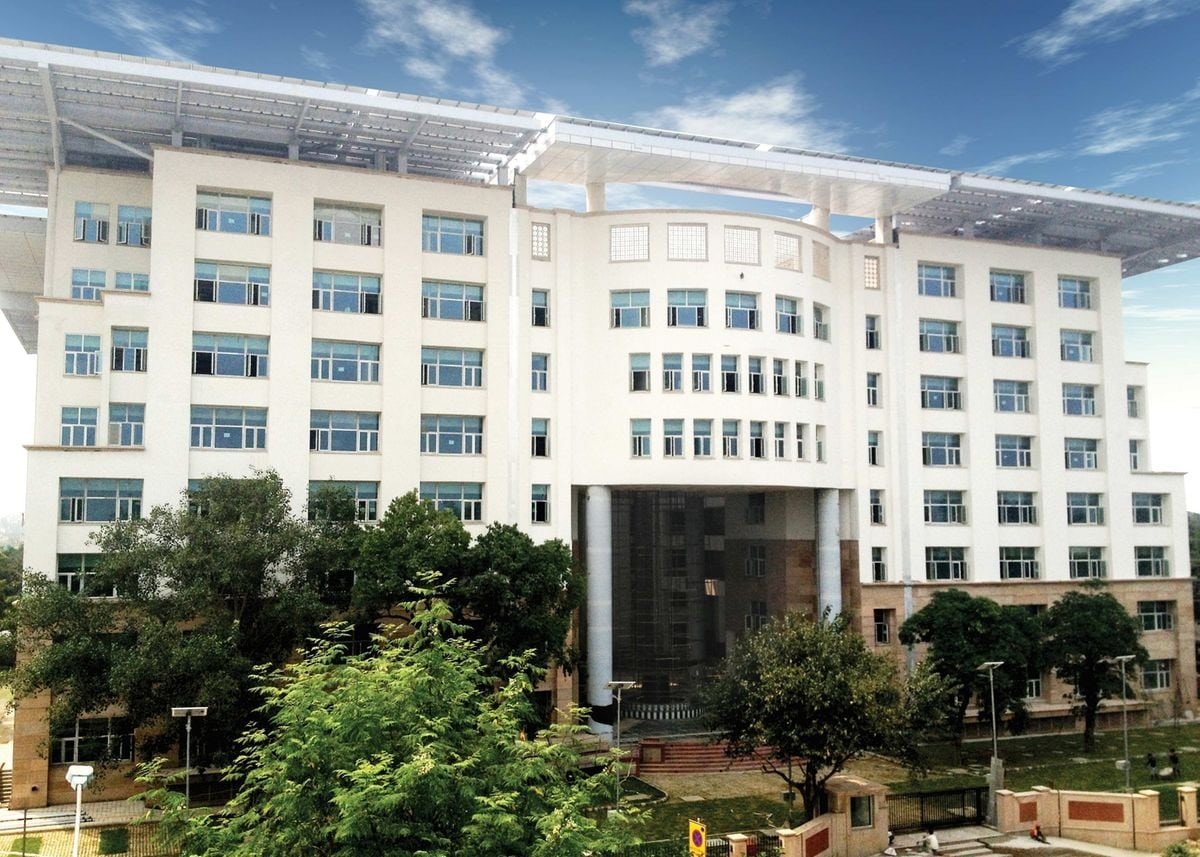
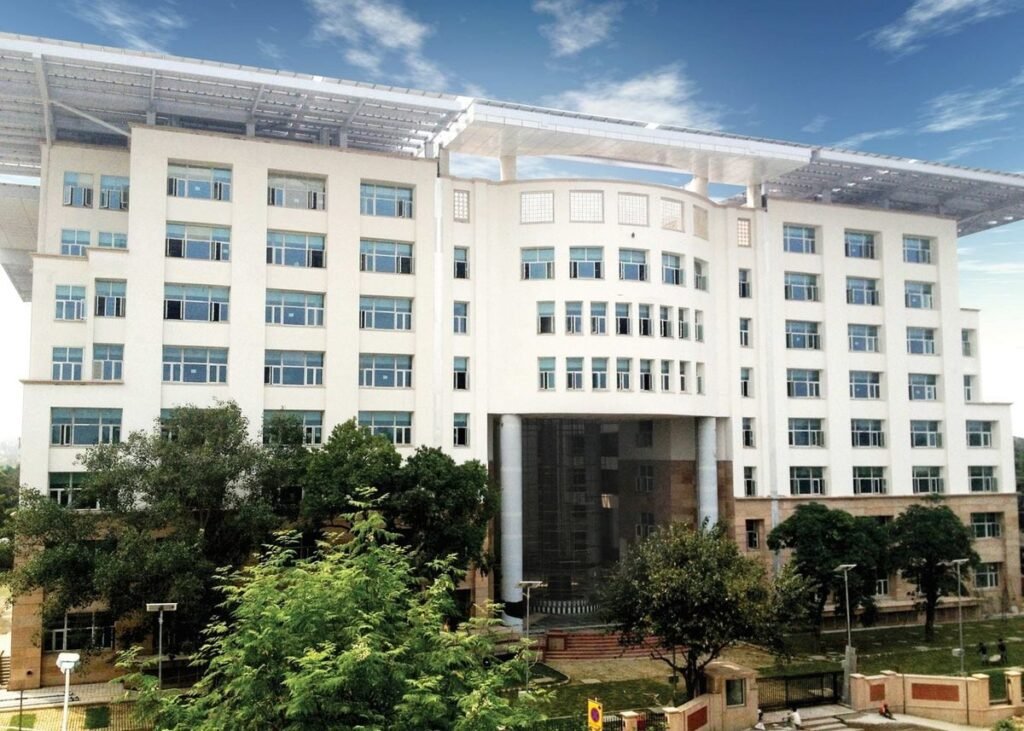
Table of Contents
In architecture, every line we draw is a promise: a promise to shelter, to inspire, and, increasingly, to sustain. As conversations about climate change intensify, the idea of the Net-Zero Home has moved from experimental prototypes to aspirational reality. These homes do not just consume less they produce as much energy as they use. For architects, the challenge is to design them not as mechanical contraptions disguised as houses, but as beautiful, liveable, and culturally relevant spaces.
At its heart, net-zero design is about balance. It is about a home that elegantly balances comfort with efficiency, sunlight with shade, tradition with technology. And, for the modern homeowner, it is about aesthetics because energy independence should not mean compromising style.
The Soul of Net-Zero: More Than Solar Panels
When most people think “net-zero,” their minds immediately conjure rooftops glittering with solar panels. Yes, photovoltaic technology is central, but a true net-zero home is an ecosystem. It begins with passive design: orienting the house to maximize winter sun and summer shade, designing cross-ventilation so breezes replace air-conditioners, and choosing building envelopes that insulate without suffocating.
The beauty of passive strategies is that they do not just save energy they shape architecture. A deep verandah in Chennai, a Jaali wall in Jaipur, or a shaded courtyard in Ahmedabad is not merely a nod to tradition; it’s a naturally cooling device. When we return to these regional design responses, we find aesthetics already aligned with sustainability.
Materials That Work Hard and Look Good
Materials are where net-zero ambitions often falter because what’s “eco” is not always “elegant.” But the rise of eco-chic materials means we can now specify surfaces that are both low-carbon and luxurious.
Imagine polished concrete floors embedded with recycled aggregates that gleam like terrazzo. Or cross-laminated timber and bamboo panels that lend warmth while sequestering carbon. Even traditional lime plaster, when tinted with natural pigments, offers walls that breathe, resist Mold, and glow with a softness synthetic paint cannot mimic.
The material palette of a net-zero home does not scream “green” it whispers refinement. The trick is curation: pairing the natural tactility of stone with high-tech finishes, mixing reclaimed wood with sleek steel. The result is a house that feels sophisticated, not “sustainable” in the stereotypical sense.
Integrating Technology Seamlessly
Energy independence hinges on technology, but design dictates how that technology is experienced. A roof covered in panels can either look like an afterthought or a carefully integrated feature. Architects today are experimenting with building-integrated photovoltaics: solar panels that double as roof tiles, skylights, or even facades.
Battery walls and smart meters are another layer of the puzzle. Instead of clunky equipment rooms, we now design discreet niches or garage panels that hide the hardware. Inside the home, automation systems adjust lighting, shading, and HVAC in response to daylight and occupancy. For the resident, this means comfort without thought; for the architect, it is another chance to fuse form with function.
Designing for Water, Not Just Energy
Net-zero is often discussed in kilowatts, but in India especially, water independence is equally critical. A truly self-sufficient home harvests rainwater, recycles greywater, and reduces water loads through low-flow fixtures. Imagine a courtyard with a reflective water body that is not just aesthetic, but doubles as a micro-climate regulator and rain-harvest basin. Imagine a bathroom finished with chic tiles made from recycled ceramic waste, paired with fixtures that save Liters a day without looking utilitarian.
When clients see sustainability manifest in elegance, they stop asking “Why net-zero?” and start asking, “Why not?”
The Indian Context: Tradition as Teacher
Designing a net-zero home in India is not about importing Western solutions wholesale it’s about reinterpreting our own wisdom. Courtyard houses, stone Jaali’s, mud plasters, tiled sloping roofs: these were all passive devices before the term even existed. Pair them with modern insulation, glazing, and renewables, and you get a home that feels both local and futuristic.
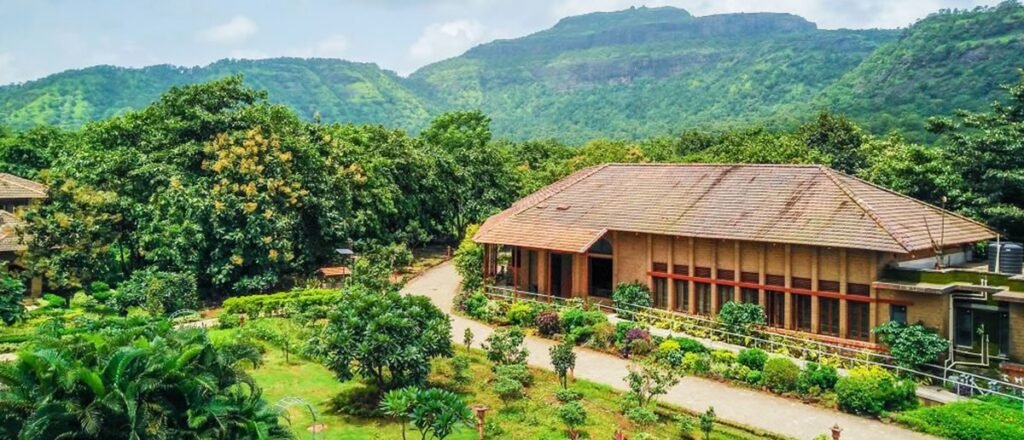
The Govardhan Eco Village in Maharashtra
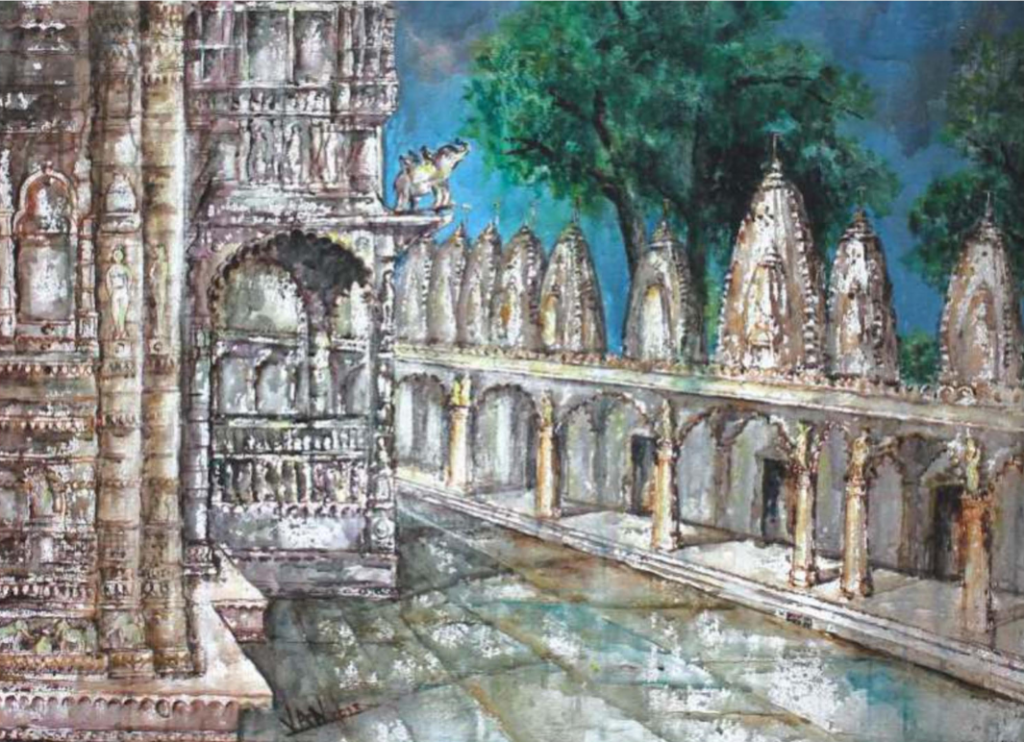
Consider the Govardhan EcoVillage in Maharashtra though not net-zero in the strictest sense, it demonstrates how traditional forms like courtyards and Jaali’s can drastically cut energy use. Or Auroville’s experimental buildings in Tamil Nadu, where solar panels, compressed earth blocks, and passive cooling are combined in ways that are both ecological and poetic. These examples remind us that net-zero does not mean sterile; it can mean soulful.
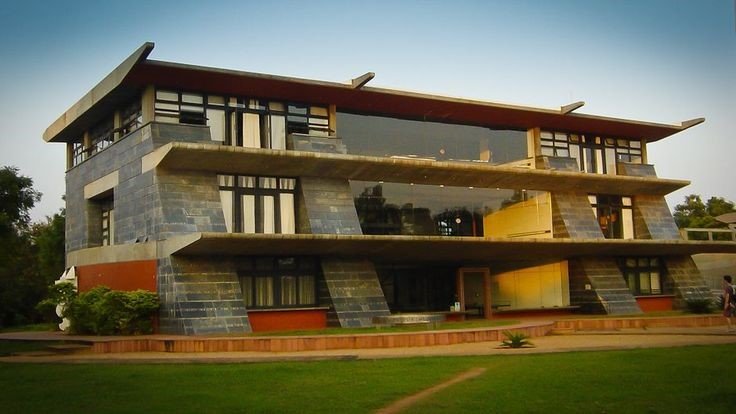
Auroville’s experimental buildings in Tamil Nadu
Aesthetics of Energy
One of the most exciting aspects of net-zero design is that it creates a new aesthetic language. Solar panels shimmering on a south-facing slope are no longer just “equipment” they are a design motif. Vertical gardens that filter air double as facades. Skylights oriented for daylighting become sculptural elements in ceilings. Even something as humble as a rainwater downpipe can be designed as a brass or copper feature that patinas beautifully over time.
As an architect, there’s joy in knowing that function is not hidden but celebrated. A net-zero homes looks like what it is: a home in dialogue with its environment.
The Luxury of Independence
For clients, the appeal of net-zero is not just sustainability; it is autonomy. Imagine never dreading an electricity bill, never worrying about a water shortage, never feeling trapped in a blackout. In India, where grid reliability can be patchy and water scarcity is real, energy independence is not just chic it is peace of mind.
A net-zero home is the ultimate luxury: freedom. And that freedom, when designed thoughtfully, is wrapped in beauty.
Five Global Inspirations
To ground the concept, here are five projects where net-zero design meets aesthetics:
- BedZED, London (Bill Dunster Architects)–
Completed in 2002, the Beddington Zero Energy Development (BedZED) was the UK’s first large-scale eco-village. It combined south-facing homes, high insulation, triple-glazing, and solar panels, all tied to a community-scale CHP (combined heat and power) plant.
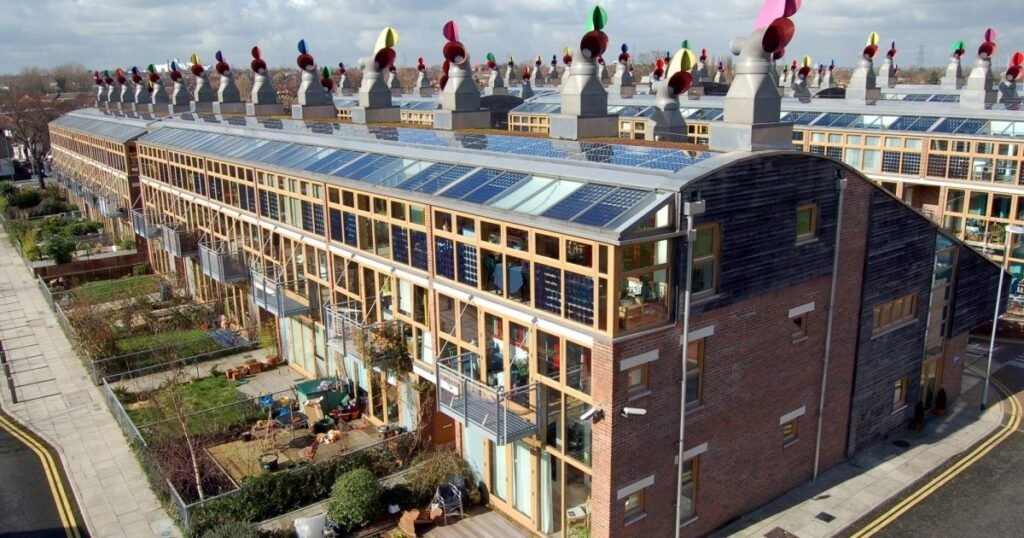
But what makes it chic is not just the tech it’s the vibrant aesthetic. The colourful wind cowls on the rooftops and playful facades made sustainability feel approachable, not austere. BedZED turned the idea of “eco-living” into a stylish, urban lifestyle choice.
- House Zero, Cambridge (Snøhetta)–
Snøhetta’s HouseZero is a deep retrofit of a 1940s house at Harvard’s Graduate School of Design. Instead of demolishing, they transformed it into a living lab that generates more energy than it consumes.
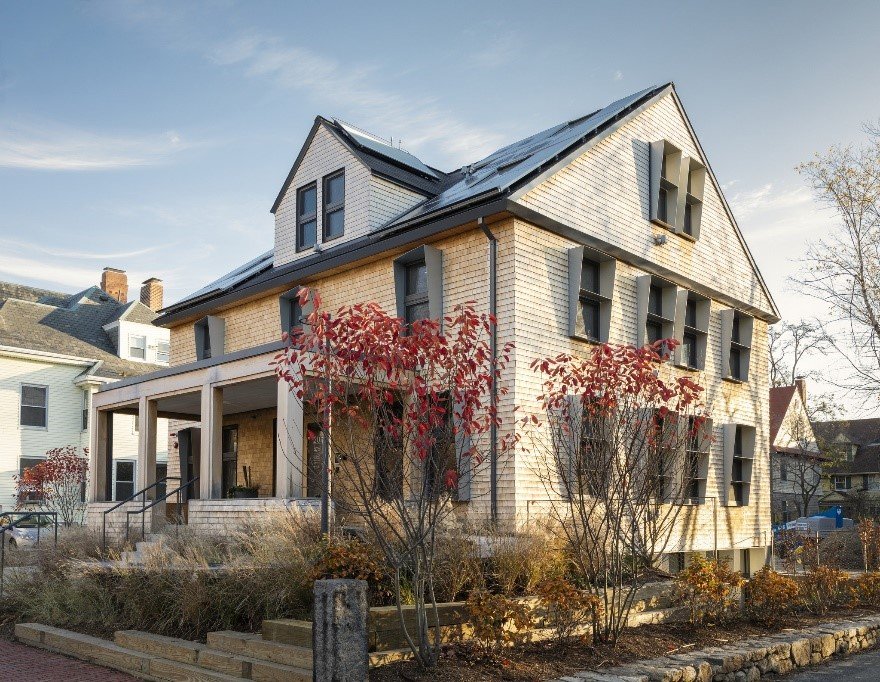
It uses natural ventilation, geothermal wells, thermal mass, and discreet solar panels. What’s striking is how the house still looks warm and domestic no flashy “green tech” aesthetic. The lesson here: net-zero doesn’t need to look experimental; it can quietly elevate the familiar.
- Zero Energy House, New Zealand (Envirotecture)–
This project in Auckland blends timber cladding, natural daylighting, and a solar array to meet all its energy needs. It uses cross-ventilation, rainwater harvesting, and insulated walls to achieve comfort with minimal load.
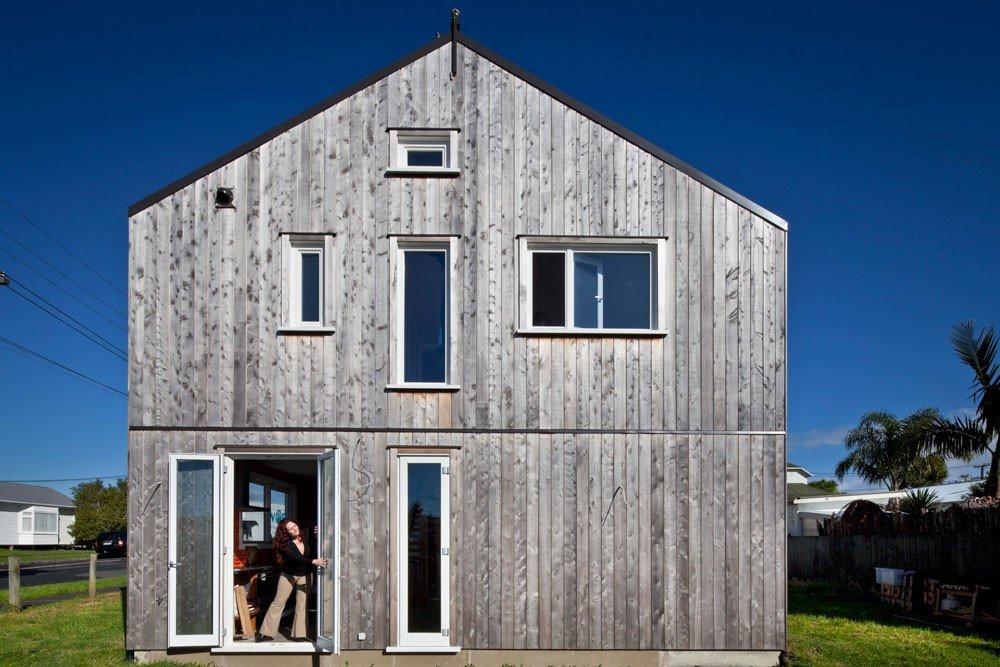
The interiors are cozy, not hyper-minimalist, proving that net-zero can be deeply livable. Importantly, it shows how modest, residential-scale homes not just big institutional buildings can achieve energy independence.
- Indira Paryavaran Bhavan, New Delhi (CPWD)–
Completed in 2014, this was India’s first net-zero energy government building. Designed with solar PV panels across the roof, sun-shading jaalis, courtyards for daylight, and high-efficiency HVAC systems, it slashed energy consumption by nearly 40% compared to conventional offices.
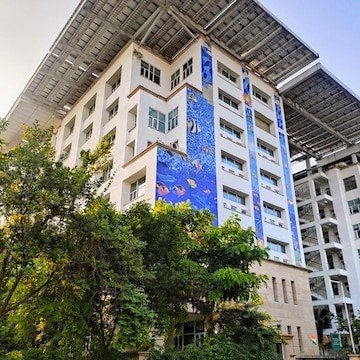
What’s inspiring is how it marries traditional Indian design responses like jaalis and courtyards with modern tech. It’s proof that Indian climate wisdom can coexist with net-zero ambitions at an urban scale.
- Sonoma Net-Zero House, California (Turnbull Griffin Haesloop)–
Nestled in wine country, this house dissolves the boundary between landscape and architecture. Expansive glass walls and minimalist lines allow daylight to flood interiors, while a solar roof, natural ventilation, and rainwater systems make it energy self-sufficient.
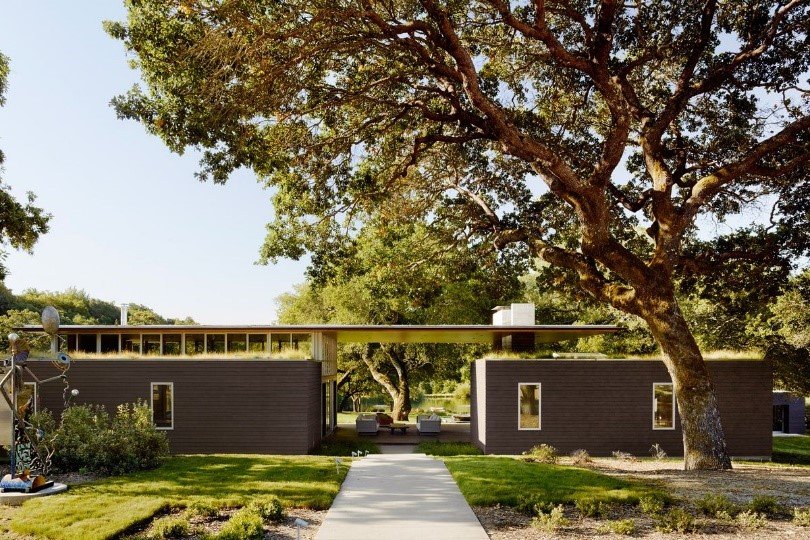
The project illustrates how net-zero homes can be deeply tied to their surroundings a house that doesn’t dominate the landscape but blends into it while quietly sustaining itself.
Each of these projects carries a lesson: net-zero is not a style; it is a philosophy that shapes styles.
Conclusion: Designing Tomorrow, Today
The net-zero home is not a utopia on a drawing board. It is here, it is viable, and it is beautiful. As architects, our responsibility is to make these homes not just perform, but inspire. To design spaces that whisper independence, that celebrate their relationship with sun, wind, and water, and that prove luxury and sustainability are two sides of the same coin.
Because one day, “net-zero” will not be a label. It will just be called “home.”