When Paper Dreams Become Concrete Realities We’ve all used paper to sketch, scribble, or script ideas that might someday touch the sky. But what if that paper itself became the very sky-touching structure? What if the material once confined to the architect’s desk made the leap into architecture itself? Paper, that seemingly fragile sheet between …

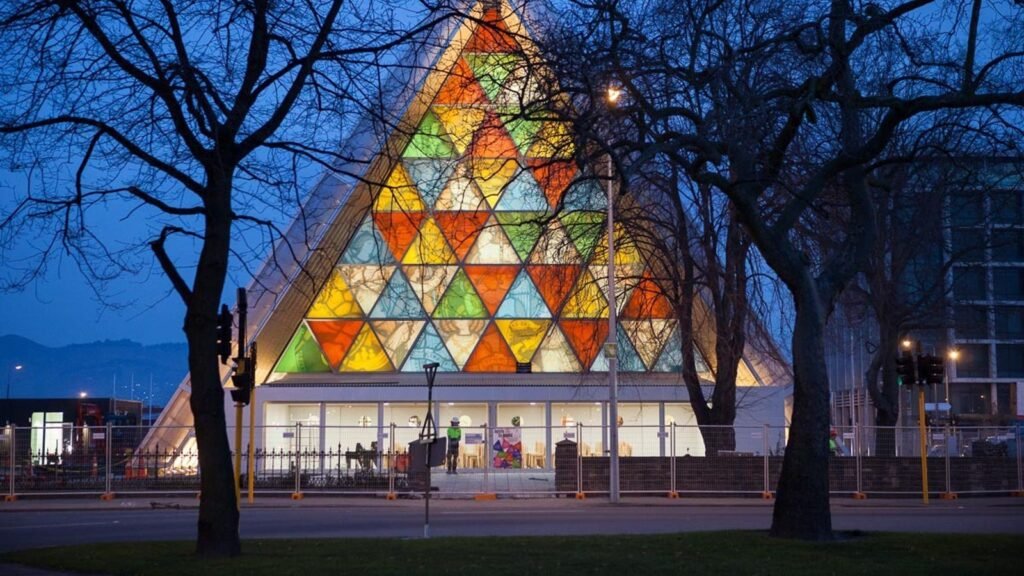
Table of Contents
- When Paper Dreams Become Concrete Realities
- Rethinking Paper: The Material with Hidden Strength
- The Science Behind the Simplicity
- A Sustainable Star
- The Paper Architect: Shigeru Ban and His Vision
- The Christchurch Earthquake: When Faith Needed Shelter
- The Cardboard Cathedral: Overview
- Anatomy of the Cardboard Cathedral
- The Cardboard Tubes: Columns of Faith
- The Roof: Light and Resilience
- The Walls: Shipping Containers and Symbolism
- Essential Blocks Advanced Heading
- The Interior: Serenity in Simplicity
- Engineering Genius: The Paper That Withstood Earthquakes
- Seismic Strength
- Weatherproofing and Longevity
- Symbolism: More Than Material
- From Fragility to Strength
- Light as Faith
- Sustainability as Spirituality
- Beyond Christchurch: Paper’s Global Architectural Journey
- Ban’s Global Experiments
- The Philosophy of Impermanence
- Public Reception and Cultural Impact
- Lessons for Architects: Rethinking the Material World
- The Future of Paper Architecture
- Epilogue: The Humble Sheet That Became a Cathedral
When Paper Dreams Become Concrete Realities
We’ve all used paper to sketch, scribble, or script ideas that might someday touch the sky. But what if that paper itself became the very sky-touching structure? What if the material once confined to the architect’s desk made the leap into architecture itself?
Paper, that seemingly fragile sheet between our fingertips, has always symbolized potential from blueprints that map our visions to the folded origami that reimagines form and beauty. Yet in recent decades, some architects dared to ask: Can paper become the building itself?
The answer, surprisingly and elegantly, is yes. And no one proved that more boldly than Shigeru Ban, the Japanese architect who turned rolls of paper yes, literal cardboard tubes into houses, museums, pavilions, and even cathedrals.
In this exploration, we’ll dive into the world of paper architecture: not metaphorical designs that stay on paper, but real, standing, weather-tested, human-occupied structures. At the heart of this journey stands the extraordinary Cardboard Cathedral in Christchurch, New Zealand a structure that redefined what “temporary” means and elevated sustainability into a symbol of resilience and faith.
Rethinking Paper: The Material with Hidden Strength
Before we get architectural, let’s get a bit philosophical. Paper, as we know it, is the ultimate paradox. It’s fragile enough to tear with a fingertip, yet powerful enough to change empires with a single decree. It burns easily, but it can outlast centuries when preserved. So what happens when you take that delicate sheet and multiply it, roll it, reinforce it, and treat it not as a surface but as a structure?
The result is a paper material revolution one that challenges our notions of durability, economy, and ecological responsibility.
The Science Behind the Simplicity
Paper tubes, or cardboard tubes, are composed of recycled paper layers wound in spirals, bonded with adhesives, and treated for waterproofing and fire resistance. Their strength lies in the geometry of the cylinder, which evenly distributes stress and resists bending. In many ways, the tube mimics the strength of a bone light, hollow, yet immensely load-bearing.

A single cardboard tube can support surprising loads, depending on its diameter, thickness, and treatment. When combined in clusters, they behave like a forest of miniature columns, creating both structure and rhythm.
A Sustainable Star
While concrete and steel dominate modern skylines, their environmental cost is staggering. Concrete production accounts for around 8% of global CO₂ emissions, and steel production isn’t far behind. Paper, in contrast, is renewable, recyclable, lightweight, and inexpensive.
Using paper-based materials challenges the high-carbon orthodoxy of modern construction it’s a call to rethink permanence, asking whether the future of architecture lies not in building forever, but in building responsibly for now.
The Paper Architect: Shigeru Ban and His Vision
You can’t discuss paper as a building material without mentioning Shigeru Ban, the Pritzker Prize-winning Japanese architect who made paper architecture not just feasible, but profoundly humane.
Ban’s approach isn’t driven by spectacle or novelty. Instead, it’s grounded in empathy his paper structures often emerge in response to disaster, displacement, and human need. He’s built temporary shelters for refugees, pavilions for expos, and chapels for mourning communities. All from a material we too often discard.
He once said, “Architects mostly work for privileged people, people who have money and power. I am interested in working for the people who are neglected by society.”
That philosoph humble, radical, and deeply moral culminated in the Cardboard Cathedral.

The Christchurch Earthquake: When Faith Needed Shelter
On February 22, 2011, Christchurch, New Zealand, was rocked by a devastating earthquake that killed 185 people and destroyed much of the city’s historic architecture, including the beloved ChristChurch Cathedral. The Gothic stone structure that had stood at the city’s heart since the 19th century was reduced to rubble, leaving both a physical and emotional void in the community.
In the aftermath, amid debris and despair, a question loomed: Where will the people gather to grieve, pray, and rebuild hope?
Enter Shigeru Ban.
Known for his humanitarian projects in disaster zones, Ban was invited to design a temporary cathedral a symbol of resilience and renewal until the original could be restored. But as history would prove, this “temporary” cathedral would become a permanent testament to ingenuity, faith, and the incredible power of paper.
The Cardboard Cathedral: Overview
Completed in 2013, the Cardboard Cathedral stands in Christchurch’s city center like a prism of light and strength, rising from tragedy with grace and innovation. Though officially called the Transitional Cathedral, locals lovingly refer to it as the Cardboard Cathedral a title that captures both its material and its miracle.
Basic Stats
- Architect: Shigeru Ban
- Location: Christchurch, New Zealand
- Completion: 2013
- Height: Approximately 24 meters (79 feet)
- Seating capacity: 700 people
- Primary materials: Cardboard tubes, timber, steel, and polycarbonate
- Cost: Around NZD $5.3 million
Anatomy of the Cardboard Cathedral
Let’s peel back the layers (pun intended) and explore what makes this structure such an engineering and symbolic marvel.
The Cardboard Tubes: Columns of Faith
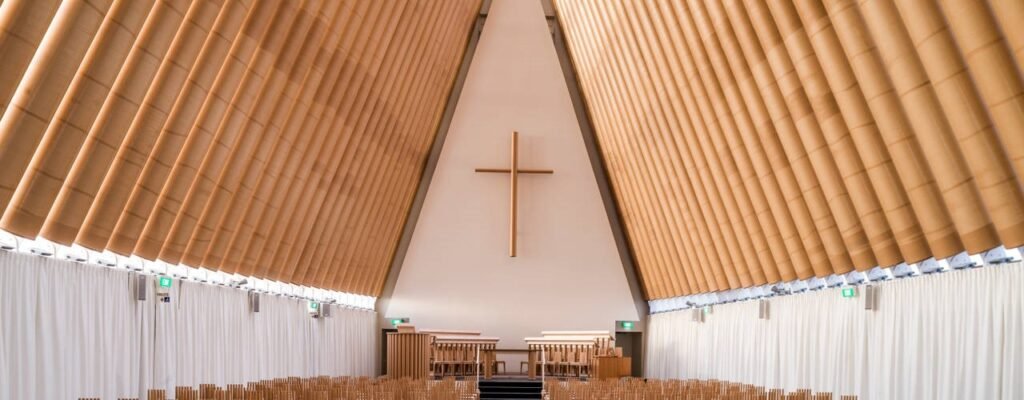
The most iconic feature of the building is its 98 cardboard tubes, each around 60 cm in diameter and up to 20 meters long. These tubes form the striking A-frame roof, arranged in a triangular formation that echoes the geometry of the original cathedral’s roofline.
Each tube is coated with polyurethane for waterproofing and flame retardant chemicals for safety. The ends are capped with laminated wood and connected with steel joints a subtle reminder that innovation is often a marriage of old and new.
Ban’s choice of cardboard wasn’t symbolic alone. Structurally, the tubes work as both load-bearing elements and aesthetic components, giving the building a warm, organic rhythm that contrasts beautifully with its translucent skin.
The Roof: Light and Resilience
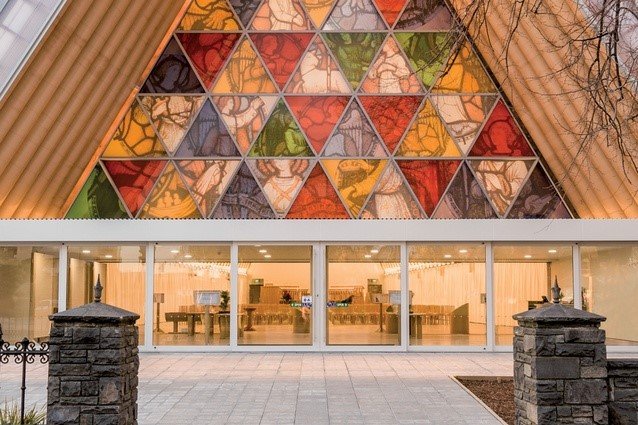
The roof is sheathed in polycarbonate panels, allowing soft natural light to diffuse into the interior. This creates a sense of ethereal brightness, aligning perfectly with the spiritual function of the building. The triangular pattern of the panels echoes stained glass motifs a nod to tradition through modern materials.
The lightweight nature of the roof reduces seismic load, crucial in an earthquake-prone city like Christchurch. In fact, the structure is engineered to exceed New Zealand’s stringent earthquake safety standards.
The Walls: Shipping Containers and Symbolism
The side walls are constructed from eight steel shipping containers, providing both structural stability and a bold metaphor for global interconnectedness. The containers are arranged to support the roof while housing essential services offices, meeting rooms, and storage.
Ban’s inclusion of industrial containers in a sacred space blurs the line between the secular and the divine a poetic commentary on faith existing amid the everyday.
The Interior: Serenity in Simplicity
Inside, the cathedral exudes calmness. The cardboard tubes arch overhead like a giant paper forest, filtering light in a way that feels both warm and transcendent. The pews, altar, and other furnishings are crafted from local timber, maintaining a tactile connection to the land and its people.
At the far end, a stunning stained-glass window replicates the rose window design of the destroyed Gothic cathedral, rendered in simple yet vibrant triangles. It’s an homage that bridges past and present loss and renewal.
Engineering Genius: The Paper That Withstood Earthquakes
Let’s be honest the first time someone hears “Cardboard Cathedral,” they might picture a soggy box after a rainstorm. But Shigeru Ban’s design proves that innovation and engineering can transform humble materials into extraordinary resilience.
Seismic Strength
Given Christchurch’s seismic vulnerability, Ban and his engineering team had to ensure the cathedral was more than symbolic it had to survive. The cardboard tubes, though lightweight, work in tandem with steel joints and timber supports to distribute stress evenly during quakes.
Additionally, the building sits on a reinforced concrete foundation with rubber base isolators, allowing it to move independently from the ground during seismic activity a technique commonly used in high-end earthquake-resistant structures.
Weatherproofing and Longevity
Each cardboard tube is meticulously sealed against moisture. The polycarbonate roof panels extend beyond the edges to prevent rain from seeping in, and the cathedral’s raised foundation ensures no direct contact between paper and ground moisture.
Originally intended to last about 10 years, the structure has since surpassed expectations. More than a decade later, the Cardboard Cathedral still stands proudly, proving that “temporary” can be remarkably enduring when vision and care meet.
Symbolism: More Than Material
The Cardboard Cathedral isn’t merely an architectural innovation it’s a symbol rich with layers of meaning.
From Fragility to Strength
Paper, typically associated with fragility, becomes a metaphor for resilience. The community that lost its stone cathedral found hope in a paper one a profound inversion of expectations. It suggests that strength is not about rigidity but adaptability.
Light as Faith
The translucent roof and the glow of the tubes create a space of divine luminosity. In a city once shadowed by disaster, the cathedral literally lets light in faith through architecture.
Sustainability as Spirituality
By using recycled and renewable materials, Ban intertwines sustainability with spirituality. The building becomes an act of environmental stewardship a cathedral not just for people, but for the planet.
Beyond Christchurch: Paper’s Global Architectural Journey
The Cardboard Cathedral is the most famous example, but it’s part of a larger movement a new era of paper-based architecture.
Ban’s Global Experiments
Before Christchurch, Ban used paper tubes for:
- Paper Church (Kobe, Japan, 1995): Built after the Great Hanshin Earthquake, this small church became the prototype for the Cardboard Cathedral.
- Paper Log Houses: Emergency shelters built for refugees in Rwanda (1999) and disaster victims in Japan and Turkey.
- Paper Arch Pavilion: Temporary exhibition spaces demonstrating paper’s load-bearing power.
Each project refined Ban’s techniques, proving that paper architecture is not about weakness it’s about responsiveness.
The Philosophy of Impermanence
Underlying these designs is a Japanese concept: wabi-sabi the beauty of impermanence. Buildings, like people, are not meant to last forever. They serve their purpose, honor their time, and gracefully make way for what comes next.
In that sense, the Cardboard Cathedral isn’t just a structure. It’s an idea. A meditation on how we build, why we build, and how we can build with compassion and intelligence.
Public Reception and Cultural Impact
When the Cardboard Cathedral opened in 2013, it wasn’t without controversy. Some skeptics questioned spending millions on a “temporary” paper building. Others doubted its durability. But over time, it silenced its critics not with rhetoric, but with presence.
It became a community hub hosting not only worship services but concerts, lectures, and art events. Its doors are open to all, reflecting Ban’s democratic ethos.
To this day, it stands as Christchurch’s most photographed post-quake structure, and arguably, its most beloved. For many residents, it symbolizes the city’s comeback fragile yet unbroken.
Lessons for Architects: Rethinking the Material World
The story of the Cardboard Cathedral challenges every architect and every human being to reconsider what’s possible.
- Innovation Doesn’t Require Exotic Materials.
Sometimes the most revolutionary material is already in your recycling bin.
- Temporary Architecture Can Have Lasting Impact.
The emotional and cultural resonance of a structure isn’t tied to how long it stands, but to what it stands for.
- Sustainability and Beauty Can Coexist.
Paper architecture demonstrates that green design need not sacrifice aesthetics or function.
- Humanitarian Design Is Real Architecture.
Ban’s career proves that empathy and technical mastery belong together that the architect’s role extends far beyond luxury and spectacle.
The Future of Paper Architecture
As climate change accelerates and natural disasters grow more frequent, the need for quick, sustainable, and affordable shelter is critical. Paper cheap, recyclable, and adaptable may well become one of the most practical materials in the architect’s arsenal.
Emerging research is pushing paper into even more ambitious realms:
- Paper-based composite panels with waterproof and fire-resistant coatings.
- 3D-printed cellulose structures that mimic organic growth.
- Modular housing systems using recycled paper cores and bamboo skins.
The material that once carried ideas may soon carry lives.
Epilogue: The Humble Sheet That Became a Cathedral
So “Paper is not just for writing; it can build homes.”
It can build hope. It can build cathedrals. It can build the future.
The story of the Cardboard Cathedral is not only about architecture. It’s about transformation of material, of mindset, of meaning. From fragility came fortitude. From waste came wonder. From paper came a place for prayer.
Perhaps that’s the most powerful lesson of all:
Architecture is not defined by the permanence of its materials but by the permanence of its message.
And sometimes, the simplest material a sheet of paper can carry the heaviest weight of all: the human spirit.