Architecture as sculpture is one of the most defining philosophical pillars of Frank Gehry’s work and perhaps the idea that most radically separates him from purely rational traditions of architectural design. At the heart of this belief is the conviction that buildings should not be limited to the role of neutral containers for function, nor …
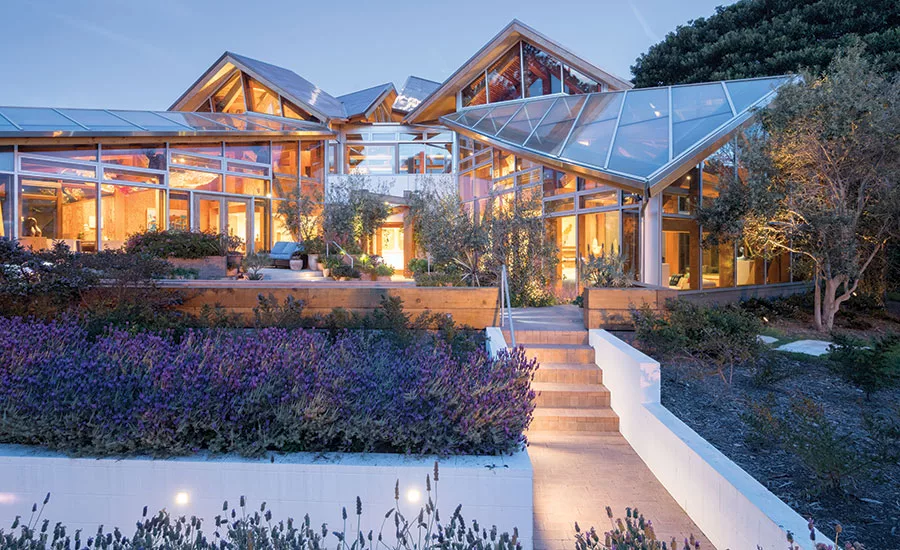
Architecture as sculpture is one of the most defining philosophical pillars of Frank Gehry’s work and perhaps the idea that most radically separates him from purely rational traditions of architectural design. At the heart of this belief is the conviction that buildings should not be limited to the role of neutral containers for function, nor should they merely solve technical problems of structure, program, and efficiency. Instead, Gehry insists that architecture can and should operate as an inhabitable work of art, charged with emotional, symbolic, and experiential power. In this view, a building is not simply an object to be used but an expressive form to be felt, interpreted, and remembered. It is a sculptural presence that shapes human perception as much as it accommodates human activity. This philosophy emerged in response to what Gehry perceived as the increasing sterility of late modernist architecture, where efficiency, modular systems, and rigid formal logic often overwhelmed poetic expression and sensorial richness. By reimagining buildings as large scale sculptures, Gehry challenged the assumption that architectural value must be rooted primarily in rational order and instead proposed that intuition, gesture, and artistic instinct are equally legitimate design drivers.
The notion of architecture as sculpture fundamentally redefines the relationship between form and function. In conventional rationalist architecture, form is typically derived from program, structure, and efficiency. A building is expected to reveal its logic clearly and economically, with minimal deviation from functional necessity. Gehry overturns this hierarchy by allowing form to take on an independent, almost autonomous role. In his work, form is not merely the outcome of rational problem solving but an active participant in shaping experience and meaning. Sculptural form becomes a medium through which architecture communicates with the city and its inhabitants on an emotional level. This does not mean that function is ignored, but rather that function is embedded within an expressive envelope that exceeds utilitarian requirements. The building becomes both a tool and a symbol, both a place of use and a work of art. This fusion of practicality and artistic autonomy is what gives Gehry’s architecture its distinctive power and controversy.
One of the most compelling aspects of Gehry’s sculptural philosophy is its emphasis on movement. Traditional architecture often seeks visual stability through symmetry, horizontality, and repetition. Gehry’s buildings, by contrast, appear to twist, fold, billow, and surge as though caught in a moment of frozen motion. These dynamic forms activate the surrounding space and draw the observer into a visual dialogue that unfolds differently from every angle. The building becomes an event rather than a static object. This kinetic quality is central to the idea of architecture as sculpture because it aligns buildings with the expressive strategies of contemporary art, where motion, tension, and transformation are key themes. The sculptural building does not simply occupy space but dramatizes it, turning the act of moving through and around architecture into an experiential narrative.
This narrative dimension is particularly evident in the Guggenheim Museum Bilbao, widely regarded as one of the most influential buildings of the late twentieth century and a definitive expression of Gehry’s belief in architecture as inhabitable sculpture. The museum does not present itself as a traditional institutional form with a clear front, symmetrical massing, and hierarchical order. Instead, it unfolds as a constellation of interlocking volumes clad in shimmering metal, each curving and colliding with the next in an apparently spontaneous composition. The building reads less like a conventional structure and more like a monumental abstract sculpture placed within the urban and riverfront landscape. As visitors approach, the form appears to change constantly, with no single vantage point offering a complete or definitive understanding. This perpetual transformation reinforces the idea that the building is not a fixed image but an evolving experience. Inside, the sculptural logic continues as galleries flow around a dramatic central atrium, with circulation paths that curve and intersect in ways that feel more like a journey through an artwork than movement through a rationally ordered container. The museum thus embodies the conviction that architecture can itself be a primary artistic attraction rather than a neutral backdrop for art.
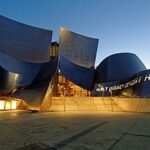
Another powerful example of this sculptural ethos can be found in the Walt Disney Concert Hall in Los Angeles. Here, Gehry transformed the functional requirements of a concert hall into a sweeping metal composition that seems to echo the fluidity and emotional intensity of music. The building’s exterior is composed of stainless steel surfaces that billow outward like the sails of a ship or the unfurling of a metallic flower. These forms are not dictated by conventional structural logic but by a sculptural intuition that seeks to express sound, rhythm, and motion in physical form. The hall does not merely house music but appears to embody it. This translation of one art form into another is central to Gehry’s sculptural philosophy. Architecture becomes a medium capable of expressing the spirit of other creative disciplines rather than remaining confined to its own technical domain. The interior continues this synthesis, where acoustical precision is housed within warm, flowing timber forms that create a sense of intimacy within the larger sculptural envelope. The result is a spatial experience that is at once highly engineered and deeply artistic, reinforcing the idea that sculpture and performance, structure and expression, are not opposing forces but interdependent ones.
Gehry’s belief in architecture as sculpture is also rooted in his close relationship with artists and the art world. Throughout his career, he has drawn inspiration from painters, sculptors, and installation artists rather than from architectural precedent alone. This artistic lineage is evident in his willingness to prioritize intuition, experimentation, and emotional resonance over typological conformity or stylistic consistency. In treating buildings as sculptures, Gehry effectively positions the architect as a type of artist rather than solely as a technical professional. This repositioning challenges conventional notions of architectural authorship and responsibility. The sculptural architect is not simply solving problems posed by clients and engineers but is also asserting a personal vision, engaging in cultural commentary, and contributing to the broader discourse of contemporary art and design.
The Santa Monica Residence, Gehry’s own house renovation, offers an early and intimate demonstration of architecture as sculpture enacted within a domestic context. By wrapping a conventional suburban house in a collage of raw, industrial materials and angular forms, Gehry transformed an ordinary dwelling into a provocative sculptural assemblage. The intervention did not seek to hide its transformative gesture but reveled in it. Walls tilt, volumes collide, and materials clash in a way that disrupts the visual expectations of domestic architecture. The house becomes a lived sculpture, an experimental artifact that questions what a home can look like and how it can relate to its neighborhood. The fact that Gehry chose his own residence as the site for such a bold sculptural statement underscores the depth of his commitment to this philosophy. It was not a theoretical exercise conducted at a safe distance but a lived manifestation of his belief that everyday architecture could and should operate as art.
This sculptural approach also alters how architecture engages with urban space. A rational building tends to align with existing street grids, massing rhythms, and contextual patterns. A sculptural building, by contrast, often asserts itself as a distinct object within the city, creating a visual rupture that draws attention and provokes reaction. Gehry’s buildings frequently function as urban landmarks not because of their symbolic ornamentation but because of their sheer formal presence. They introduce a new visual vocabulary into their surroundings, compelling the city to accommodate them rather than dissolve them into the background. This assertive presence reflects a belief that architecture has the capacity to redefine urban identity rather than merely reinforce it. In many cases, Gehry’s sculptural buildings have played catalytic roles in urban regeneration, demonstrating that artistic architecture can have tangible social and economic consequences.
The philosophical implications of architecture as sculpture extend beyond aesthetics into questions of experience and perception. A rational structure often communicates its purpose clearly through legible form and organization. A sculptural building, on the other hand, resists immediate comprehension. Its meaning unfolds gradually through movement, changing light, and shifting perspectives. This ambiguity invites interpretation and personal engagement. The user is not simply given a clear message about what the building is but is invited to construct meaning through experience. This open ended quality aligns architecture more closely with contemporary art, where interpretation is not fixed but negotiated between the work and the observer. Gehry’s buildings thus become platforms for ongoing perceptual exploration rather than static statements of function.
Critics of this approach have often argued that treating architecture as sculpture risks privileging visual spectacle over practical performance. They contend that dramatic forms may compromise efficiency, clarity, or accessibility. These criticisms raise legitimate concerns about balance and responsibility in architectural design. Yet Gehry’s work demonstrates that sculptural expression does not inherently negate functional rigor. Beneath the expressive skins of his buildings lie highly sophisticated structural systems, environmental controls, and acoustical engineering. The apparent freedom of the sculptural form is supported by an intense framework of technical discipline. In this sense, architecture as sculpture is not an abandonment of rationality but a renegotiation of its role. Rational systems become enablers of artistic freedom rather than constraints upon it.
The rise of digital design and fabrication technologies has played a crucial role in making Gehry’s sculptural vision buildable at increasingly ambitious scales. Complex curves, non repetitive geometries, and interlocking volumes that once would have been prohibitively difficult to construct can now be precisely modeled, analyzed, and fabricated. This technological shift has effectively expanded the possible territory of architecture as sculpture, allowing intuitive gestures to be translated into accurate construction without losing their expressive force. The sculptural building is no longer an isolated anomaly but an increasingly viable mode of architectural production. This convergence of art and technology further supports Gehry’s belief that architecture need not choose between imagination and execution but can operate powerfully at their intersection.
Beyond individual buildings, Gehry’s sculptural philosophy has had a broader cultural impact on how architecture is perceived by the public. His most recognizable projects have entered popular consciousness not merely as functional structures but as icons, symbols, and destinations in their own right. People travel to see these buildings in the same way they travel to see famous artworks. This shift in perception reflects a broader acceptance of the idea that architecture can be experienced as art rather than simply used as infrastructure. While landmark architecture existed long before Gehry, his work helped solidify the notion that expressive, sculptural form could be a central driver of public engagement rather than a marginal one. In this way, his philosophy altered not only architectural practice but also public expectations of what architecture can offer.
At a deeper philosophical level, architecture as sculpture challenges the Enlightenment derived belief that reason should dominate human creation. The rationalist tradition in architecture is rooted in the idea that clarity, order, and efficiency are the highest values. Gehry’s approach does not reject these values outright but places them in dialogue with intuition, emotion, and artistic impulse. The sculptural building does not seek to resolve all contradictions into a single clear message. Instead, it embraces complexity, ambiguity, and even contradiction as authentic expressions of contemporary life. In a world defined by overlapping identities, rapid technological change, and cultural pluralism, a purely rational architecture may feel insufficient to capture lived experience. The sculptural approach offers a way to embed these complexities into built form.
The psychological dimension of Gehry’s sculptural architecture is also significant. His buildings often evoke strong emotional responses, ranging from awe and excitement to confusion and discomfort. These reactions are not incidental but central to the sculptural intent. Just as a powerful sculpture can unsettle, inspire, or provoke, Gehry’s architecture seeks to move people emotionally rather than simply accommodate them physically. This emotional engagement deepens the relationship between people and their built environment, transforming architecture from background scenery into an active participant in human experience.
Over time, the idea of architecture as sculpture has become more widely accepted, even as it remains controversial. Many architects now incorporate expressive, sculptural elements into their work, often drawing on the formal freedom that Gehry helped legitimize. At the same time, the risk persists that sculptural architecture can devolve into superficial spectacle if not grounded in conceptual rigor and experiential depth. Gehry’s most enduring projects avoid this pitfall precisely because their sculptural forms are not arbitrary but deeply integrated with movement, light, material, and spatial sequencing. The sculpture is not applied to the building after the fact but emerges from the total logic of the design process.
In the final analysis, Gehry’s belief that buildings should function as inhabitable works of art represents a profound redefinition of architectural purpose. It asserts that architecture is not merely a technical response to practical needs but a cultural and artistic practice capable of shaping identity, memory, and emotion. Through sculptural form, dynamic movement, and expressive materiality, Gehry’s buildings challenge the dominance of purely rational structures and propose an alternative vision of what the built environment can be. They invite people not only to use space but to feel it, interpret it, and remember it as part of their personal and collective experience. In doing so, his architecture occupies a unique position between art and utility, between imagination and engineering, between object and environment. It stands as a reminder that architecture, at its most powerful, is not only something we inhabit but something that inhabits us in return, shaping how we see, move, and understand the world around us.