The study of house architecture advances from planning and measurement into the practical domain of construction. The components of a house represent the tangible elements that transform design into built reality. Before construction begins, traditional architectural practice emphasizes the importance of proper commencement. The beginning of building activity is considered a decisive stage because it …
Table of Contents
The study of house architecture advances from planning and measurement into the practical domain of construction. The components of a house represent the tangible elements that transform design into built reality. Before construction begins, traditional architectural practice emphasizes the importance of proper commencement. The beginning of building activity is considered a decisive stage because it sets the foundation for stability, durability, and orderly execution.
Commencement of building involves careful consideration of time, conditions, and preparation. Construction is not viewed merely as a physical act but as a coordinated process that aligns material readiness, labor, and environmental factors. The text establishes that beginning construction at an appropriate time ensures smooth progress and minimizes disruption during execution.
Preparation before construction includes clearing the site, organizing materials, and confirming measurements. These steps reduce errors and delays. The emphasis on preparation reflects a disciplined approach to building that values foresight and methodical execution.
Selection of Time for Construction
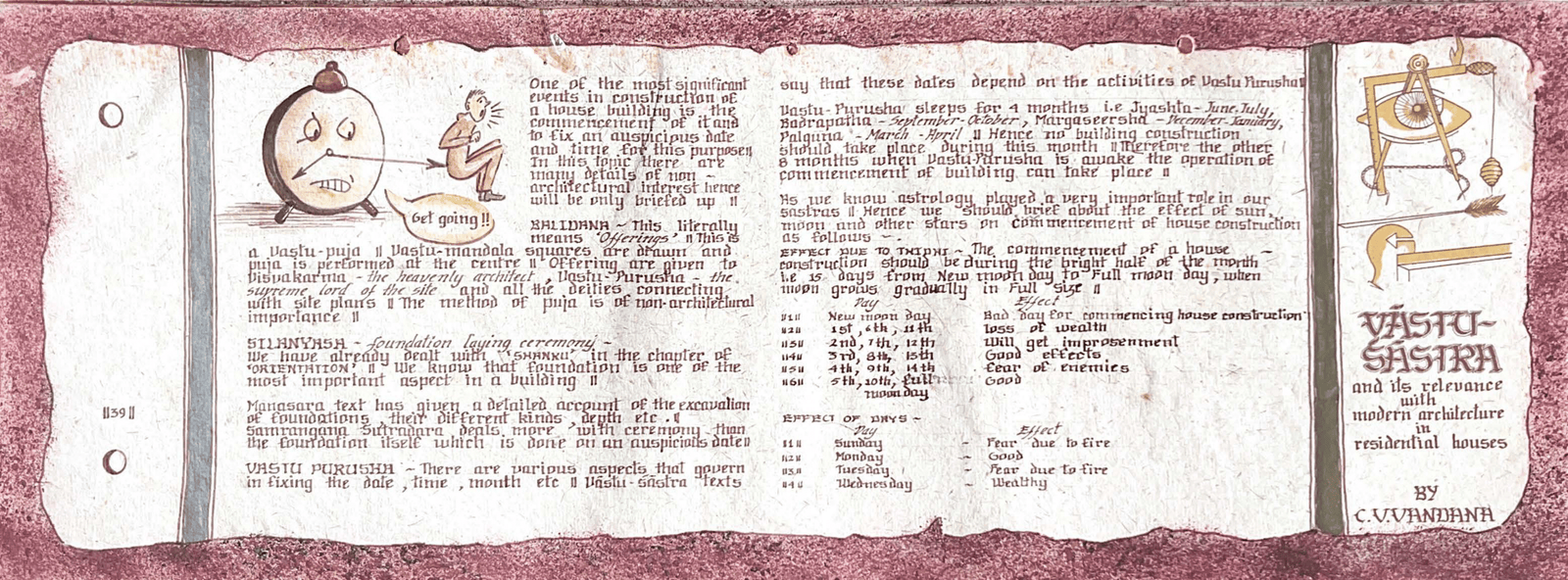
Time plays a significant role in traditional construction practice. The text explains that certain periods are considered more suitable for commencing building work. These considerations are based on observation of environmental stability, seasonal behavior, and labor conditions.
Construction activity is ideally undertaken during periods of predictable weather. Excessive rain, extreme heat, or severe cold can compromise material performance and workmanship. By aligning construction with favorable conditions, builders ensure better curing, bonding, and structural integrity.
The selection of time also affects workforce efficiency. Stable conditions allow sustained labor without interruption. This practical understanding underscores the importance of timing as a functional consideration rather than a symbolic one.

Effects of Days on Construction Activity
Different days are believed to influence the progress of construction in varied ways. The text presents a classification of days and their associated effects on building activity. These observations are rooted in long term experience rather than isolated belief.
Certain days are considered suitable for initiating work related to foundations and masonry, while others favor carpentry or finishing tasks. This division reflects an intuitive alignment between task type and environmental rhythm.
The underlying objective of considering days is to ensure continuity and reduce unforeseen interruptions. This approach highlights the importance of rhythm and sequencing in construction processes.
Influence of Stars and Months
The text also discusses the influence of stars and months on building commencement. These observations are based on seasonal cycles and environmental stability. Certain months provide favorable conditions for specific construction activities due to temperature and moisture levels.
Dry months are preferred for masonry and foundation work, while moderate conditions suit timber related activities. Seasonal alignment ensures material performance and reduces the risk of defects.
These considerations demonstrate an integrated understanding of time, climate, and material behavior. Construction is thus planned as a responsive process rather than a rigid schedule.

Role of Materials in House Construction
Materials form the physical substance of a house. The quality and suitability of materials directly influence durability, comfort, and maintenance. The text emphasizes that material selection must align with environmental conditions and structural requirements.
Natural materials such as wood, stone, and brick have been used extensively in traditional construction. Each material possesses distinct properties that determine its application. Understanding these properties is essential for effective use.
The text establishes that improper material selection leads to premature deterioration and structural weakness. Therefore, careful evaluation of materials is considered fundamental to construction practice.
Wood as a Construction Material
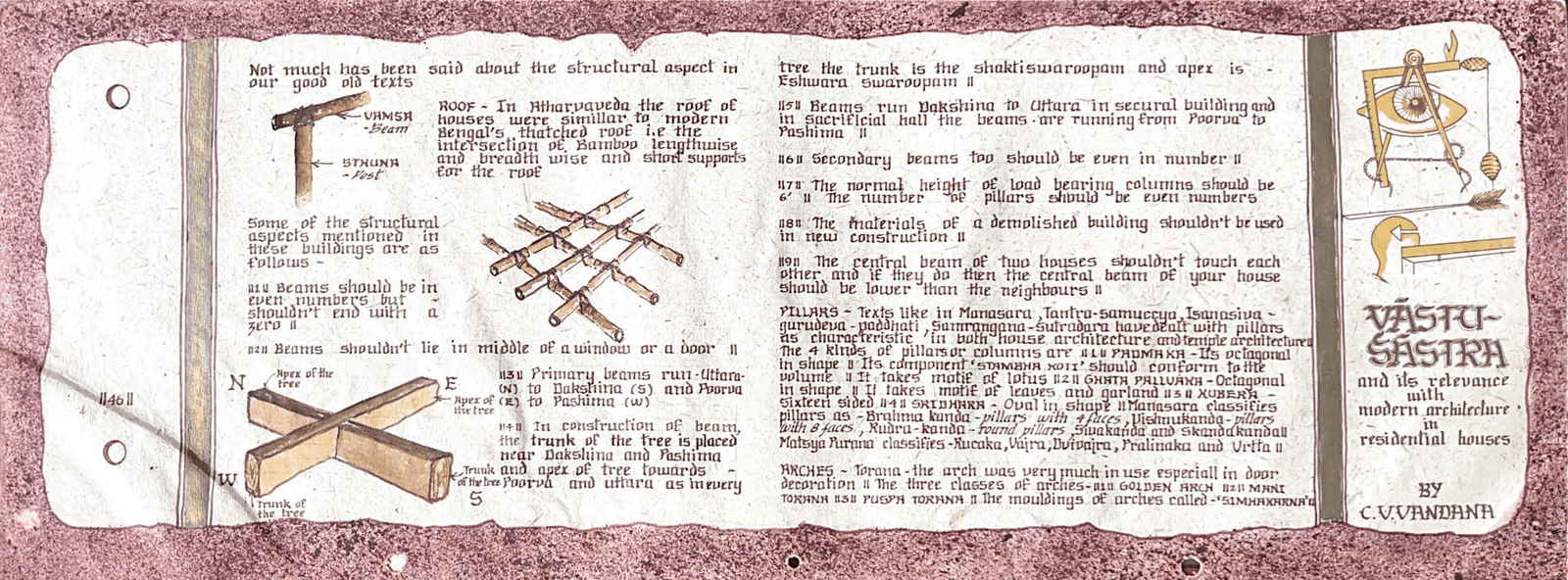
Wood occupies a prominent place among traditional building materials. It is valued for its strength, flexibility, and ease of workmanship. The text explains that wood is commonly used for structural members, doors, windows, and roofing elements.
Different types of wood possess different characteristics. Hardwoods provide strength and durability, while softer woods offer ease of shaping. Selection depends on intended use and load requirements.
Wood is also appreciated for its thermal properties. It moderates temperature and contributes to indoor comfort. These qualities make it suitable for residential construction.

Collection of Wood
The collection of wood is a carefully regulated process. The text emphasizes that wood must be sourced from healthy trees to ensure strength and longevity. Trees that are diseased, damaged, or improperly grown are avoided.
The method of cutting affects wood quality. Proper cutting minimizes internal stress and prevents cracking. Trees are cut at appropriate heights and angles to preserve structural integrity.
Transportation and storage of wood are also important. Wood must be protected from moisture and direct exposure to harsh conditions before use.
Seasoning of Wood
Seasoning refers to the process of reducing moisture content in wood. Proper seasoning improves strength, stability, and resistance to decay. The text explains that unseasoned wood is prone to warping, cracking, and insect attack.
Natural seasoning involves storing wood in well ventilated conditions for extended periods. This gradual process allows moisture to escape evenly. Artificial seasoning methods may also be employed to accelerate drying.
Seasoned wood performs better in construction. It maintains shape, holds joints securely, and lasts longer. The emphasis on seasoning reflects a commitment to quality and durability.
Properties and Classification of Wood
The text classifies wood based on strength, texture, and durability. Dense woods provide greater load bearing capacity, while lighter woods are suited for non structural elements.
Color, grain pattern, and resistance to pests are also considered. These characteristics influence both performance and appearance. Builders select wood that balances strength with workability.
Understanding wood properties allows appropriate application and reduces material failure. This knowledge is essential for responsible construction.
Masonry and Its Importance
Masonry forms the backbone of residential construction. It includes brickwork, stonework, and related bonding techniques. The text explains that masonry provides structural stability and enclosure.
Proper masonry depends on accurate alignment, bonding, and material compatibility. Poor workmanship compromises strength and appearance. Therefore, skilled execution is emphasized.
Masonry also contributes to thermal performance. Thick walls regulate temperature and provide insulation. This reinforces the functional value of masonry in housing.
Bricks as Building Units
Bricks are widely used masonry units due to their uniformity and ease of handling. The text discusses brick dimensions, shapes, and quality requirements. Well fired bricks exhibit strength, durability, and resistance to moisture.
Brick size consistency ensures uniform bonding and alignment. Irregular bricks lead to weak joints and uneven walls. Therefore, quality control in brick production is essential.
Bricks are valued for their versatility. They can be used in load bearing walls, partitions, and decorative elements. Their widespread use reflects practicality and reliability.
Bonding and Brickwork Techniques
Bonding refers to the arrangement of bricks in a pattern that ensures strength and stability. The text outlines the importance of proper bonding to distribute loads evenly.
Different bonding patterns serve different structural and aesthetic purposes. Correct bonding improves wall integrity and reduces cracking. It also enhances visual coherence.
Mortar quality plays a crucial role in bonding. Proper mortar composition ensures adhesion and accommodates minor movement without failure.
Plastering and Finishing
Plastering protects masonry surfaces and improves appearance. The text explains that plaster shields walls from moisture, weathering, and wear. It also creates a smooth surface for finishing.
Proper plastering requires appropriate material composition and application technique. Poor plastering leads to cracking and detachment. Skilled workmanship ensures durability.
Finishing enhances both protection and aesthetics. It completes the transition from structure to habitable space.
Integration of Materials in Construction
The text emphasizes that materials must work together as a system. Wood, masonry, mortar, and plaster must be compatible. Incompatibility leads to differential movement and damage.
Integrated material selection ensures structural coherence and longevity. This holistic approach distinguishes traditional construction practice.
Conclusion
The first half of the Components of House establishes the disciplined foundation of construction. From commencement and timing to material selection and preparation, each step contributes to structural integrity and durability.
Wood and masonry emerge as primary materials, each requiring careful handling and understanding. Proper collection, seasoning, and application ensure performance and longevity. Brickwork and plastering complete the structural envelope, transforming materials into habitable form.
This stage of house construction reflects a balance between knowledge, skill, and environmental awareness. It prepares the ground for the study of structural layout, doors, windows, rooms, circulation, and internal components, which are addressed in the next section.