Introduction: when a port builds a pause A golf course inside a port ecosystem is, on paper, an unlikely pairing. Ports are engineered for movement, logistics, schedules, throughput, and scale. Golf is engineered for time, focus, rhythm, patience, and terrain. When those two worlds meet, the landscape has to do more than look green. It …
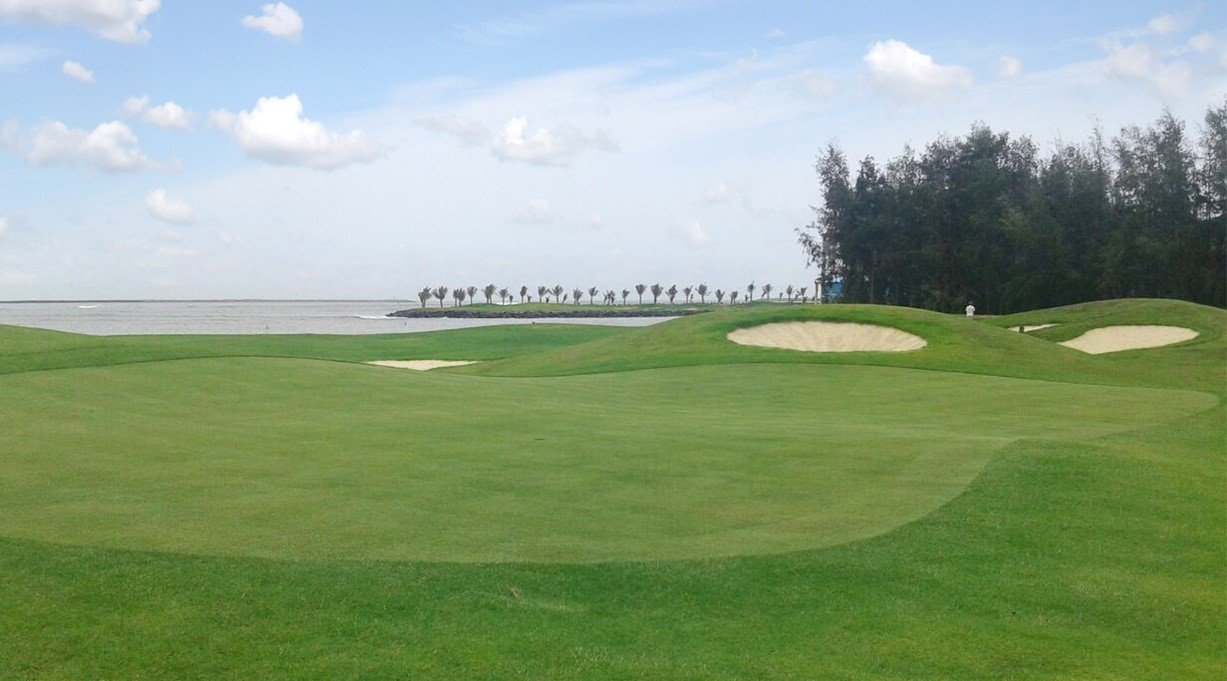
Table of Contents
- Introduction: when a port builds a pause
- Project summary, based on VANZSCAPE’s published brief
- The core design idea: a landscape that stages the horizon
- Why an academy course is a smart program choice
- Corporate entertainment is a design metric, not a footnote
- Coastal conditions: wind, salt, glare, and resilience
- Landform: the real architecture of a links landscape
- The routing mindset: designing for flow, not only for holes
- The club environment: where hospitality becomes spatial
- Shade and microclimate: executive comfort is operational success
- The path network: the guest experience between shots
- Bunkers, sand, and the links identity
- Planting strategy: disciplined, resilient, and view protecting
- Water and sustainability: the hidden credibility layer
- Lighting: extending use and elevating atmosphere
- Signage and wayfinding: the course should feel effortless
- The social dimension: golf as a relationship tool
- Brand value for the port: a statement landscape
- Execution mindset: why integrated teams matter
- What makes CVR Links memorable as a landscape experience
- Key takeaways for clients planning golf and leisure landscapes
- Closing: a strategic landscape with an ocean sized backdrop
Introduction: when a port builds a pause
A golf course inside a port ecosystem is, on paper, an unlikely pairing. Ports are engineered for movement, logistics, schedules, throughput, and scale. Golf is engineered for time, focus, rhythm, patience, and terrain. When those two worlds meet, the landscape has to do more than look green. It has to reconcile intensity with ease, and utility with experience.
CVR Links at Krishnapatnam Port, as described in VANZSCAPE’s own project narrative, began with a clear client ambition. KPCL, Krishnapatnam Port Company Limited, envisioned an academy golf course on 20 acres, with stunning vistas set against the horizon of the port and the infinity views of the sea. The stated purpose was equally specific: to facilitate corporate entertainment for busy, stressed executives.
That one paragraph carries the entire brief. It is not a decorative landscaping request. It is a strategic environment for high value relationship building, decompression, and status signalling, built in a place that is otherwise about operational efficiency. If the design succeeds, the course becomes more than a sporting facility. It becomes a soft power space, a place where conversations move differently, and where the port’s brand is experienced as progressive, global, and confident.
This blog expands on that intent and explains how a links style, coastal facing, academy scale golf landscape can be conceived and detailed as a complete experience. It focuses on the design logic implied by VANZSCAPE’s published brief and by the realities of building a playable, memorable course in a coastal industrial context.
Project summary, based on VANZSCAPE’s published brief
- Client: KPCL, Krishnapatnam Port Company Limited
- Scope intent: an academy golf course on 20 acres
- Setting: horizons of Krishnapatnam Port and infinity vistas of the sea
- User intent: corporate entertainment for busy, stressed executives
- Timeline: 2016 to 2017
- Client sentiment (public testimonial associated with CVR Links): efficiency through an integrated, one place process, backed by architectural strength and deep landscaping knowledge
These points set expectations for a landscape that must be high performance in three ways: playability, comfort, and image.
The core design idea: a landscape that stages the horizon
The phrase “stunning vistas laid out on the horizons” is more than marketing language. In golf design, horizon management is a real technique. It shapes how holes feel, how players orient themselves, and how memory is formed.
In a coastal facing site, the horizon becomes the main visual asset. The objective is not simply to show it. The objective is to choreograph it. A well-designed course reveals the sea in sequences, with moments of compression and release. It uses dunes, mounds, planting masses, and fairway alignments to frame the horizon like a moving panorama.
In a port context, horizon framing also has a second job: selective editing. Ports can be visually powerful, but they can also feel harsh and mechanical. A careful landscape strategy can incorporate the port as a distant, dramatic backdrop while reducing the immediate perception of industrial clutter. In other words, the course can allow the setting to feel both expansive and composed.
For executives using the course for corporate entertainment, this matters. Hospitality is not only service. It is atmosphere. A horizon that feels endless communicates ease, ambition, and possibility. It is a subtle but potent psychological contrast to the compressed time pressures of corporate schedules.
Why an academy course is a smart program choice
VANZSCAPE’s description calls this an academy golf course on 20 acres. That scale has strategic advantages.
An academy course can be positioned as both a training ground and a corporate experience. It supports beginners and improvers, which is essential when guests have mixed skill levels. It allows shorter loops, time-controlled rounds, and less intimidation, while still delivering the prestige of golf. It can also be maintained with a different intensity model than a full championship layout, depending on turf strategy and intended traffic.
From a corporate entertainment standpoint, time control is critical. A full round can be a large time commitment. An academy course can offer meaningful play in a smaller window, without sacrificing the sense of event. For a port leadership team hosting partners, a course that can deliver a high-quality experience in a flexible duration becomes a practical asset.
Corporate entertainment is a design metric, not a footnote
The brief explicitly states the course was meant to facilitate corporate entertainment for busy, stressed executives. In practice, that sets measurable design priorities.
- Arrival must be frictionless
Parking, drop off, and orientation should feel obvious and calm, not like entering an operational yard.
- The first five minutes must communicate quality
This is where brand perception is formed. Materials, cleanliness, signage, and staff movement patterns matter.
- The walking and cart experience must feel effortless
Paths, gradients, shade availability, and rest points become as important as the tees and greens.
- The course must reward conversation
Golf hospitality is about the pace between shots. The landscape has to provide moments where people naturally slow down, look outward, and talk.
- Comfort must be embedded
Heat, wind, glare, and humidity management are part of the design, not secondary engineering problems.
A corporate entertainment landscape is judged by whether guests feel taken care of without noticing the mechanics of that care.
Coastal conditions: wind, salt, glare, and resilience
A course that faces sea vistas and sits within a port region will inevitably confront coastal realities: wind patterns, salt laden air, intense sun, and the need for resilient planting and turf. The design response typically has four layers.
1) Wind as a feature, not only a challenge
Links landscapes are defined by wind. A well-crafted routing can turn wind into variety. It can create holes that play differently depending on direction, and it can use mounding and planting to create occasional shelter without killing the links character.
For corporate guests, wind can also be a comfort issue. If the course is too exposed everywhere, the experience becomes tiring. Strategic wind breaks, not as walls but as layered planting and landform, can create comfortable pockets while keeping open vistas.
2) Salt tolerance and material selection
Plant palettes need to be selected for salt tolerance, dust tolerance, and low maintenance viability. Hardscape needs to resist corrosion. Metal detailing, if used, must be specified carefully. Even furniture and lighting fixtures need coastal consideration.
3) Glare management
Golf is visually demanding. Players track flight, read greens, and align putts. A coastal site with reflective light can increase glare. Tree placement, bunker sand colour, path materials, and even water surfaces influence visual comfort.
4) Turf strategy and irrigation logic
Water is central to both playability and sustainability. A coastal site must plan for efficient irrigation, reduced evaporation, and predictable turf health. The goal is consistent play surfaces without water waste.
These are the invisible decisions that determine whether a course feels premium year after year, or only in its opening season.
Landform: the real architecture of a links landscape
In golf, landform is architecture. It guides the eye, shapes difficulty, manages drainage, and creates identity.
A links inspired landscape typically relies on:
- Rolling contours that feel natural rather than engineered
- Mounding that frames holes and hides transitions
- Bunker forms that look wind carved, not geometric
- Fairway movement that invites risk and reward
On a relatively compact 20-acre academy course, landform also solves adjacency. It creates separation between holes, controls safety lines, and reduces the feeling of crowding. This is essential for corporate hospitality, because people must feel space around them. Even on a smaller course, the experience should feel expansive.
A carefully calibrated landform strategy can also be used to direct sightlines to the sea and port horizon. You do not need every point to show the horizon. You need key points to show it strongly, so the memory of the place becomes anchored in a few unforgettable vistas.
The routing mindset: designing for flow, not only for holes
A course is not a set of greens. It is a journey.
For an academy course intended for corporate entertainment, the routing should prioritise:
- Simple navigation, so guests never feel lost
- Clear sequencing, so the experience builds naturally
- Proximity to comfort points, such as shaded stops or clubhouse access
- Efficient maintenance access that stays hidden from the guest experience
- A balanced mix of challenge and relief
The goal is to keep the pace enjoyable. Corporate rounds often involve varying levels of seriousness. Some guests want to compete. Others want to talk. A good routing allows both.
The club environment: where hospitality becomes spatial
Even when the course is the headline, corporate entertainment often hinges on the spaces around it: arrival court, reception, locker experience, café or lounge zones, and viewing terraces.
The landscape around the clubhouse is typically the most symbolic zone. It sets the tone. It frames the first and last impressions. It is where photos happen, where guests wait, and where deals get discussed after play.
In a port setting, the clubhouse landscape can express a refined contrast: soft planting, controlled hardscape, and carefully aligned views that make the sea and horizon feel like a private asset. It is also where lighting design matters, because many corporate events extend into evening hours.
A successful clubhouse landscape should feel composed in daylight and cinematic at night, without becoming flashy.
Shade and microclimate: executive comfort is operational success
The brief’s user profile includes busy, stressed executives. Comfort is not optional for this audience. If the environment feels harsh, they will shorten rounds, avoid walking, and reduce repeat use.
Microclimate design in such a course typically includes:
- Tree placement that shades waiting zones, tee grounds, and transitions
- Pergolas or lightweight shade structures where trees are not feasible
- Planting that reduces ground heat reflection near paths and seating
- Water features used selectively for cooling effect, if they can be maintained without heavy burden
- Surface choices that reduce heat absorption on paths and terraces
This does not mean turning a links landscape into a tree park. It means using shade strategically, placing comfort where it is most needed, and keeping the broader landscape open enough to preserve the links identity and the sea horizon narrative.
The path network: the guest experience between shots
Golf landscape design is often judged on fairways and greens, but guests experience the course through transitions. Paths are what connect the entire narrative.
For corporate hospitality, path design should deliver:
- Smooth cart movement
- Safe walking gradients
- Visual continuity, so the landscape feels deliberate
- Frequent opportunities to stop without blocking flow
- Maintenance access that does not cut through guest space
In a coastal setting, the path material must also resist salt exposure and remain non slippery. The detailing is not glamorous, but it determines whether the course feels premium and safe.
Bunkers, sand, and the links identity
One of the most recognisable signatures of a links style course is bunker character. The objective is not only challenge. It is drama and texture.
A well-designed bunker strategy in a compact academy course should do three jobs:
- Teach golfers
Academy courses often educate. Bunkers should be placed where learning is meaningful, not only where punishment is severe.
- Create visual rhythm
Bunkers can guide the eye and reinforce the intended line of play.
- Support the coastal story
Sand tones, edges, and forms can echo coastal dunes, reinforcing the sea horizon concept.
Bunker maintenance is also a real operational concern. Drainage, sand quality, and edging details determine long term performance. Corporate guests will tolerate challenge, but they will not tolerate poor maintenance. For a course used for corporate entertainment, consistency is a brand promise.
Planting strategy: disciplined, resilient, and view protecting
Planting in a links landscape is not about density everywhere. It is about disciplined placement.
The key goals are:
- Resilience to coastal conditions
- Low maintenance viability
- Wind modulation
- Visual framing of key vistas
- Separation between play corridors where needed
- Ecological benefit, where possible, without compromising play
A port landscape also carries dust and operational particulate. Planting palettes must be able to take that load and still look intentional. This is where strong landscape practice matters: selecting species that perform, not only species that photograph well in the first season.
VANZSCAPE’s public positioning emphasises deep landscape expertise and the value of having architecture and landscape knowledge integrated within one process. In a project like CVR Links, that integration becomes particularly valuable because the line between built edge and landscape edge is constant: club arrival courts, retaining edges, lighting, signage, and pathways all require architectural discipline within a landscape system.
Water and sustainability: the hidden credibility layer
Golf is often criticised for water use. In a contemporary project, sustainability has to be built into both strategy and communication.
For a 20 acre academy course, sustainability opportunities typically include:
- Efficient irrigation zoning, watering greens and tees precisely, not broadly
- Turf selection aligned with climate and water availability
- Stormwater management integrated into shaping, so the landscape handles rain events without erosion
- Reuse opportunities, where feasible within the site infrastructure
- Plant palettes that reduce irrigation demand beyond play surfaces
Even when the guest does not see the irrigation plan, they feel the outcome: consistent turf, fewer muddy edges, fewer dead patches, and a landscape that looks stable across seasons. In corporate hospitality, this stability is part of the premium signal.
Lighting: extending use and elevating atmosphere
Corporate entertainment does not always happen in morning hours. Many business interactions occur after meetings, in late afternoon, and into evening.
Thoughtful lighting design can:
- Make arrival and parking safe and welcoming
- Highlight key landscape elements around the clubhouse
- Illuminate paths without glare
- Create a calm night identity that feels exclusive
- Support small events, dinners, and informal gatherings
The key is restraint. Over lighting destroys the links atmosphere. Under lighting reduces usability. A layered approach that focuses on wayfinding and selected focal points usually works best.
Signage and wayfinding: the course should feel effortless
Busy executives do not want to decode a site. They want the environment to carry them. Good signage does not shout. It guides.
Course wayfinding typically includes:
- Arrival signage and identity markers
- Clear directions to reception, locker zones, and first tee
- Hole signage that supports play and pace
- Subtle markers for paths and crossings
- Safety warnings integrated with design, not pasted on as afterthought
In a port context, where there may be multiple layers of access control and operational boundaries, the clarity of wayfinding becomes even more important. The golf experience should feel like a separate, curated world, even if it sits within a complex operational campus.
The social dimension: golf as a relationship tool
The brief is explicit that this landscape is intended for corporate entertainment. That implies a social program.
A well-designed corporate golf landscape supports social interaction in these ways:
- It creates moments where groups can regroup naturally, without feeling forced
- It provides comfortable waiting areas that do not feel like leftover corners
- It offers viewpoints that become conversation starters, especially when the sea and port horizon are present
- It supports post-game gathering with outdoor terraces or lawns that feel appropriate for business hospitality
This is how the course becomes a strategic asset. It does not only host a game. It hosts relationship building in an environment that feels relaxed yet professional.
Brand value for the port: a statement landscape
A port that invests in a golf landscape is communicating something about itself. It is signalling:
- global ambition
- confidence in long term presence
- attention to experience, not only operations
- ability to host partners with sophistication
In VANZSCAPE’s description, the client’s vision ties the course to the horizon of Krishnapatnam Port and the sea. That is a deliberate brand move. It ensures the guest does not forget where they are. They are not in an isolated resort. They are in a landscape that belongs to a powerful logistical gateway, softened into an experience of leisure and scale.
This dual identity can be extremely effective: the guest feels both the calm of golf and the awe of industrial scale at a distance. It creates a unique narrative that typical city courses cannot replicate.
Execution mindset: why integrated teams matter
Projects like CVR Links require coordination across multiple technical layers: earthworks, drainage, irrigation, turf establishment, coastal resistant detailing, lighting, access, and hospitality planning. They also require a clear aesthetic thesis, so the place feels coherent.
A public testimonial linked with CVR Links highlights that, at Vanzscape, the process becomes more efficient because it is all in one place, combining architectural background with deep landscape knowledge to make a project come true. That statement points to an important operational advantage: fewer gaps between disciplines, fewer translation errors, and a stronger ability to keep the guest experience as the centreline during technical decisions.
In golf landscapes, the smallest coordination mistakes can show up visibly: path edges that do not align, drainage that causes chronic wet spots, lighting that creates glare on greens, planting that blocks intended lines. Integrated design management reduces those risks.
What makes CVR Links memorable as a landscape experience
Based on VANZSCAPE’s stated intent, CVR Links is memorable for three reasons.
1) The horizon as a constant companion
The course is positioned to access port horizons and sea infinity views. That creates a sense of scale that is rare, even in premium golf environments.
2) The contrast between industrial power and natural calm
Ports are about power and movement. Golf is about rhythm and calm. When a course is placed in that context, the experience becomes unique by definition.
3) The purpose is human, not only sporting
The brief frames the course as corporate entertainment for stressed executives. That makes comfort, pace, and hospitality core design metrics, which in turn tends to produce a more carefully curated user journey.
Key takeaways for clients planning golf and leisure landscapes
If you are developing a golf or leisure landscape inside a corporate, institutional, or industrial campus, CVR Links suggests several useful lessons.
- Write a user intent statement and treat it as a design requirement
Corporate entertainment is not a tag line. It defines comfort, timing, and social flow.
- Make one big visual asset do the identity work
Here, the horizon and sea vista become the defining narrative.
- Design transitions as carefully as destinations
Paths, rest points, shade, and wayfinding determine whether guests feel cared for.
- Build resilience into every layer
Coastal conditions demand material and planting discipline. This is where long term quality is decided.
- Integrate architecture and landscape early
Club arrival courts, terraces, and edge details must feel seamless with the course landscape. Integrated teams reduce disconnects.
Closing: a strategic landscape with an ocean sized backdrop
CVR Links at Krishnapatnam Port is described by VANZSCAPE as an academy golf course on 20 acres, shaped by the dramatic horizons of the port and the infinity vistas of the sea, created to support corporate entertainment for busy, stressed executives.
That brief captures a contemporary truth: in high pressure environments, places of pause are not luxuries. They are strategic infrastructure. A golf landscape, when done with discipline, becomes a platform for relationships, brand perception, and mental recovery, all while staging the identity of the larger institution around it.
In that sense, CVR Links is not simply a course. It is a carefully designed contrast. It turns a landscape into a message: we are global, we are confident, and we understand the human side of business.