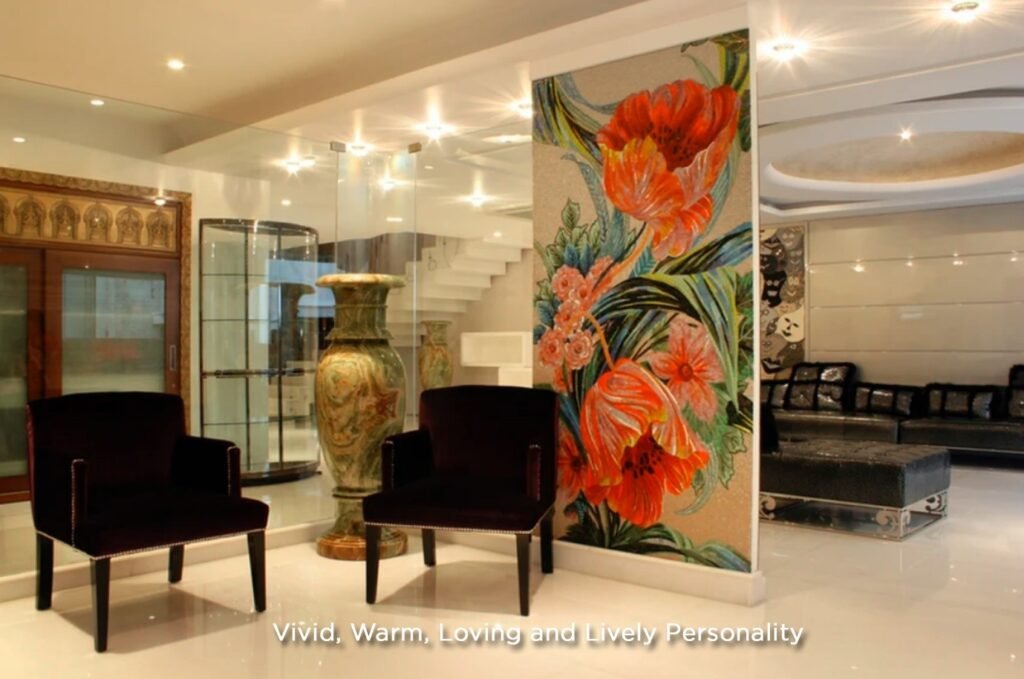
There was a time when “eco-friendly” in design circles meant beige jute mats, chunky bamboo furniture, and a lot of earnest but clunky experiments. Today, sustainability is no longer a rustic afterthought it is luxury, it is modern, it is chic. Eco-conscious materials are not only keeping pace with design trends but leading them, bringing …
Table of Contents
- Why Eco-Chic, Not Just Eco?
- Timber Reimagined: Bamboo and Beyond
- Stone 2.0: Local and Lightweight
- Concrete with a Conscience
- Textiles That Tell a Story
- Metal with Patina and Purpose
- The New Age of Composites
- Paints and Finishes that Breathe
- India’s Adaptive Aesthetic
- Five Indian Projects That Champion Eco-Chic Materials
- Conclusion: Curating with Conscience
There was a time when “eco-friendly” in design circles meant beige jute mats, chunky bamboo furniture, and a lot of earnest but clunky experiments. Today, sustainability is no longer a rustic afterthought it is luxury, it is modern, it is chic. Eco-conscious materials are not only keeping pace with design trends but leading them, bringing tactility, elegance, and conscience into the spaces we create.
As architects and interior designers, we live by our palettes. Mood boards are our first conversations with a project the place where ideas take texture, tone, and soul. And right now, the smartest boards are those that balance aesthetics with environmental responsibility. Here is a journey through the eco-chic materials redefining contemporary design, with examples from India and around the world.
Why Eco-Chic, Not Just Eco?
Because sustainability should never feel like compromise. Clients do not want a home that looks like an “eco-resort” unless that is their brief. They want interiors that are stylish, aspirational, and timeless. That is where eco-chic materials stand apart, they prove that responsibility and beauty are not opposites but allies.

Bharat Floorings & Tiles, Mumbai
Think terrazzo with recycled glass fragments glinting like jewels. Think handmade tiles from fly ash that look more bespoke than marble. Think bamboo engineered so finely it rivals hardwood floors. Chic design has always been about storytelling, and eco-conscious materials come with built-in narratives of care, craft, and innovation.
Timber Reimagined: Bamboo and Beyond
In India, bamboo has often been typecast as rural or temporary. But engineered bamboo products like laminated bamboo boards or woven bamboo panels have turned that stereotype on its head. They are strong, dimensionally stable, and elegant enough for high-end interiors.
A project in Kerala recently used cross-laminated bamboo flooring with such precision that visitors mistook it for European oak. But the difference? It regenerates in 3–5 years, versus oak’s 60. Chic points: 10.
Similarly, reclaimed timber is a material with soul. Imagine dining tables crafted from old railway sleepers or wall cladding from shipyard planks. Each knot and scar tells a story. In adaptive reuse projects across India, reclaimed Burma teak from demolished colonial homes is being lovingly polished and reborn into contemporary interiors.

Laminated bamboo tower- Ninghai bamboo tower
Stone 2.0: Local and Lightweight
Stone has always been the darling of Indian architecture granite counters, marble floors, sandstone courtyards. But eco-chic design is moving away from imported slabs toward locally quarried, responsibly sourced stone. Kota stone, once seen as budget flooring, is now being rediscovered as a minimalist, matte-finished, endlessly durable surface. Paired with brass inlays or terrazzo edges, it’s undeniably chic.
Even terrazzo itself has staged a comeback. Today’s terrazzo incorporates recycled aggregates everything from broken tiles to glass chips. In Mumbai, studios like Bharat Floorings have turned terrazzo into a collectible art form, embedding sustainability into stylish, custom patterns.

Bharat Floorings
For lighter alternatives, stone veneers thin slices of real stone backed with eco-resins allow designers to bring stone texture without the embodied carbon of thick slabs.
Concrete with a Conscience
Concrete may be the backbone of modern India, but it’s also one of the largest carbon culprits. Enter low-carbon concretes made with fly ash, slag, or recycled aggregates. Fly ash bricks and blocks, in particular, are not only sustainable but also chic when left exposed, bringing a warm, matte industrial aesthetic to interiors.
At the Indian School of Business, Mohali, exposed fly ash brickwork has become part of the design vocabulary, marrying raw honesty with eco-performance. Similarly, polished concrete floors with recycled content are giving high-end residences in Delhi and Bengaluru a contemporary, gallery-like feel.

Indian School of Business, Mohali, exposed fly ash brickwork
Textiles That Tell a Story
Soft furnishings are often the quickest way to greenwash a space but with the right materials, they can become genuine eco-chic statements. Handwoven khadi, organic cotton, hemp, and linen bring natural breathability and understated elegance.
India’s craft traditions give us a wealth of options. Upcycled sari fabrics are being reimagined into upholstery and wall panels, while ikat and block prints are finding their way into chic cushions and curtains. For luxury projects, silk blended with eco-friendly banana fiber or ahimsa silk (non-violent silk) creates textiles that are both ethical and indulgent.
Globally, recycled PET fabrics are making waves in high-performance interiors, turning discarded plastic bottles into plush upholstery that looks anything but recycled.
Metal with Patina and Purpose
Steel and aluminum are energy-intensive, but recycled metals are leading the way in eco-conscious interiors. Brass and copper, when salvaged and reused, gain a beautiful patina that makes new finishes look bland by comparison.
In Jaipur, several boutique hotels have used reclaimed brass fixtures and railings from old havelis, integrating them into contemporary bathrooms and lobbies. The result? A layered, lived-in aesthetic that feels both sustainable and luxurious.
Even industrial scraps like perforated steel sheets or corrugated aluminum are finding new lives as room dividers, ceiling panels, and lighting features. When finished with natural coatings, they add raw glamour to interiors.
The New Age of Composites
Eco-chic is not only about tradition it’s also about innovation. Designers are experimenting with bio-composites made from agricultural waste: coconut husk panels, rice-husk particle boards, sugarcane bagasse laminates. These materials are light, renewable, and surprisingly beautiful when finished properly.
In Ahmedabad, an experimental co-working space used bagasse boards for wall cladding, paired with natural lime plaster. The walls look contemporary, yet the material has roots in the sugarcane fields just a few kilometers away. That is local, circular design at its finest.
Paints and Finishes that Breathe
What good is a natural material if it is coated in toxic finishes? Eco-chic design prioritizes low-VOC or lime-based paints, natural oils, and breathable finishes. Lime plaster, in particular, has made a glamorous comeback. Its soft, cloud-like texture, subtle color variations, and inherent antibacterial properties make it perfect for both minimal and maximal interiors.
Brands across India are offering limewash paints in contemporary palettes, from muted greys to bold jewel tones. These are not just healthy; they are visually stunning.
India’s Adaptive Aesthetic
What makes eco-chic materials especially powerful in India is the cultural resonance. Many of these materials are not new to us they are traditional. Lime plaster, bamboo, clay tiles, and Kota stone have been around for centuries. The “chic” part comes from recontextualizing them placing them on sleek mood boards, pairing them with modern detailing, and showing clients that sustainability is not nostalgia, it is innovation.
The real trick lies in curation. Eco-chic is not about filling a room with “green” materials but about layering them thoughtfully. A reclaimed teak dining table against lime-plastered walls. A terrazzo floor inset with brass near bamboo screens. Linen curtains catching sunlight filtered through stone Jaali panels. These compositions do not shout “sustainable” they whisper it with confidence.
Five Indian Projects That Champion Eco-Chic Materials
- Ammanai House, Chennai (by ArchitectureRED)

Housing DupleXS, Chennai by Biju Kuriakose and Kishore Pannikar, ArchitectureRED
Featuring exposed fly ash brick, local granite, and handwoven textiles, this residence balances rawness with elegance.
- Bharat Floorings Showroom, Mumbai
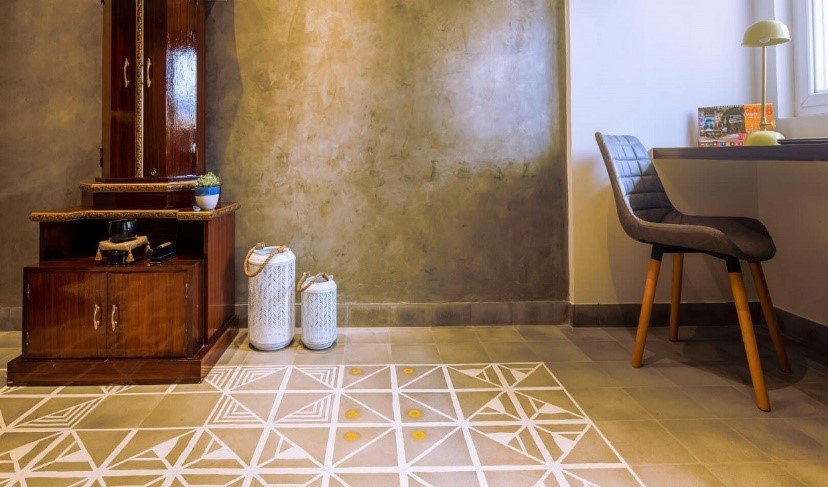
A temple to terrazzo, showcasing recycled aggregate flooring that looks like jewelry underfoot.
- IIM Bangalore (B.V. Doshi)

Though built decades ago, its use of locally quarried stone, brick, and natural finishes shows how timeless eco-materiality can be.
- CGH Earth Hotels, Kerala

These boutique hotels have championed local laterite stone, reclaimed timber, and coir-based furnishings, blending luxury with sustainability.
- Nivim Goa (by Dean D’Cruz)

A home designed with laterite stone, recycled timber, and passive cooling strategies—an example of chic sustainability in a tropical context.
Conclusion: Curating with Conscience
Every mood board tells a story. As designers, we can choose whether that story is one of extraction or of renewal. Eco-chic materials let us tell stories of continuity, craft, and care without compromising on beauty. They remind us that luxury does not lie in imported marble or synthetic laminates but in the thoughtfulness of materials chosen, the textures that age gracefully, and the integrity of design.
So, the next time you pin samples to your board, ask yourself: does this material just look good, or does it also do good? If it is both, then you’re not just on trend you are ahead of it.