Town planning in Vastu Shastra is not merely a technical exercise of arranging streets and buildings; it is a profound synthesis of cosmology, nature, society, and human well-being. The ancient Indian approach to settlement planning views towns and cities as living organisms microcosms of the universe where every spatial decision influences physical comfort, social harmony, …
Table of Contents
- 1. Vastu Shastra as the Basis of Urban Order
- 2. Regional Planning: The Macro Framework
- 3. Site Selection: Choosing the Right Land
- 4. Orientation and the Role of Directions
- 5. The Vastu Purusha Mandala and Settlement Geometry
- 6. Natural Elements as Planning Determinants
- 7. Human Scale and Social Structure
- 8. Spiritual and Civic Integration
- 9. Timeless Relevance of Vastu Town Planning
- Conclusion
Town planning in Vastu Shastra is not merely a technical exercise of arranging streets and buildings; it is a profound synthesis of cosmology, nature, society, and human well-being. The ancient Indian approach to settlement planning views towns and cities as living organisms microcosms of the universe where every spatial decision influences physical comfort, social harmony, and spiritual balance. The attached text on Town Planning lays out these principles systematically, combining philosophical foundations with highly practical guidance on site selection, regional planning, and orientation.
1. Vastu Shastra as the Basis of Urban Order
Vastu Shastra derives its authority from the understanding that the universe is governed by rhythm, balance, and directional energies. Towns planned according to Vastu are designed to align human life with these universal forces rather than oppose them.
In traditional planning thought, land is not neutral. Every site possesses inherent qualities influenced by:
- Directional forces
- Solar movement
- Wind patterns
- Water flow
- Soil composition
The town planner’s role is to read the land, not dominate it. The text emphasizes that ancient planners prioritized harmony with natural conditions long before modern sustainability became a discipline.
2. Regional Planning: The Macro Framework
The document begins by situating town planning within a regional context, recognizing that no settlement exists in isolation. Regional planning considers:
- Climate
- Topography
- Availability of water
- Vegetation
- Trade routes
- Defense and connectivity
This early recognition of regional interdependence is remarkably advanced. Settlements were located where natural resources could support long-term habitation without ecological degradation. Hills, forests, rivers, and fertile plains were integrated into the planning logic, not treated as obstacles.
The text makes it clear that regional balance precedes local design. Only when the broader landscape is understood can towns be correctly positioned within it.
3. Site Selection: Choosing the Right Land
One of the most critical aspects of Vastu-based town planning is site selection. The document outlines clear criteria for identifying auspicious and functional land.
Key factors considered include:
- Soil quality: Fertile, well-drained soil is preferred
- Slope: Gentle slopes, ideally descending toward the north or east
- Water proximity: Natural water sources without flood risk
- Vegetation: Healthy plant life as a sign of vitality
- Shape and stability: Regular, well-defined landforms
Unsuitable sites such as marshy land, land with excessive rocky outcrops, or areas prone to stagnation were traditionally rejected regardless of convenience.
This demonstrates that ancient town planning was preventive rather than corrective, reducing long-term risk through informed initial decisions.
4. Orientation and the Role of Directions
Orientation is central to Vastu Shastra. The town itself is aligned with the cardinal directions, ensuring equitable distribution of sunlight, airflow, and energy.
The document illustrates how:
- East is associated with sunrise, vitality, and beginnings
- North relates to prosperity and growth
- South governs stability and restraint
- West reflects completion and endurance
Towns were oriented so that major streets, zones, and public spaces responded to these directional qualities. This was not symbolic alone it directly affected:
- Thermal comfort
- Daylight penetration
- Ventilation patterns
- Social activity cycles
By aligning with the sun’s path and prevailing winds, towns naturally achieved environmental efficiency without mechanical intervention.
5. The Vastu Purusha Mandala and Settlement Geometry
At the philosophical core of Vastu town planning lies the Vastu Purusha Mandala a geometric representation of cosmic order imposed upon land.
While often discussed in the context of individual buildings, the text makes clear that the mandala also governs:
- Town layouts
- Street grids
- Zoning distribution
- Placement of key institutions
The land is metaphorically occupied by the Vastu Purusha, whose body aligns with the site. Sensitive areas of the mandala are protected, while active zones accommodate movement and development. This concept ensured that settlements maintained energetic balance even as they grew.
Importantly, geometry was never rigid. The mandala acted as a guiding framework, adaptable to terrain and context.
6. Natural Elements as Planning Determinants
The classical approach integrates the five elements (Pancha Mahabhutas) into urban structure:
- Earth (Prithvi): Stability of land and built form
- Water (Jala): Placement of rivers, tanks, drainage
- Fire (Agni): Solar orientation, activity zones
- Air (Vayu): Street alignment, ventilation corridors
- Space (Akasha): Open areas, central spaces
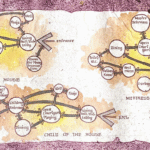
The document’s diagrams and notes show how water bodies were ideally located to support drainage and microclimate regulation, while open spaces were essential for light, air, and social gathering.
Rather than zoning by function alone, ancient planners zoned by elemental suitability, producing resilient and comfortable towns.
7. Human Scale and Social Structure
Town planning in Vastu Shastra is deeply human-centric. The document emphasizes that settlements were designed to support:
- Social cohesion
- Occupational organization
- Walkability
- Visual harmony
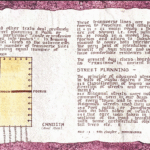
Streets, blocks, and open spaces were proportioned to human movement and perception. This is evident in the careful consideration of widths, lengths, and junction spacing discussed later in the text.
Neighborhoods were structured to encourage interaction while preserving privacy an early balance of community and individuality.
8. Spiritual and Civic Integration
Unlike modern zoning, which often isolates religious, administrative, and residential functions, Vastu-based towns integrated them into a coherent whole.
Sacred spaces were strategically placed to:
- Anchor the settlement energetically
- Act as social and cultural centers
- Reinforce moral and civic order
This integration ensured that spiritual life was not segregated from daily life, but woven into the urban fabric.
9. Timeless Relevance of Vastu Town Planning
What emerges clearly from the document is that Vastu Shastra is not archaic or symbolic it is systematic, ecological, and pragmatic.
Its principles anticipate:
- Sustainable land use
- Climate-responsive design
- Preventive urban planning
- Human-centered development
In an era of congested cities and ecological stress, these foundational ideas offer a corrective lens for contemporary planners and architects.
Conclusion
The foundations of town planning in Vastu Shastra reveal an extraordinary synthesis of science, philosophy, and environmental wisdom. By grounding settlements in cosmic order, respecting natural forces, and prioritizing human well-being, ancient planners created towns that were resilient, harmonious, and enduring.
The Town Planning document demonstrates that good urban design begins long before construction with understanding land, direction, and life itself. These principles remain as relevant today as they were centuries ago, offering timeless guidance for sustainable and meaningful human settlements.