Town planning in Vastu Shastra reaches its highest level of sophistication in the concept of zoning the orderly distribution of residential, occupational, civic, and cultural spaces. Unlike modern zoning systems that often separate functions rigidly, Vastu-based zoning seeks harmonious coexistence, where every activity is placed according to its natural, social, and energetic suitability. The Town …
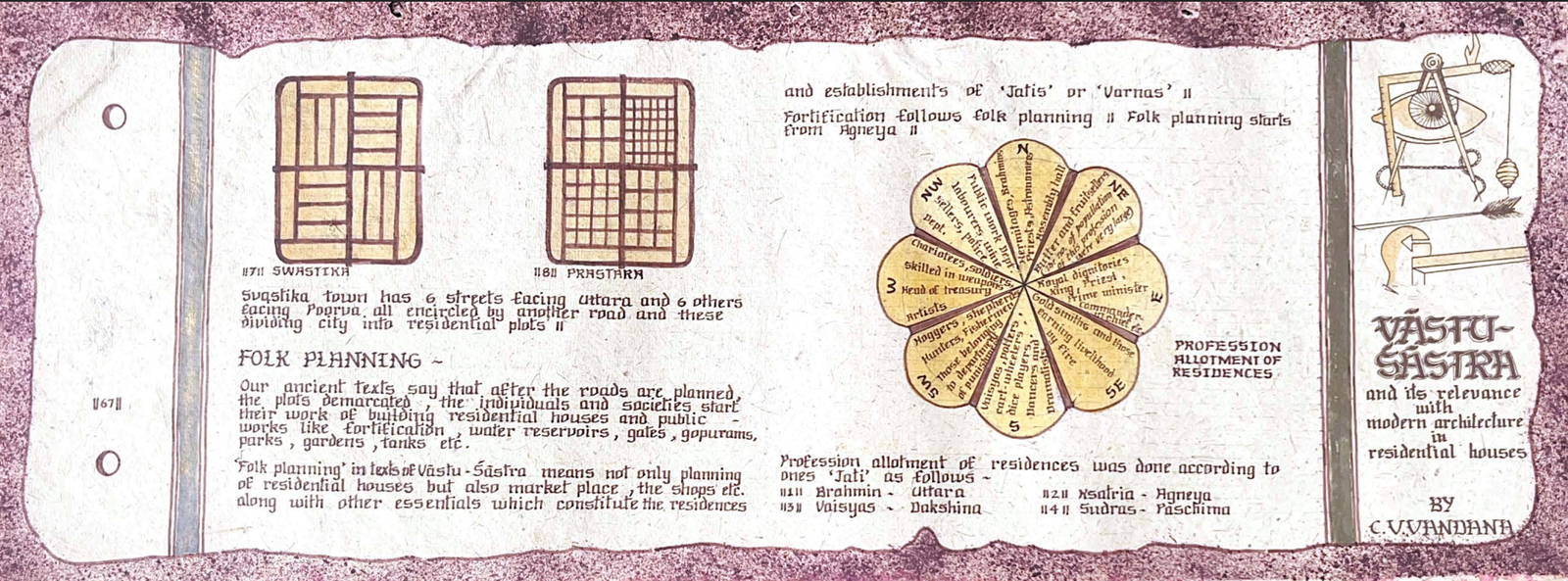
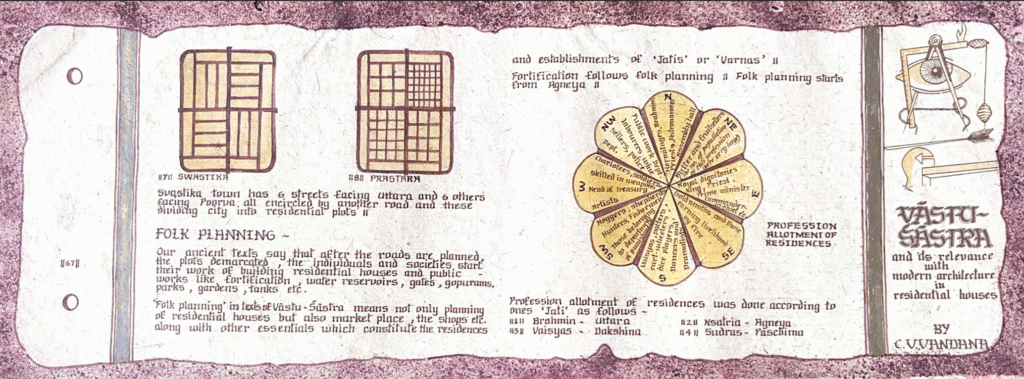
Table of Contents
- 1. Purpose of Zoning in Vastu Shastra
- 2. Classification of Towns
- 3. Functional Zoning: An Integrated System
- 4. Residential Zoning: The Heart of the Town
- 5. Profession-Based Residential Planning
- 6. Occupational and Professional Zones
- 7. Market Streets and Commercial Areas
- 8. Civic and Administrative Zones
- 9. Religious and Cultural Spaces
- 10. Open Spaces as Zoning Elements
- 11. Plot Orientation and Neighborhood Structure
- 12. Social Harmony Through Spatial Order
- 13. Adaptability and Context Sensitivity
- 14. Relevance to Contemporary Urban Planning
- Conclusion
Town planning in Vastu Shastra reaches its highest level of sophistication in the concept of zoning the orderly distribution of residential, occupational, civic, and cultural spaces. Unlike modern zoning systems that often separate functions rigidly, Vastu-based zoning seeks harmonious coexistence, where every activity is placed according to its natural, social, and energetic suitability.
The Town Planning document presents zoning not as an administrative tool, but as a social and cosmic framework, ensuring that daily life unfolds in balance with nature, community structure, and human psychology.
1. Purpose of Zoning in Vastu Shastra
The fundamental objective of zoning in Vastu town planning is to:
- Prevent functional conflicts
- Support social harmony
- Enhance environmental comfort
- Align human activities with directional energies
Each zone within a town is carefully positioned so that its function reinforces, rather than disrupts, the overall settlement. Noise-generating, movement-heavy, or commercial activities are separated from calm residential areas, yet remain accessible.
This approach reveals an early understanding of urban livability, long before the term existed.
2. Classification of Towns
The document classifies towns based on form, function, and scale, illustrated through distinct geometric patterns.
Common classifications include:
- Rectangular towns
- Square towns
- Circular towns
- Radial or lotus-shaped towns
- Organic and irregular towns (adapted to terrain)
Each form is selected based on:
- Topography
- Defense requirements
- Population size
- Economic function
Regular forms were preferred on flat land, while irregular or organic layouts were adopted in hilly or constrained regions. This flexibility ensured functional efficiency without compromising Vastu principles.
3. Functional Zoning: An Integrated System
Vastu-based towns are divided into functional zones, each supporting a specific aspect of urban life.
Major zones typically include:
- Residential areas
- Occupational and professional zones
- Commercial and market streets
- Administrative and civic areas
- Religious and cultural spaces
- Open spaces and water bodies
Unlike contemporary single-use zoning, these zones are interconnected, allowing smooth transitions between living, working, and social life.
4. Residential Zoning: The Heart of the Town
Residential areas form the core of Vastu town planning. The document emphasizes that housing should be located in zones that promote:
- Peace
- Health
- Social stability
- Privacy
Residential neighborhoods are typically placed away from heavy traffic routes and noisy activities. Streets are narrower, movement is slower, and spatial proportions are human-scaled.
The orientation of residential plots follows strict directional logic to ensure access to daylight, ventilation, and positive energy flow.
5. Profession-Based Residential Planning
One of the most distinctive aspects of Vastu zoning is profession-based residential distribution. The document explains that in traditional towns:
- Occupations influenced residential location
- Similar professions were grouped together
- Each profession was assigned a direction best suited to its nature
For example:
- Trade-related activities were placed near main streets
- Artisans and craftsmen occupied transitional zones
- Scholars and priests resided in calmer, inward areas
- Service and labor-oriented professions were positioned for accessibility without intrusion
This arrangement supported economic efficiency while reinforcing social order and mutual dependence.
6. Occupational and Professional Zones
Occupational zones were designed to support productivity without disturbing residential calm. Workshops, markets, and professional spaces were:
- Strategically located along major streets
- Buffered from homes by transitional spaces
- Oriented for ventilation and daylight
The document shows that occupational zoning was not exclusionary but context-sensitive, ensuring dignity and functionality for all professions.
7. Market Streets and Commercial Areas
Markets were among the most active zones in Vastu towns. They were typically located:
- Along main roads
- Near major intersections
- Close to civic or religious centers
This ensured maximum accessibility and footfall. Market streets were wider than residential lanes and designed to accommodate movement, exchange, and social interaction.
Importantly, commercial areas were not allowed to overwhelm the town. Their scale and placement were carefully controlled to maintain balance.
8. Civic and Administrative Zones
Administrative buildings and public institutions occupied prominent but stable positions within the town. Their placement symbolized:
- Authority
- Order
- Governance
These zones were easily accessible yet distinct from commercial chaos and residential quiet. This spatial hierarchy reinforced respect for civic systems and social structure.
9. Religious and Cultural Spaces
Religious structures were central to Vastu town planning not merely spiritually, but spatially.
The document indicates that sacred spaces:
- Anchored the town energetically
- Acted as cultural gathering points
- Structured surrounding neighborhoods
Their placement was determined by both directional principles and social accessibility. Rather than being isolated monuments, temples and cultural spaces were integrated into daily life.
10. Open Spaces as Zoning Elements
Open spaces were not residual leftovers; they were deliberate zoning components.
These included:
- Courtyards
- Community grounds
- Water tanks
- Green buffers
Open spaces served multiple purposes:
- Environmental regulation
- Social interaction
- Visual relief
- Emergency gathering
Their distribution ensured that dense residential or commercial zones never became oppressive.
11. Plot Orientation and Neighborhood Structure
At the micro level, zoning extends to plot orientation and neighborhood layout. The document illustrates how:
- Plot access aligns with street hierarchy
- Houses relate harmoniously to streets and open spaces
- Neighborhood clusters form cohesive social units
This hierarchical structure from town to neighborhood to plot creates clarity, identity, and legibility within the settlement.
12. Social Harmony Through Spatial Order
A key insight of Vastu zoning is its role in maintaining social harmony. By assigning appropriate locations to different activities and professions, conflict was minimized and cooperation encouraged.
The town functioned as a balanced ecosystem, where every role had a place and purpose. Spatial order reinforced social ethics without coercion.
13. Adaptability and Context Sensitivity
While the document provides clear zoning guidelines, it also emphasizes adaptability. Planners were expected to respond to:
- Local customs
- Population size
- Economic conditions
- Environmental constraints
This ensured that Vastu principles were applied intelligently, not dogmatically.
14. Relevance to Contemporary Urban Planning
Modern cities struggle with:
- Zoning conflicts
- Social fragmentation
- Monofunctional districts
The Vastu-based zoning model offers valuable lessons:
- Mixed-use with order
- Human-scale neighborhoods
- Profession-sensitive planning
- Integrated civic and cultural spaces
These principles align closely with contemporary ideas of sustainable and inclusive urbanism.
Conclusion
Zoning in Vastu Shastra represents a deeply thoughtful approach to organizing human life within a town. By aligning residential, occupational, and civic functions with natural forces and social structure, ancient planners created settlements that were efficient, peaceful, and resilient.
The Town Planning document shows that zoning was never about separation alone it was about relationship, balance, and harmony. In revisiting these principles today, planners and architects can rediscover a framework that places human well-being at the center of urban design.