Walk into a cathedral and you might instinctively whisper. Enter a school hallway flooded with daylight and you may feel more alert. Step into a cramped, windowless office, and watch your energy drain. Architecture isn’t neutral. Every wall, window, and ceiling line participates in shaping how we feel, behave, and relate to one another. This …
Table of Contents
- The Science Behind the Emotional Blueprint
- Case Study 1: Schools as Emotional Landscapes
- Case Study 2: Hospitals and Healing Environments
- Case Study 3: Workplaces and the Psychology of Productivity
- The Emotional Blueprint in Detail: Spatial Elements
- Cross-cultural nuances
- Emerging Frontiers: Neuroscience + Architecture
- Practical Takeaways for Architects and Designers
- Conclusion: Designing with Feeling
Walk into a cathedral and you might instinctively whisper. Enter a school hallway flooded with daylight and you may feel more alert. Step into a cramped, windowless office, and watch your energy drain. Architecture isn’t neutral. Every wall, window, and ceiling line participates in shaping how we feel, behave, and relate to one another.
This is the emotional blueprint of architecture the hidden psychology embedded in spatial design. Architects are not only shaping physical environments but also scripting patterns of behavior, setting moods, and influencing mental health.
This blog explores how architectural spaces affect psychology, supported by global case studies in schools, hospitals, and workplaces.
The Science Behind the Emotional Blueprint
Before we dive into projects, let’s lay the groundwork. How do spaces influence us?
- Light: Natural daylight regulates circadian rhythms, boosts mood, and improves concentration. Poor lighting contributes to fatigue and depression.
- Scale & proportion: Human-scaled spaces feel safe and welcoming; cavernous, overwhelming spaces can intimidate or awe.
- Color & materiality: Warm tones and natural textures often comfort; cold or sterile finishes may distance or agitate.
- Sound: Acoustics influence stress levels, concentration, and social interaction.
- Connection to nature: Views of greenery reduce cortisol levels and aid recovery in patients and students alike.
- Layout & flow: Open, legible circulation promotes ease and reduces anxiety; confusing layouts increase stress.
These principles translate into architecture that either supports or sabotages human flourishing.
Case Study 1: Schools as Emotional Landscapes
Ørestad Gymnasium (Copenhagen, Denmark)
This high school has no traditional classrooms. Instead, it’s open-plan design encourages group learning and interaction across subjects. The central atrium floods with daylight, and circular staircases spiral around open spaces, ensuring visibility and accessibility.
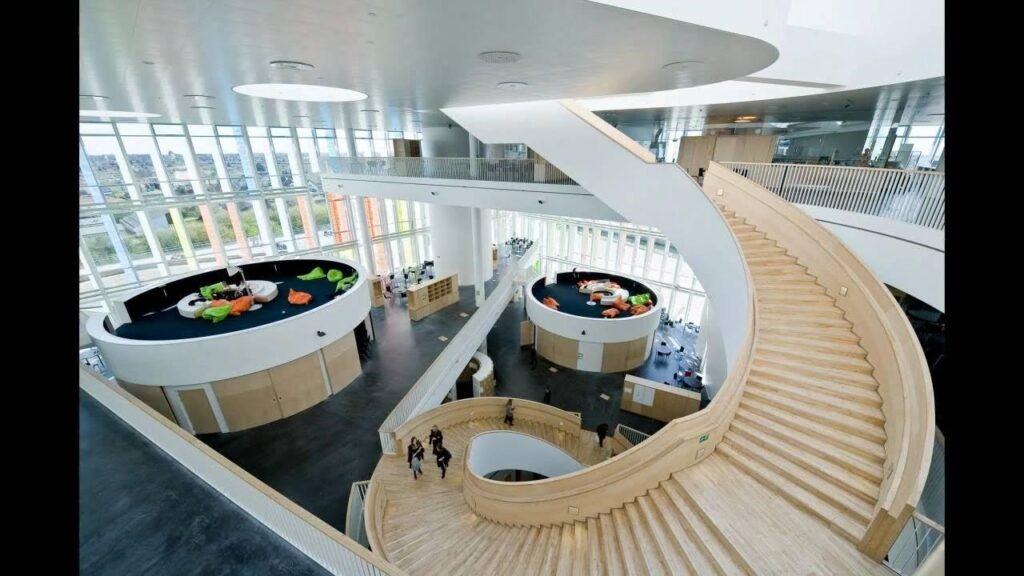
Psychological impact: The openness fosters collaboration, social learning, and reduces the rigid hierarchy of teacher-fronted classrooms. However, some critiques note that the openness can challenge students who need quieter, more structured spaces. The emotional blueprint here values transparency, interaction, and flexibility.
Fuji Kindergarten (Tokyo, Japan)
Designed by Tezuka Architects, this kindergarten is famous for its oval-shaped rooftop play area where children can run endlessly in circles. Classrooms open directly into outdoor areas, blurring boundaries between inside and outside.

Psychological impact: The looping rooftop creates freedom of movement and encourages independence, while the connection to outdoors supports natural exploration. Children are calmer, more active, and more socially connected the building itself scaffolds playful learning.
Vittra Telefonplan School (Stockholm, Sweden)
This school eschews traditional desks and instead provides flexible learning environments: caves, group zones, amphitheater-like steps, and soft lounge areas.

Psychological impact: Flexibility empowers students to choose learning environments that match their mood and tas from quiet focus to group projects. This supports autonomy and self-regulation, both key in child development.
Case Study 2: Hospitals and Healing Environments
Healthcare settings illustrate most vividly how architecture impacts wellbeing. A hospital can either amplify stress or ease suffering through design choices.
Maggie’s Centres (United Kingdom)
These cancer support centers are spread across the UK, each designed by notable architects like Norman Foster, Zaha Hadid, and Snohetta. Despite the famous names, none are flashy; instead, they prioritize human-scale, natural light, warm materials, and gardens.
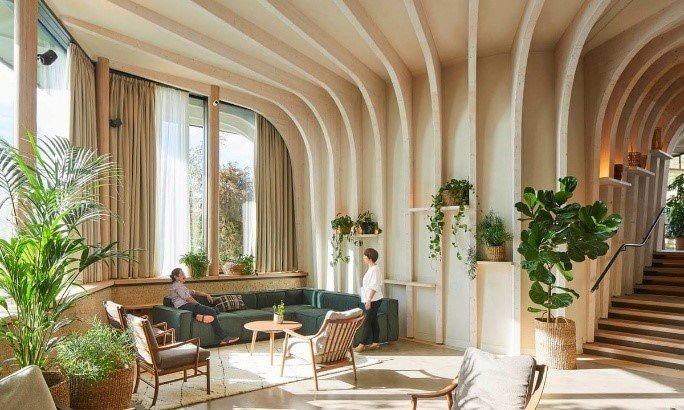
Psychological impact: By feeling more like a welcoming home than a sterile clinic, these spaces reduce stress, support social interaction, and restore dignity for patients undergoing treatment.
Khoo Teck Puat Hospital (Singapore)
This hospital integrates gardens, ponds, and green facades throughout its design. Patient rooms overlook greenery, and natural ventilation flows through open courtyards.
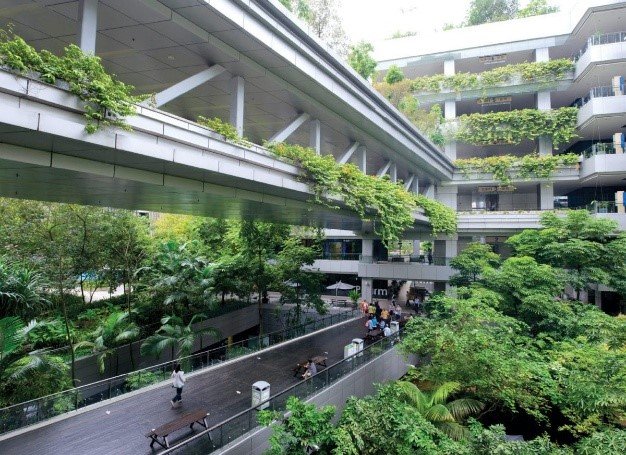
Psychological impact: Patients recover faster, staff experience reduced stress, and families feel calmer while visiting. The seamless integration of nature is more than decoration it becomes part of the therapeutic process.
Akershus University Hospital (Oslo, Norway)
This hospital emphasizes transparency, daylight, and art. Its design incorporates views of forests, wood finishes, and color-coded circulation that makes navigation intuitive.
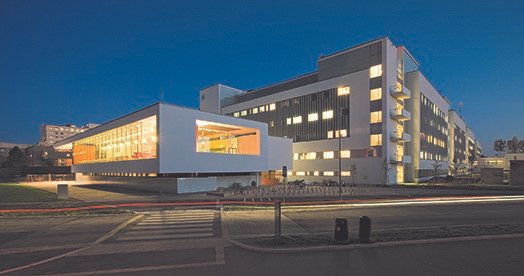
Psychological impact: By reducing the typical anxiety of hospital visits (confusing hallways, sterile interiors), the design helps patients feel more in control and less disoriented. Staff also benefit from more humane, daylight-filled workspaces.
Lucile Packard Children’s Hospital (Stanford, USA)
This pediatric hospital integrates murals, play spaces, gardens, and color-rich environments to support young patients.

Psychological impact: Children feel less fearful, parents feel reassured, and the environment encourages playful distraction, which reduces stress and aids recovery.
Case Study 3: Workplaces and the Psychology of Productivity
Workplaces have become laboratories of emotional architecture, especially with the rise of hybrid work.
Googleplex (Mountain View, USA)
Google’s headquarters pioneered playful, flexible, campus-like workplaces. Spaces include open lounges, themed meeting pods, and abundant natural light.

Psychological impact: The playful, non-traditional design stimulates creativity and reduces formality, encouraging spontaneous collaboration. Critics note that some employees may find the constant stimulation overwhelming, highlighting the need for balance.
The Edge (Amsterdam, Netherlands)
Dubbed the “smartest building in the world,” The Edge uses sensors and data to personalize lighting, temperature, and desk allocation for employees. Its atrium is filled with natural light and plants.
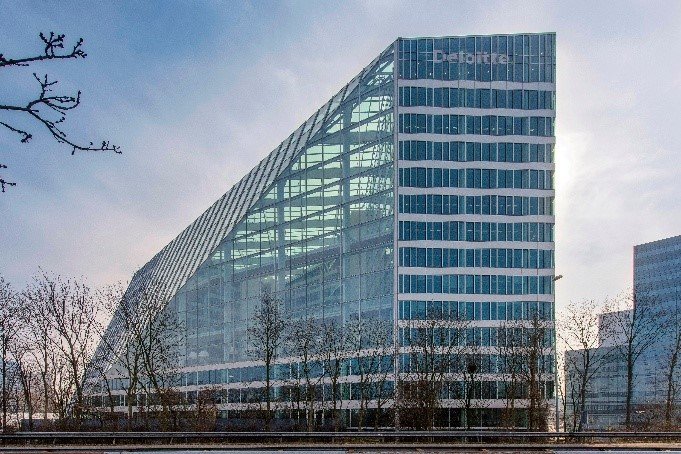
Psychological impact: Comfort, personalization, and sustainability combine to support wellbeing and productivity. Employees report higher satisfaction, and the building itself adapts to human needs in real time.
Bloomberg Headquarters (London, UK)
Designed by Foster + Partners, this workplace emphasizes natural ventilation, daylight, and collaborative layouts while achieving outstanding sustainability credentials. Its “pantry spaces” on every floor encourage informal interaction.
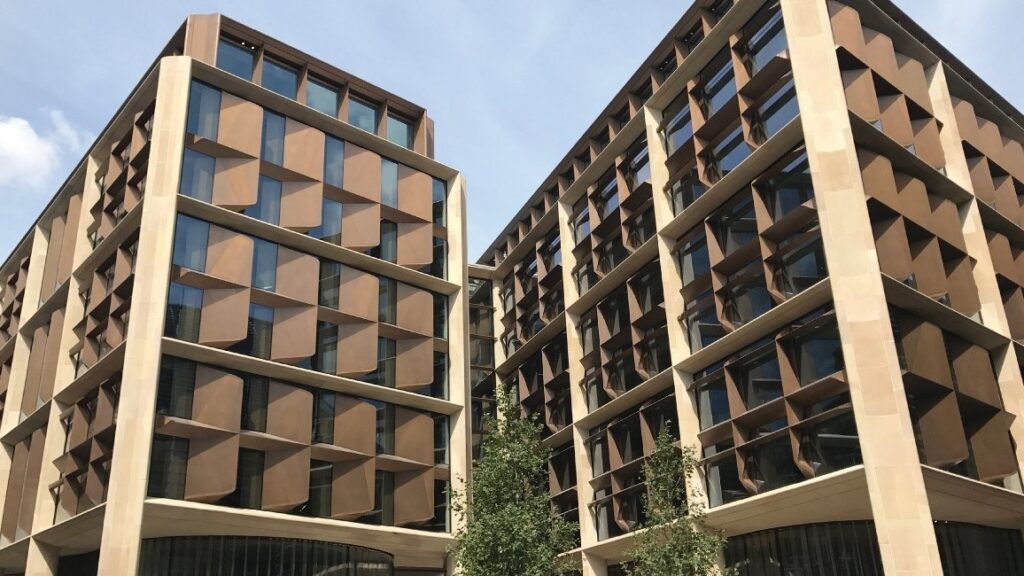
Psychological impact: By combining comfort, sustainability, and spontaneous meeting spots, the building fosters a sense of belonging and reduces hierarchical barriers.
Selgas Cano Office (Madrid, Spain)
This small architectural office is partly submerged in a forest clearing, with a long-windowed wall that opens directly to the woods.
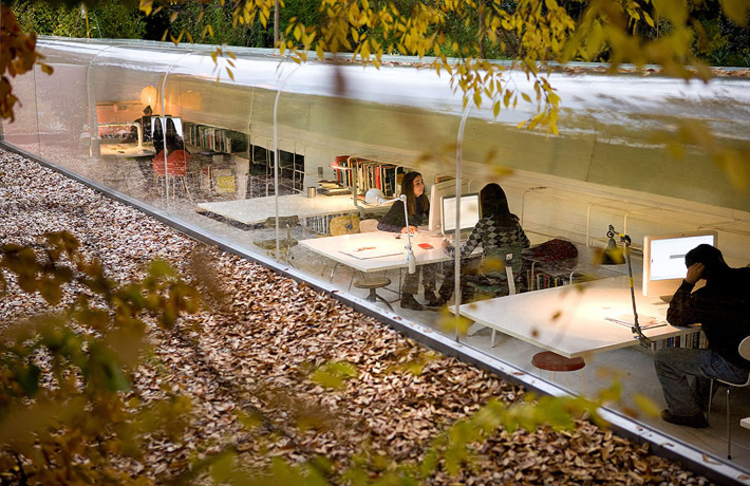
Psychological impact: Staff work literally at eye-level with nature, blurring the boundary between indoors and outdoors. The design supports focus, reduces stress, and provides constant natural inspiration.
The Emotional Blueprint in Detail: Spatial Elements
Let’s zoom into how design decisions map directly to psychology:
- Ceiling height: High ceilings evoke freedom and abstract thinking; low ceilings encourage focus and detail orientation.
- Daylight: Aligns circadian rhythms, improving mood and sleep quality.
- Color: Blues and greens calm, yellows energize, reds stimulate but context matters.
- Biophilia: Views of greenery reduce stress, improve attention spans, and speed recovery.
- Wayfinding: Clear circulation reduces cognitive load; confusing layouts elevate stress hormones.
- Acoustics: Softer soundscapes encourage calm; noisy environments elevate stress and reduce focus.
Cross-cultural nuances
Different cultures experience space differently. For example:
- In Japan, spatial minimalism and natural materials often evoke calm.
- In Mediterranean cultures, plazas and courtyards foster social life and collective energy.
- In Scandinavian contexts, natural light and warm wood are prized to offset long winters.
An effective emotional blueprint considers these cultural expectations while also accommodating diverse individual needs.
Emerging Frontiers: Neuroscience + Architecture
New technologies allow architects to measure how people actually respond to space. Wearable sensors track heart rate, brainwave patterns, and cortisol levels in different environments. Virtual reality lets users “test” designs before construction to gauge emotional responses.
This emerging field neuro-architecture is making the emotional blueprint measurable and evidence-based. It shifts design from intuition alone to data-informed empathy.
Practical Takeaways for Architects and Designers
- Design for emotion, not just function: Ask how a space should make people feel.
- Prioritize daylight and views: Nature is the cheapest antidepressant.
- Balance stimulation and calm: Variety matters; people need both collaboration hubs and quiet zones.
- Support autonomy: Spaces that offer choice empower people psychologically.
- Consider transitions: Corridors, thresholds, and entries shape emotional states as much as main spaces.
- Work with specialists: Collaborate with psychologists, neuroscientists, and ecologists for holistic outcomes.
Conclusion: Designing with Feeling
Buildings don’t just house activities; they script emotions. Schools that spark curiosity, hospitals that ease fear, and workplaces that inspire creativity all prove that architecture is as much about psychology as it is about structure.
The emotional blueprint is a reminder that every plan and section carries invisible weight shaping mood, behavior, and human flourishing. Architects are not just builders of walls and roofs; they are choreographers of feeling.
When we design with empathy, sensitivity, and awareness, we don’t just make spaces. We make lives a little lighter, calmer, more joyful. And that may be the most profound blueprint of all.