The evolution of organic parametric design within the global projects of Zaha Hadid Architects represents one of the most transformative movements in contemporary architecture, merging digital experimentation with an expressive vision of spatial fluidity. Long before parametric design became a mainstream methodology, Zaha Hadid and her studio were already exploring the conceptual foundations of non-linear …
The evolution of organic parametric design within the global projects of Zaha Hadid Architects represents one of the most transformative movements in contemporary architecture, merging digital experimentation with an expressive vision of spatial fluidity. Long before parametric design became a mainstream methodology, Zaha Hadid and her studio were already exploring the conceptual foundations of non-linear geometry, challenging what buildings could be and how they could reshape the relationship between form, structure, and user experience. This trajectory, evolving from early conceptual paintings to complex built environments, illustrates how parametric thinking has allowed the firm to generate architecture that behaves almost like living systems, adapting, folding, and flowing in ways that traditional design tools could never fully accommodate. The story of this evolution is not just about software or geometric experimentation; it is also about cultural shifts, interdisciplinary collaboration, and a relentless pursuit of architectural forms that reflect the dynamism of the modern world. By examining several key global projects, we begin to understand how Zaha Hadid Architects brought organic parametric design from speculative visions into tangible, inhabitable spaces that continually redefine the possibilities of architecture.
The origins of Zaha Hadid’s parametric exploration emerged long before computational design tools became widely available. Her early career was shaped by abstract paintings and drawings that depicted cities and buildings as continuous landscapes, fragmented planes, and flowing geometries. Works such as “The Peak” or the Suprematist-inspired compositions reveal a conceptual approach grounded in fluid transformation rather than static form. These early visions created a conceptual foundation that later aligned naturally with parametric strategies, which rely on dynamic relationships between geometry, data, and spatial logic. When digital tools matured, Hadid’s studio quickly integrated them not as technical novelties but as extensions of the non-linear spatial thinking she had always championed. Computational methods offered the freedom to explore curvature, variation, and complexity at a scale and precision that hand-drawing could only suggest, allowing her once-unbuildable visions to take architectural form.
One of the first major examples that demonstrated the studio’s transition from conceptual fluidity to constructible parametric design was the MAXXI Museum in Rome. Although not fully parametric in the contemporary sense, the project introduced complex geometries that required digital modeling and algorithmic logic to coordinate structural systems, circulation flows, and light penetrations. The building behaves like a field rather than a discrete object, with intertwined galleries that fold and twist around one another. This spatial continuity, generated through digitally controlled curvature, signaled a new era for the firm. MAXXI’s organic qualities come not from mimicking nature but from adopting natural principles of flow and movement, orchestrating spaces that guide visitors intuitively through the museum. The use of concrete, shaped through intricate formwork informed by digital models, reveals how parametric thinking bridged the gap between conceptual expression and construction pragmatics. MAXXI became one of the earliest examples demonstrating the studio’s ability to use digital parametric tools to create buildings that blur boundaries between wall, floor, and ceiling, producing an immersive architectural experience.
The Heydar Aliyev Center in Baku represents a milestone in the evolution of organic parametric design, embodying a monumental fluidity that redefined architectural identity in Azerbaijan. The building appears as a continuous, wave-like landscape rising from the ground, merging architecture, landscape, and urban presence into a single gesture. This fluid form was only possible through advanced parametric modeling, which coordinated thousands of unique panels and structural components. Every curve of the building responds to relationships defined within the parametric model: curvature gradients, structural tolerances, material constraints, and lighting conditions informed the final geometry. The organic surface behaves like a living skin, stretching and folding to shape both exterior and interior spaces. The smooth transitions between spaces contribute to the building’s iconic identity, and behind this seamlessness lies a highly complex digital workflow involving scripting, panelization algorithms, and performance-based adjustments. The Heydar Aliyev Center demonstrated to the world that parametric design could produce not only futuristic forms but also meaningful cultural architecture, symbolically expressing openness and transformation.
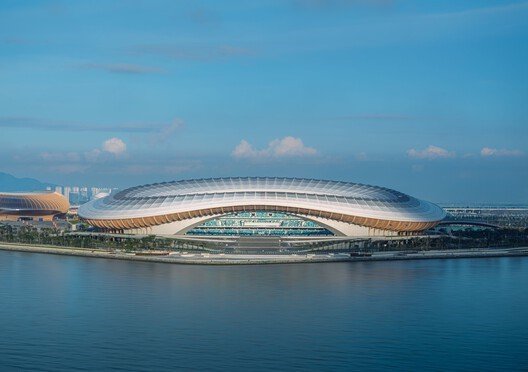
Another pivotal project in the organic parametric evolution of Zaha Hadid Architects is the Guangzhou Opera House in China. Inspired by geological formations such as river-worn stones, the building embraces a concept of erosion and flow, creating two pebble-like volumes shaped through complex parametric surfaces. The geometry of the building required advanced curvature analysis, digital fabrication techniques, and computational structural optimization. Each facade panel, whether glass, steel, or concrete, had to be individually calibrated to fit the double-curved surfaces that form the opera house’s identity. Internally, the main auditorium continues this theme with a fluid wooden envelope shaped through parametric techniques that allowed precise control of acoustic performance and spatial continuity. The building exemplifies how organic parametric design can unify technical rigor with artistic expression, creating a performance space that feels both sculpted by nature and engineered by computation. The Guangzhou Opera House expanded the global understanding of how parametric design could shape not only iconic exteriors but also highly functional environments tailored to acoustic, visual, and experiential performance.
On a different scale, the London Aquatics Centre for the 2012 Olympic Games illustrates how organic parametric design can respond gracefully to functional demands and large crowds. The wave-like roof of the Aquatics Centre is one of the most recognizable examples of ZHA’s parametric thinking. Its sweeping form was developed through a series of parametric studies that analyzed roof curvature, structural efficiency, sightlines, and environmental performance. The roof operates as a single fluid gesture, rising and dipping in response to spatial requirements below. Parametric modeling allowed the design team to test variations quickly, adjusting the curvature until achieving a balance between aesthetics and engineering. The resulting structure feels lightweight despite its vast span, and its organic form connects the building to water as an element. The Aquatics Centre underscores the firm’s ability to merge symbolism with parametric precision, turning performance requirements into opportunities for elegant architectural expression.
Beyond individual buildings, Zaha Hadid Architects use parametric design as a method for orchestrating complexity across urban contexts. The Galaxy SOHO development in Beijing is a powerful demonstration of this approach, consisting of interconnected fluid volumes that form a continuous, organic urban landscape. The project replaces traditional block-based urbanism with a parametric system of smooth transitions, courtyards, bridges, and flowing public pathways. The buildings are shaped through relationships between circulation patterns, skyline considerations, and structural optimization. Parametric modeling allowed the design team to create a composition of four domed volumes that feel interconnected and harmonious rather than repetitive. The smoothness of the form expresses digital continuity, while the relationship between interior and exterior spaces redefines how commercial architecture can function within dense urban fabrics. Galaxy SOHO exemplifies the shift from singular architectural objects to parametric urban systems that behave like living organisms.
The development of organic parametric design at Zaha Hadid Architects has also been shaped by a philosophical shift driven by the work of Patrick Schumacher, who championed “Parametricism” as a new architectural style. While Zaha Hadid’s intuitive approach to fluidity laid the conceptual groundwork, Schumacher provided theoretical frameworks that embraced differentiation, adaptation, and continuous variation as essential attributes of contemporary architecture. According to this perspective, buildings and cities should operate like ecosystems, adapting to flows of movement, function, and environmental forces. This philosophy influenced the firm’s design process, encouraging deeper integration of computational tools capable of analyzing data and generating performative geometries. Parametricism elevated the use of algorithmic processes not merely as aesthetic drivers but as means of organizing complex social, spatial, and structural systems. Through this theoretical lens, the organic forms seen in ZHA’s global projects are not decorative but emergent from the dynamic relationships embedded within the computational models that generate them.
The cultural impact of organic parametric design became especially visible in projects like the Sheikh Zayed Bridge in Abu Dhabi, where fluid structural lines create a rhythmic interplay of movement and form. The bridge is shaped by sinuous curves that evoke desert dunes and flowing water, demonstrating how parametric geometry can translate cultural narratives into built form. Each curving beam and arch required meticulous digital coordination, as slight variations in curvature affected structural loads and fabrication processes. The bridge shows how parametric design extends beyond buildings into infrastructural and civic projects, offering expressive potential in contexts traditionally dominated by rigid engineering constraints. Through such projects, Zaha Hadid Architects demonstrated that parametric design can merge structural performance, cultural storytelling, and sculptural form within a single architectural expression.
The integration of parametric design also advanced the firm’s material experimentation. The use of lightweight concrete, fiber-reinforced composites, and advanced glazing systems became increasingly viable as digital workflows enabled precise fabrication and assembly. Parametric models allowed materials to be shaped into previously impossible geometries, while performance simulations optimized thermal conditions, lighting, and structural integrity. This synergy between materials and digital tools is evident in projects like the Dongdaemun Design Plaza in Seoul, where thousands of unique aluminum panels were fabricated using CNC technology controlled by parametric scripts. The building’s seamless metallic surface undulates like a living organism, creating an iconic urban landmark that embodies movement, flexibility, and innovation. Through this project, ZHA showed how parametric design supports mass customization, allowing each component to respond to geometric and environmental parameters while contributing to an integrated architectural whole.
As the firm continued exploring parametric design, sustainability increasingly became a driving force behind geometric decision-making. Organic forms often lend themselves to environmental performance, guiding wind flows, optimizing solar exposure, and improving structural efficiency. In projects such as the King Abdullah Petroleum Studies and Research Center in Riyadh, parametric modeling supported the design of a cellular, hexagonal system inspired by natural patterns. This system allows the structure to adapt to climatic conditions, providing shade, regulating temperature, and facilitating efficient energy use. Such projects illustrate how organic parametric design can merge aesthetic expression with environmental intelligence, creating architecture that is both visually compelling and ecologically responsive.
The evolution of organic parametric design within Zaha Hadid Architects’ global portfolio reflects not only technological advancement but also a cultural transformation in architectural practice. Early experiments rooted in conceptual abstraction evolved into highly sophisticated computational workflows that reshape how buildings are conceived, engineered, and constructed. The firm’s global projects demonstrate that parametric design is not merely a stylistic choice but a methodology capable of addressing complex architectural challenges through adaptability, integration, and innovation. Whether through iconic cultural buildings, infrastructural works, commercial complexes, or research institutions, ZHA has consistently shown that organic parametric design can create spaces that resonate emotionally, perform efficiently, and redefine the architectural landscape.
The legacy of Zaha Hadid herself continues to influence the studio’s direction. Her intuitive grasp of form, movement, and spatial complexity laid the foundation for a practice that embraces the full potential of digital design. Even after her passing, the firm maintains a commitment to pushing the boundaries of computational architecture, exploring emerging technologies such as robotic fabrication, AI-driven modeling, and real-time simulation. These technologies enhance the parametric approach, allowing future buildings to become even more adaptive, responsive, and integrated with their environments. The global impact of Zaha Hadid Architects’ work ensures that organic parametric design will remain a significant force in shaping the cities of tomorrow.
In examining the evolution of organic parametric design across the firm’s major global projects, it becomes clear that this approach has not only produced some of the most recognizable architectural icons of the twenty-first century but has also influenced how the world understands the relationship between design, technology, and cultural expression. The projects discussed demonstrate how parametric tools enable the creation of architectural forms that are fluid yet precise, expressive yet performative, and iconic yet deeply connected to their contexts. Through continuous experimentation and a commitment to computational innovation, Zaha Hadid Architects have established a design language that transcends geography, culture, and program, offering a new vision of architecture as a dynamic, evolving system. As future projects build upon this foundation, the organic parametric legacy of Zaha Hadid will continue to inspire architects, designers, and urban thinkers around the world.