High performance façades sit at the confluence of architecture, engineering and environmental science and operate as the primary interface through which buildings receive, modulate and exchange energy with their surroundings; they are not merely a skin but an active and passive system that mediates solar radiation, daylight, heat transfer, ventilation and acoustic exchange while shaping …

High performance façades sit at the confluence of architecture, engineering and environmental science and operate as the primary interface through which buildings receive, modulate and exchange energy with their surroundings; they are not merely a skin but an active and passive system that mediates solar radiation, daylight, heat transfer, ventilation and acoustic exchange while shaping occupant comfort and the building s operational energy profile. At the heart of high performance façade design lie passive strategies which rely on geometry, materiality and proven physical principles rather than mechanical energy to reduce heating and cooling loads, reduce peak demand and create a more stable and comfortable internal environment. These strategies include carefully considered shading devices that manage solar gain, double skin façades that provide thermal buffer zones and enable controllable ventilation, orientation responsive glazing that balances daylight with solar control, and natural ventilation techniques that harness wind and buoyancy effects to replace or reduce mechanical conditioning. When combined into an integrated design approach that responds to climate, program and urban context, these elements can convert façades into instruments of environmental control that materially reduce primary energy consumption and operating costs while improving indoor environmental quality. The first principle to address is solar control because solar radiation is the principal driver of cooling loads in warm climates and of glare management and daylighting opportunities in temperate and cold climates. Shading devices can be static or dynamic, and their design requires a careful analysis of sun paths, local latitude, surrounding buildings and internal programmatic needs. Fixed horizontal overhangs perform well for south facing façades in moderate climates where the summer sun is high and winter sun low because they block high angle summer sun while admitting low angle winter sun. Vertical fins and narrower louvers are effective on east and west façades where the sun s angle is lower and changes rapidly during mornings and afternoons. Where architectural expression calls for complexity, perforated screens or semi transparent membranes provide a graduated control over light and can reduce direct glare while admitting diffuse daylight. Dynamic shading devices extend the passive concept by adding the capacity to change in response to time of day, season or measured environmental conditions. Operable louvres, automated screens and material systems that change optical properties provide the capacity to optimize daylight penetration while minimizing unwanted gains. The primary advantages of dynamic shading are the ability to reconcile conflicting objectives such as maximizing daylight autonomy and minimizing cooling loads, and the potential to reduce reliance on electrically powered lighting during occupied hours. When paired with intelligent control systems that respond to occupancy and daylight sensors, dynamic shading becomes part of a building wide strategy to harmonize comfort and energy performance. A related but distinct approach is the use of high performance glazing that is tuned to orientation and solar exposure. Orientation responsive glazing is not merely about low emissivity coatings but about selecting glazing assemblies that provide appropriate levels of visible light transmittance, solar heat gain coefficient and thermal transmittance for each façade face. Spectrally selective coatings allow visible light to transmit while blocking portions of the near infrared spectrum that carry heat. This permits high levels of daylight without commensurate solar heat gain. Electrochromic glazing provides variable tinting controlled by occupants or automated systems so that daylight and view can be preserved while reducing glare and cooling loads on demand. Fritted or patterned glass accomplishes similar goals through controlled translucency and can be tuned for privacy and bird safety while modulating daylight. The choice of glazing must always be integrated with shading strategies because no single glazing solution solves both glare and thermal gain under all conditions. Double skin façades present another robust approach to façade mediated performance. In its simplest form a double skin façade consists of two layers of glazing separated by an air cavity that can be ventilated either naturally or mechanically. The cavity acts as a buffer that reduces heat transfer, moderates internal temperatures and provides a location for shading devices where those devices are protected from the weather and can operate with greater longevity. Natural ventilation within the cavity can be driven by stack effect when vertical openings at the base and the top of the cavity allow warm air to exhaust and draw cooler air through lower vents. Mechanically assisted cavities can use controlled fans to draw air through the cavity when natural forces are insufficient. Double skin façades are particularly effective in climates with significant diurnal temperature swings because the cavity can isolate the internal environment from daytime heat while releasing stored heat at night. In temperate climates double skin façades allow large glazed areas and excellent daylighting while mitigating thermal losses in winter and reducing solar gains in summer when combined with appropriate cavity ventilation and shading. The design of the cavity is critical; too narrow a cavity will not provide the intended thermal buffering and will complicate maintenance; too wide a cavity increases cost and may reduce daylighting control if not carefully detailed. In all cases the integration of operable vents, maintenance access and condensation control is essential for long term durability. Natural ventilation strategies are central to passive façade performance and operate at multiple scales. At the façade scale simple operable windows and ventilated cavity systems allow occupants to interact with exterior conditions. Cross ventilation uses prevailing winds and operable openings aligned across the plan to provide effective cooling and air change. Stack or buoyancy driven ventilation uses vertical differences in temperature to create upward air movement through atria, shafts or façade openings. Designing façades to support these phenomena requires careful placement of inlet and outlet openings, consideration of local wind patterns and turbulence created by adjacent buildings, and integration with internal partitions to allow effective airflow paths. Night purge ventilation is another powerful tactic in climates with cool nights, where the façade and thermal mass are designed to allow cool night air to flush heat accumulated during the day. This approach reduces daytime conditioning by leveraging thermal mass and the façade s ability to exchange heat with the external environment. Importantly, natural ventilation must be designed with controls and fallback strategies because outdoor air quality, noise and security can impose limits on when and how openings can be used. A high performance façade therefore does not simply permit natural ventilation; it senses, filters and manages it. Climate responsive design is the overarching framework that determines which passive strategies are applicable and how they are prioritized. The same façade solution that is excellent for a hot arid climate will be deeply inappropriate for a cold humid climate. A climate responsive approach begins with a careful climate analysis that synthesizes temperature ranges, humidity patterns, solar geometry, predominant wind directions and the urban heat island profile. In hot humid climates shading and humidity management are paramount and strategies favor protected openings, stack ventilation enhanced by high ceilings and the use of materials that do not trap moisture. In hot dry climates evaporative cooling, night flushing and thermal mass to smooth diurnal swings are effective. In temperate climates optimizing daylight while allowing passive solar gain during winter is crucial. Orientation becomes a design lever because it determines the character of solar exposure. East and west orientations require fine grain control for low sun angles whereas south faces are amenable to horizontal shading devices that can be tuned seasonally. Façade optimization uses parametric modelling and performance simulation to translate these climate imperatives into quantified design decisions. Computational tools allow designers to test permutations of louvre size, placement, glazing specifications, cavity depth and material properties to find balanced solutions that minimize energy while meeting daylight and aesthetic targets. Daylight modelling evaluates daylight autonomy and useful daylight illuminance metrics to ensure that shading and glazing do not undermine the goal of reducing electric lighting loads. Thermal simulations probe annual heating and cooling demands and allow the evaluation of combined strategies such as the interaction between thermal mass and night purge ventilation. Computational fluid dynamics can refine the design of natural ventilation paths and cavity air movement. The integration of these tools early in design shifts the façade from an afterthought into a calibrated environmental system. Measurable energy performance outcomes are a necessary discipline because promises of high performance must be validated by metrics.
Key performance indicators include annual energy use intensity expressed in kilowatt hours per square meter per year, peak cooling and heating loads, daylight autonomy percentages which indicate the proportion of occupied hours where sufficient daylight is available, glare metrics that assess occupant visual comfort, and façade specific indicators such as U value which measures thermal transmittance and solar heat gain coefficients which quantify the fraction of incident solar radiation transmitted into the interior. Post occupancy evaluation and continuous monitoring provide the empirical data to compare predicted performance against reality and to tune control strategies over time. Sensor networks embedded in or adjacent to the façade can monitor surface and cavity temperatures, air flow rates within cavities, indoor temperature stratification and incident daylight. These data streams allow building operators to refine shading schedules and ventilation strategies and to schedule maintenance before performance degrades. Life cycle assessment is another dimension of measurable performance and should not be neglected. The operational benefits of a high performance façade must be weighed against embodied energy and carbon in materials, manufacturing and installation.
Materials with lower embodied carbon combined with durable detailing and ease of maintenance will typically deliver better whole life environmental performance. Designers increasingly complement operational modelling with embodied carbon analysis so that façade choices such as the extent of glazing, the use of recycled materials, and the selection of frame systems are informed by both upfront and operational consequences. Integration with mechanical systems is also essential because a façade that reduces peak loads can enable smaller HVAC equipment and therefore reduce capital costs and embedded emissions associated with mechanical plant. Similarly, when façades increase daylighting they reduce lighting loads and open opportunities for daylight responsive lighting controls and lower electrical infrastructure sizing. However, designers must avoid sub optimizing a single system; the highest gains occur when façades are conceived as part of a holistic building environmental system where envelope, systems and controls are co designed. Operational resilience and adaptability are practical considerations that influence façade design. Buildings experience change in use, in occupant density and in climate conditions over their useful life. Façades that allow incremental adjustments such as retrofit of shading elements, replacement of glazing with improved low carbon units, or the addition of external shading can extend building life and preserve performance in changing conditions. Maintenance accessibility influences long term effectiveness; shading devices that are difficult to clean or repair will deteriorate in performance and increase lifecycle costs. Consideration of durability of seals, desiccants in insulated glazing units and corrosion resistance of metal components is therefore not peripheral but central to achieving promised performance. From an aesthetic and cultural perspective façades communicate and mediate the building s relationship with the public realm. High performance does not prescribe a single aesthetic but invites architects to develop expressive strategies that are materially and functionally honest.
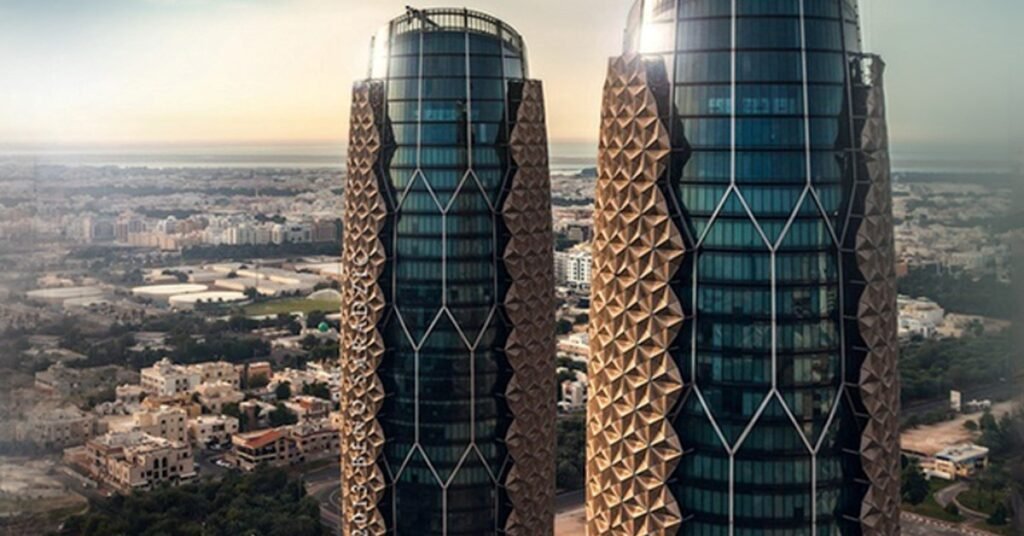
Perforated screens, layered glazing, vegetated façades and articulated shading elements can all satisfy rigorous environmental goals while producing distinctive urban character. The challenge for designers is to balance legibility with measurable efficacy and to document performance expectations so that expression does not outstrip operational reality. The practical deployment of high performance façades has matured and can be seen in exemplary buildings that demonstrate measurable benefits. One example is the office building known as KfW Westarkade in Frankfurt designed by the firm Sauerbruch Hutton. The project is frequently referenced as a seminal example of integrating a dynamic, technically sophisticated façade with natural ventilation and low energy operation. The building s façade strategy employs a ventilated envelope that effectively mediates heat and daylight, and the overall design prioritizes operability and occupant control so that natural ventilation can be used widely. The combination of façade buffering and strategic glazing enables generous daylighting while reducing cooling loads and the reliance on mechanical systems. The Westarkade s performance was validated through its unusually low operational energy consumption for an office tower of its size and through recognition by sustainability rating bodies. The building demonstrates how intentional façade geometry and intentional airflow pathways can deliver high levels of comfort with limited mechanical intervention and how careful detailing solves practical issues such as condensation and maintenance within a ventilated façade system. A second high profile example is the Al Bahar Towers in Abu Dhabi designed by Aedas with an innovative responsive shading system inspired by the traditional mashrabiya. The towers employ a dynamic umbrella of geometric shading units that open and close in response to solar exposure through an automated control system. The shading units are arranged as a screen over the glazing and are coordinated to articulate the evolving solar attack across the façade surface. This responsive approach reduces solar gain and glare and enables large glazed areas that provide occupants with daylight and views while significantly moderating cooling loads compared to a fully glazed façade without shading. The Al Bahar Towers illustrate how cultural precedent and contemporary technology can be combined to produce a façade that is both highly performative and regionally resonant. Together these case studies show that measurable outcomes such as reduced cooling energy, improved daylight autonomy and lower peak loads are achievable through façade strategies that are respectful of climate and context. Implementation of these strategies at scale requires a shift in project delivery processes. Façade design must be integrated earlier into the design timeline and be resourced with specialist consultants and performance modelling. Contractual frameworks must support iterative refinement and include performance based requirements where appropriate. Commissioning and post occupancy evaluation should be considered obligatory for high performance projects so that predicted gains are verified and control systems are tuned to real use patterns. There are also important economic arguments for high performance façades. Although initial costs can be higher than conventional envelope systems the operational savings over the life of the building and the potential for reduced mechanical system sizing often produce attractive life cycle cost outcomes. Additionally, non energy related benefits such as improved occupant productivity through better daylight and thermal comfort and the reputational value of demonstrably sustainable design contribute to the value proposition. From a regulatory perspective many jurisdictions are tightening envelope requirements and introducing performance targets which make investment in façade quality not only an environmental choice but an obligation for market competitiveness. Retrofit of existing façades poses a particular set of challenges and opportunities. The majority of the global building stock will still be standing for decades, so strategies for upgrading façades to improve thermal performance, add shading and enable natural ventilation are crucial for large scale energy reductions. Retrofit approaches range from installing external shading and secondary glazing to more ambitious interventions such as adding ventilated cavities or replacing existing cladding with insulated panels. Successful retrofits balance disruption, cost and expected energy savings and must account for the structural capacity of the host building and access for works. In many cases modest interventions such as adding external shading and upgrading glazing deliver disproportionately large benefits and should be prioritized where resources are constrained. The future of high performance façades points toward greater use of adaptive materials, integrated photovoltaics and smarter controls. Photovoltaic integrated façades enable façades to contribute actively to energy generation and reduce net operational energy demand. Increasingly affordable sensors, improved control algorithms and machine learning open the possibility of façades that learn occupant patterns and environmental idiosyncrasies and adapt in ways that continuously optimize performance. At the same time concerns about embodied carbon are driving interest in low carbon materials and in designing façades for disassembly so that components can be reused rather than discarded at end of life. The design profession will need to develop robust methods for integrating these considerations so that the pursuit of operational efficiency does not inadvertently increase lifecycle impacts. In practical terms design teams seeking to deploy high performance façades should adopt a structured process that begins with climate and context analysis, sets clear performance targets that are measurable, uses iterative simulation to explore massing and façade permutations, and defines controls and maintenance regimes before final detailing. Engagement with contractors and façade fabricators early in the process reduces risk and allows constructability and cost trade offs to be evaluated before details are frozen. Equally important is a commissioning plan that verifies that the façade, its shading and ventilation systems and any active glazing operate as intended and that a post occupancy monitoring plan is in place to gather data and inform continuous improvement. To conclude, façades that integrate passive design strategies are among the most potent tools architects and engineers have for reducing energy consumption and improving occupant comfort. By combining shading devices that are carefully sited and sized, double skin systems that provide thermal buffering and controlled ventilation, orientation responsive glazing that balances daylight with solar control, and natural ventilation strategies that exploit wind and buoyancy, designers can deliver buildings with significantly lower operational energy while enhancing the quality of internal environments. These outcomes are measurable through established metrics and are reinforced when design teams commit to life cycle thinking, rigorous simulation and post occupancy evaluation. Exemplary projects such as the KfW Westarkade and the Al Bahar Towers illustrate that these strategies are practical and can be realized at scale. As climate imperatives intensify and regulatory frameworks evolve, the imperative to treat façades as integrated environmental systems rather than mere enclosures will only grow. The challenge for the profession is to continue refining the technical language of façade performance, to make performance data transparent and to develop procurement and construction practices that reward lasting, measurable sustainability rather than transient symbolism.