House architecture represents one of the earliest and most fundamental expressions of human civilization. From the moment humans began to seek protection from environmental forces, the concept of a house emerged as a necessity rather than a luxury. The introductory discussion on house architecture establishes that a house is not merely a physical structure but …
Table of Contents
House architecture represents one of the earliest and most fundamental expressions of human civilization. From the moment humans began to seek protection from environmental forces, the concept of a house emerged as a necessity rather than a luxury. The introductory discussion on house architecture establishes that a house is not merely a physical structure but an organized response to climate, terrain, social needs, and cultural values. Architecture in its earliest form was driven by survival, gradually evolving into an expression of order, comfort, and identity.
A house serves as a protective enclosure that shelters human life from natural elements such as heat, cold, rain, wind, and wild animals. Over time, this basic protective function expanded to include safety, privacy, and psychological comfort. The introduction emphasizes that architecture developed not in isolation but alongside human progress, adapting continuously to changing needs, materials, and environmental understanding.
The concept of house architecture is deeply connected to the way humans interact with nature. Early dwellings were shaped directly by geography and climate. Regions with heavy rainfall demanded sloping roofs, while hot and dry climates encouraged thick walls and shaded spaces. This adaptive response laid the foundation for architectural principles that remain relevant even today.
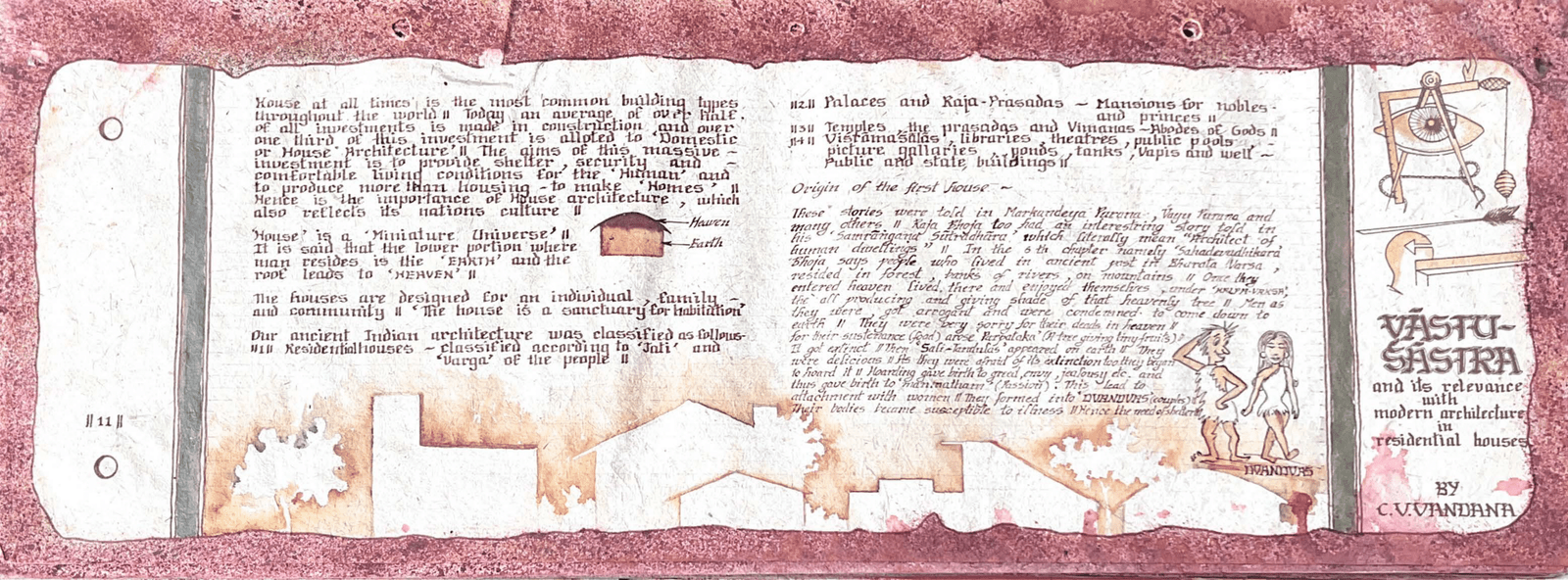
The introductory section explains that architecture must always be understood as both a technical and social discipline. A house reflects the lifestyle, beliefs, and economic conditions of its occupants. It responds to family structure, occupation, and social customs. Thus, the study of house architecture is also a study of human behavior and societal evolution.
Meaning and Purpose of a House
The house is defined as a built space designed to support daily human activities such as sleeping, cooking, resting, and social interaction. Beyond its functional role, the house also fulfills emotional and psychological needs. It provides a sense of belonging, security, and identity. The text emphasizes that a house becomes a home only when it successfully supports the physical and emotional well being of its occupants.
From an architectural perspective, a house is a composition of spaces arranged logically to facilitate movement, comfort, and efficiency. These spaces must be proportioned correctly and connected meaningfully. Poor planning can result in discomfort, congestion, or inefficiency, while thoughtful design enhances quality of life.
The purpose of a house extends beyond individual comfort to social stability. Well designed houses contribute to healthy communities by promoting safety, hygiene, and interaction. This broader role of residential architecture highlights its importance in shaping settlements and urban environments.
Origin of Human Dwellings
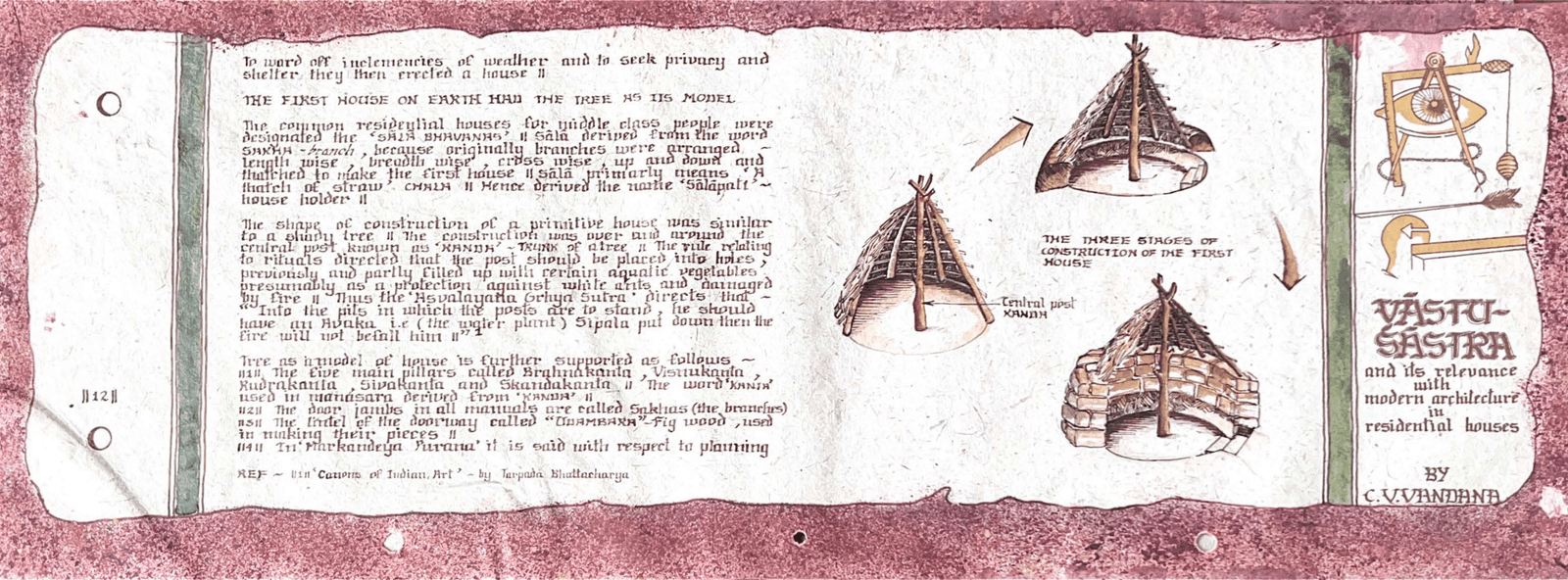
The origin of houses can be traced back to prehistoric times when humans lived as nomads. Early humans relied on natural shelters such as caves, rock overhangs, and tree canopies. These shelters offered immediate protection but lacked permanence. As humans transitioned from hunting and gathering to agriculture, the need for permanent dwellings emerged.
The development of agriculture encouraged settlement near fertile land and water sources. This shift marked a turning point in architectural history. Permanent houses allowed humans to store food, raise families, and develop social structures. The earliest constructed dwellings were simple and utilitarian, built using locally available materials such as mud, wood, stone, and reeds.
The text explains that the form and material of early houses were dictated by availability and ease of construction. In forested regions, wood was commonly used, while stone structures emerged in rocky terrains. In river valleys, mud and clay became primary building materials. These early choices laid the groundwork for regional architectural traditions.
Evolution of House Forms
As societies evolved, so did house architecture. The simple shelters of early humans gradually transformed into more complex structures. This evolution was influenced by technological advancements, social organization, and cultural development. The introduction outlines how increasing population density led to more organized settlements and defined residential layouts.
Early houses often consisted of a single multipurpose space. Over time, internal divisions were introduced to separate activities such as cooking, sleeping, and storage. This spatial differentiation improved hygiene, comfort, and efficiency. The emergence of private and semi private spaces reflected changes in family structure and social norms.
The evolution of house forms also coincided with improvements in construction techniques. The use of tools enabled more precise shaping of materials. Roofing systems became more sophisticated, allowing for larger spans and better protection. Walls grew thicker and stronger, improving insulation and durability.
The text highlights that the evolution of houses was not linear but adaptive. Different cultures developed distinct architectural forms based on their environment and traditions. While the basic function of shelter remained constant, the expression of that function varied widely across regions.
Influence of Climate on House Architecture
Climate plays a decisive role in shaping residential architecture. The introductory section emphasizes that early builders were keen observers of weather patterns. Houses were oriented and designed to respond effectively to heat, cold, wind, and rainfall.
In hot climates, houses were designed with thick walls, small openings, and shaded courtyards to reduce heat gain. In cold regions, compact forms with minimal openings helped retain warmth. Sloping roofs were common in areas with heavy rainfall to facilitate water drainage, while flat roofs appeared in arid regions.
The relationship between climate and architecture demonstrates that effective house design is rooted in environmental awareness. This principle remains essential in contemporary sustainable architecture, reinforcing the relevance of traditional knowledge.
Social and Cultural Influences on Houses
House architecture reflects social organization and cultural values. The text explains that family structure directly influences house layout. Joint families required larger houses with shared spaces, while nuclear families favored compact dwellings. Social customs determined the placement of living areas, kitchens, and guest spaces.
Cultural beliefs also shaped architectural choices. Certain spaces were considered sacred, while others were designated for daily activities. These distinctions influenced spatial hierarchy within the house. The design of entrances, courtyards, and thresholds often carried symbolic meaning.
The introduction makes it clear that houses are cultural artifacts. They embody traditions, rituals, and social norms. Studying residential architecture therefore provides insight into the values and priorities of a society.
Materials and Construction Techniques
The availability of materials played a crucial role in early house construction. Natural materials such as mud, timber, stone, and thatch were widely used. These materials were chosen not only for availability but also for their performance in specific climates.
Mud walls provided thermal insulation, while stone offered durability and strength. Timber was flexible and easy to work with, making it suitable for roofing and framing. Thatch provided lightweight and effective roofing in rural settings.
Construction techniques evolved alongside material use. Simple stacking gave way to bonding methods, joints, and structural systems. These advancements improved stability and allowed for larger and more complex houses.
Functional Organization of Early Houses
The introduction describes how early houses were organized to support daily activities efficiently. Cooking areas were often placed away from sleeping spaces to reduce smoke exposure. Storage areas were positioned to protect food from pests and moisture.
As understanding of hygiene improved, separate spaces for sanitation were introduced. Courtyards became central features, providing light, ventilation, and communal space. This organization reflects an intuitive understanding of spatial efficiency and comfort.
The functional planning of early houses laid the foundation for modern residential design. Many contemporary layouts still follow principles established in traditional dwellings.
Psychological and Emotional Aspects of Housing
Beyond physical shelter, houses provide emotional security. The text emphasizes that a well designed house promotes peace, comfort, and stability. Poorly designed spaces can create stress, discomfort, and inefficiency.
Natural light, ventilation, and proportion influence human mood and behavior. Early builders recognized this intuitively, incorporating open spaces and courtyards to create pleasant living environments.
The emotional significance of a house reinforces the importance of thoughtful architectural design. A house is not merely an object but a lived experience shaped by space and form.
Conclusion
The introductory portion of house architecture establishes the house as a fundamental human necessity shaped by environment, culture, and technology. From primitive shelters to organized dwellings, the evolution of houses reflects humanity’s continuous effort to create safe, comfortable, and meaningful living spaces.
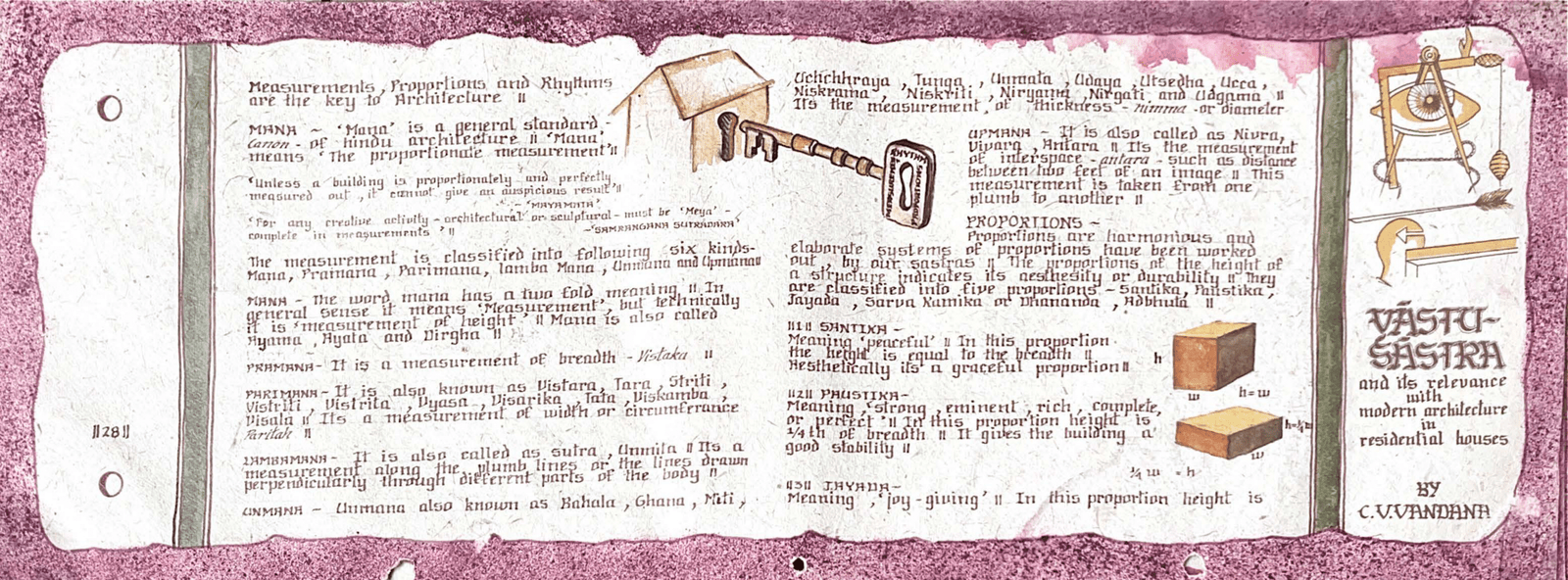
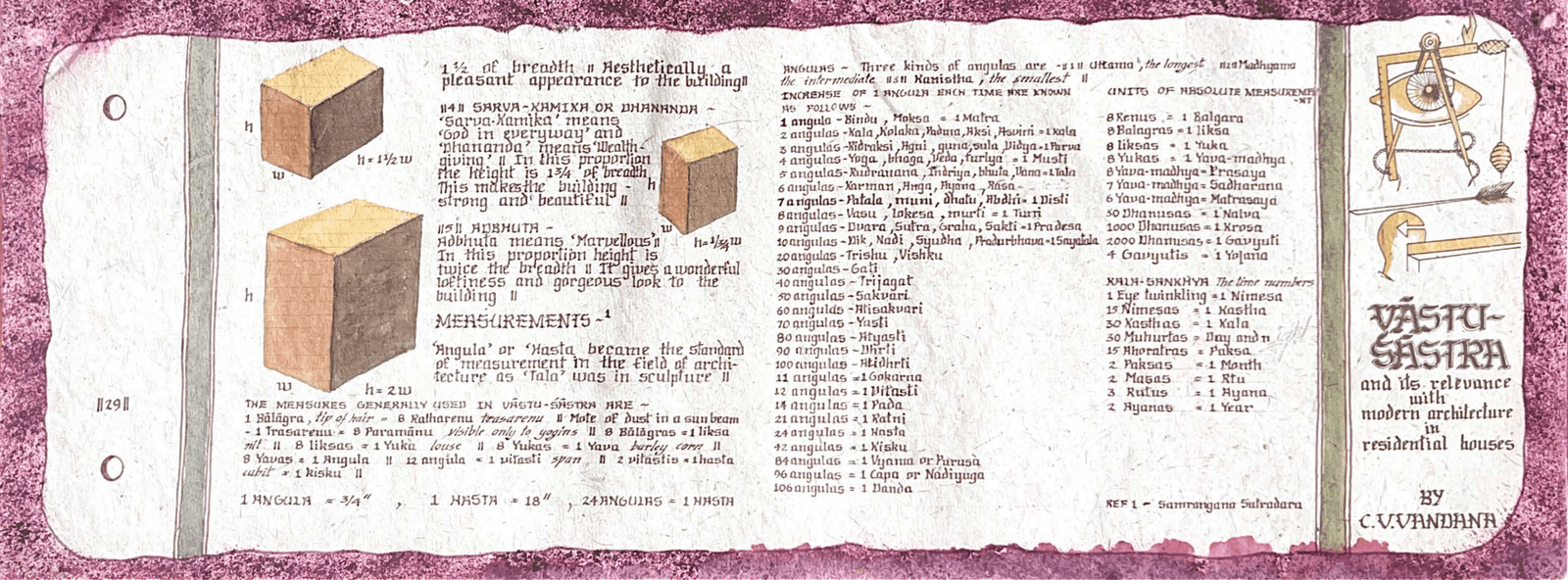
This foundation sets the stage for deeper exploration into measurement systems, proportions, site selection, soil conditions, and testing methods, which form the technical backbone of residential architecture. These aspects are addressed in the next section, where practical principles guide the translation of shelter into structured and harmonious built form.