Shigeru Ban’s architectural philosophy has long been celebrated for its humanitarian focus, material experimentation, and pioneering work with sustainable, low-cost building systems. While Ban is often associated with paper tubes, recycled materials, and emergency shelters, an equally important yet less frequently discussed aspect of his practice is his use of computational thinking. Although he is …
Shigeru Ban’s architectural philosophy has long been celebrated for its humanitarian focus, material experimentation, and pioneering work with sustainable, low-cost building systems. While Ban is often associated with paper tubes, recycled materials, and emergency shelters, an equally important yet less frequently discussed aspect of his practice is his use of computational thinking. Although he is not typically grouped with the digital avant-garde or the parametric design movement, Ban’s work embodies a deep parametric logic: form follows material behavior, design is generated through systems rather than arbitrary shapes, and optimization is integral rather than additive. In this way, Ban’s architecture is profoundly parametric—not in the sense of expressive complex geometries but in the use of rules, constraints, and variable-based design methods that embody sustainability. The parametric sustainability embedded in his work reveals a powerful model for low-carbon architecture that relies not on spectacle but on efficiency, adaptability, and intelligence. Understanding how his projects apply computational thinking illuminates a unique intersection of craft and algorithmic logic where materials dictate form and environmental responsibility informs every design decision.
Ban’s relationship with parametric thinking begins with his commitment to material-driven architecture. Before digital tools became ubiquitous, he was already developing systems-based designs where geometry was determined by the physical properties and behavior of materials such as cardboard tubes, paper, bamboo, lightweight timber, and recycled composites. This approach mirrors modern parametric workflows, where variables such as strength, bending tolerance, thickness, and connection logic shape the form of the structure. In Ban’s work, these constraints become the design drivers. He studies how a material behaves under compression or tension, how repetitive modules can be optimized for fabrication, and how structural loads can be distributed efficiently. This resembles digital parametric modeling long before software became central to architecture. As computational tools became more accessible, Ban embraced them as a silent backbone to refine material systems and structural performance rather than to generate flamboyant geometries. He uses parametric methods not to draw attention to form but to enhance sustainability, reduce waste, and deliver architecture that respects its environment and purpose.
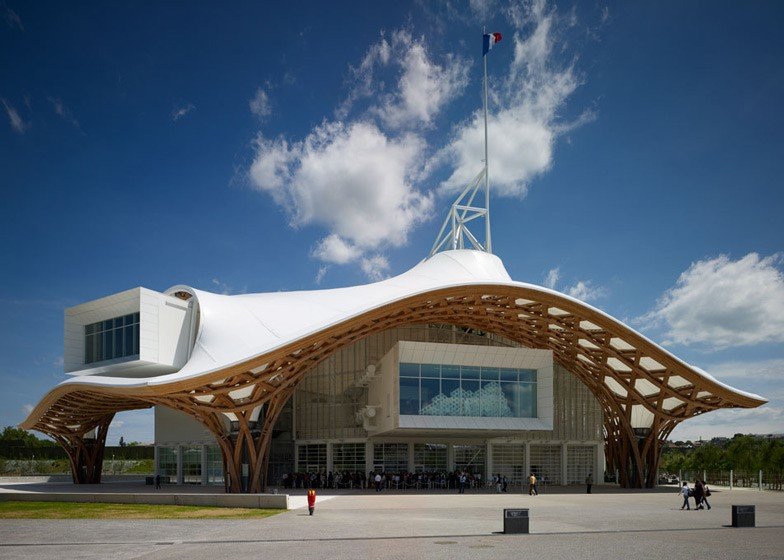
One of the most compelling examples of Ban’s parametric sustainability is the Centre Pompidou-Metz in France. Its iconic sweeping timber roof is often celebrated for its sculptural beauty, but its form is fundamentally the outcome of algorithmic logic combined with traditional craft. The roof’s geometry is based on a hexagonal lattice inspired by the woven patterns of a Chinese hat; however, the final shape was refined through computational analysis, which allowed the complex curvature to be constructed from a repeating set of wooden members. Instead of creating thousands of unique components a common issue in complex parametric architecture the design team used computational optimization to minimize variation, reducing production waste and simplifying construction. The result is a structure that appears fluid and organic but is grounded in sustainable logic. The timber used in the roof sequesters carbon rather than producing it, and the long spans create open interior spaces without reliance on heavy concrete or steel. Through this combination of analogue craft, material-conscious design, and computational optimization, Ban demonstrated that parametric architecture can be environmentally responsible rather than resource-intensive.
Ban’s humanitarian projects offer another dimension of parametric sustainability, especially his paper tube shelters designed for disaster relief in Rwanda, Japan, Turkey, Nepal, and other regions. Although these shelters may seem simple compared to digital parametric structures, they are deeply rooted in computational thinking. Ban developed a system rather than a single design: the diameter, thickness, spacing, and length of tubes can be adjusted like parameters depending on the climate, available resources, and required structural performance. The shelters are thus inherently parametric they are optimized configurations responding to specific site conditions. For example, in earthquake-prone areas, tube thickness and connection details can be adjusted to improve stability; in warmer climates, spacing can be altered to increase ventilation. This variable-based design approach mirrors digital parametric frameworks, but Ban achieves it through a combination of mathematical analysis, material testing, and on-ground adaptation. The sustainability of this strategy lies not only in the use of recyclable materials but in the reduction of wasteful, one-size-fits-all construction practices. Instead, Ban provides a design algorithm that communities can adapt, allowing architecture to function as a responsive, low-carbon system.
Another exemplary project is the Aspen Art Museum, which showcases Ban’s ability to merge computational logic with natural materials. The exterior lattice, made of woven wood strips, operates as both structure and environmental filter. The pattern was developed through iterative design processes involving computational modeling to test light permeability, shading behavior, and structural stability. The result is a facade that reduces heat gain by controlling solar exposure, thereby lowering the building’s energy consumption. Inside, the use of timber and environmentally responsive detailing further reduces the project’s carbon footprint. The museum’s emphasis on local materials reinforces Ban’s belief that sustainability begins with building responsibly from what is available. The digital modeling used here is not decorative; it ensures that the design performs efficiently, aligns with environmental conditions, and supports a warm, human-scale experience. This blending of optimization, performance analysis, and natural materials exemplifies parametric sustainability, showing how computational tools can support low-carbon architecture rooted in craft and context.
Ban’s work on the Oita Prefectural Art Museum in Japan also demonstrates how computational thinking enhances sustainable design. The building uses movable timber louvers inspired by traditional Japanese screens, allowing natural ventilation and daylight to be modulated dynamically. The design team utilized digital daylight simulations, airflow modeling, and parametric optimization to determine the configuration of these louvers, ensuring that each component contributed to the building’s low-energy performance. Instead of relying solely on mechanical systems, the museum uses these adjustable screens to regulate interior conditions, reducing energy consumption significantly. Ban’s approach here reflects a parametric strategy where environmental data sun paths, seasonal temperatures, humidity levels drives the geometry and behavior of architectural elements. The result is a building that is not only aesthetically rooted in cultural symbolism but also functionally tied to environmental stewardship. Through careful calibration and computational refinement, Ban demonstrated that heritage-inspired architecture can coexist with advanced sustainable technologies.
In the Tamedia Office Building in Zurich, Ban again embraced parametric principles through his highly efficient timber structure. The building features interlocking wooden beams that fit together without metal fasteners, designed through precise digital modeling techniques. The joints were optimized to distribute structural loads effectively, reducing the need for carbon-intensive materials. This approach required computational accuracy, as the forces within the beams had to be precisely understood to avoid unnecessary mass or reinforcement. The result is a building that appears simple but embodies remarkable structural logic, where every beam and joint is the product of iterative digital testing. The use of Glulam timber further underscores the low-carbon objectives, as engineered wood offers exceptional strength with a significantly smaller environmental footprint. Ban’s commitment to transparency both visually and conceptually is evident here, as the exposed structure illustrates that sustainability can be elegant, high-performance, and explicitly expressed.
Parametric sustainability also defines Ban’s approach to temporary and modular structures, where computational thinking enhances reuse and adaptability. His Paper Log Houses, used widely after natural disasters, are designed through a logic of modularity in which dimensions, materials, and assembly procedures can be adjusted based on available resources. This mirrors parametric workflows in which inputs change but the rule-based system generates consistent outputs. Ban emphasizes designs that can be assembled quickly, transported efficiently, and disassembled or reused without producing waste. Such strategies reduce the carbon footprint not only in construction but also across the building’s lifecycle. By designing with modular variation and systematic logic, Ban ensures that architecture can respond dynamically to crises without imposing further environmental burdens. These projects stand as some of the clearest examples of how computational thinking can fundamentally support more sustainable, humane architectural outcomes.
The Japanese Pavilion at the Hannover Expo is another project where Ban’s parametric interpretations of natural materials shine. The pavilion, built primarily from paper tubes connected with recyclable materials, relied heavily on structural analysis to achieve its large spans. Although the design appears simple, its underlying geometry required computer simulations to understand load paths, compression behavior, and buckling thresholds. The repetitive grid system was optimized to reduce material usage while ensuring stability, and the entire structure was designed to be disassembled and recycled after the expo. This approach demonstrates Ban’s unique form of parametric sustainability: instead of designing luxurious, high-tech parametric forms, he uses computational support to elevate humble, low-carbon materials into expressive, high-performing architecture. The Hannover Pavilion reinforces that parametric thinking is not tied to expensive technologies; rather, it is a way of designing that responds to constraints, opportunities, and responsibilities.
Ban’s architectural philosophy also extends to the idea that sustainable buildings should be accessible, culturally sensitive, and socially responsible. His Nepal Emergency Shelters, built after the 2015 earthquake, use local materials such as rubble, bamboo, and earth, combined with parametric rule sets that adapt to available resources. The shelters were designed through a logic of substitution: computational principles allowed the system to work whether bamboo was thick or thin, whether rubble was plentiful or scarce. By embedding flexibility into the design, Ban created architecture that performs sustainably in real-world conditions rather than idealized scenarios. This approach differs from conventional parametric architecture, which often assumes precise fabrication environments. Ban reverses the narrative: instead of controlling the environment to meet the design, he adapts the design to meet the environment. This inversion may be one of his greatest contributions to parametric sustainability, teaching the architectural world that flexibility, resilience, and humility can be computational virtues.
Ban’s use of computational thinking also aligns with the broader global shift towards lifecycle-based design. He considers not only how buildings are constructed but how they can be maintained, dismantled, or reused. This lifecycle approach is inherently parametric because it relies on understanding variables across time: durability, recyclability, carbon emissions, transportation impacts, and end-of-life strategies. His Curtain Wall House in Tokyo, for example, uses lightweight, movable walls that modify environmental conditions throughout the day. Such operable systems reduce energy use and rely on algorithmic thinking: geometry, movement, and function are tied together in a responsive, variable-based design. By integrating these adaptive systems, Ban champions a sustainable architecture that is not passive but interactive changing in response to the needs of occupants and the climate.
What makes Shigeru Ban’s contribution to parametric sustainability especially significant is his insistence that architecture must serve society first. Unlike designers who use parametric tools to pursue sculptural complexity, Ban uses computation quietly to make buildings more efficient, humane, affordable, and environmentally responsible. His projects demonstrate that the core values of parametric design variation, optimization, adaptability, and performance can be expressed through low-carbon materials and straightforward construction techniques. Ban’s architecture reminds us that sustainability is not about expensive technologies but about intelligent, resource-conscious design guided by data, analysis, and experimentation. He bridges the worlds of craftsmanship and computation, showing that traditional materials like timber and paper can be elevated through modern digital analysis to create high-performance, low-carbon architecture.
As global interest in sustainable design grows, Shigeru Ban’s parametric approach offers a powerful alternative to high-tech environmental design that often relies on advanced machinery, rare materials, or complex mechanical systems. Instead, Ban demonstrates that sustainability can be achieved through design systems that promote material efficiency, structural clarity, and contextual responsiveness. His work suggests that the future of parametric sustainability lies not in generating complexity but in mastering simplicity. This philosophy encourages architects to reconsider the role of computation in ecological design not as a tool for producing futuristic forms, but as a lens for understanding natural systems, material behavior, and community needs.
Ultimately, Shigeru Ban’s body of work establishes a model for how computational thinking can support a low-carbon architectural future. His projects reveal that sustainability and parametric logic are not separate domains but deeply intertwined principles. Through material-driven optimization, adaptive systems, modular strategies, and environmental responsiveness, Ban exemplifies a gentler, more humane form of parametric architecture one that prioritizes the planet and its people. His approach challenges the architectural community to rethink what parametric design can be, demonstrating that its real power lies not in visual complexity but in purposeful, resource-conscious innovation. In a world facing climate urgency, Shigeru Ban’s parametric sustainability offers a path forward that merges the precision of computation with the ethics of care, creating architecture that is intelligent, low-carbon, and profoundly humane.