When I first stood before the Lotus Temple in Delhi, I felt an emotion that is rare in architecture: a sense of stillness that was not imposed, but invited. Here, in the midst of one of the most chaotic cities in the world, rises a building that speaks not in stone-heavy declarations but in soft …

When I first stood before the Lotus Temple in Delhi, I felt an emotion that is rare in architecture: a sense of stillness that was not imposed, but invited. Here, in the midst of one of the most chaotic cities in the world, rises a building that speaks not in stone-heavy declarations but in soft whispers of form and light. Its architect, Fariborz Sahba, conceived it as a symbol of unity, openness, and spirituality. As an architect myself, I see in it not only a work of great beauty, but also a profound lesson in how architecture can transcend religion, culture, and language to touch something universal.
The Idea of the Lotus
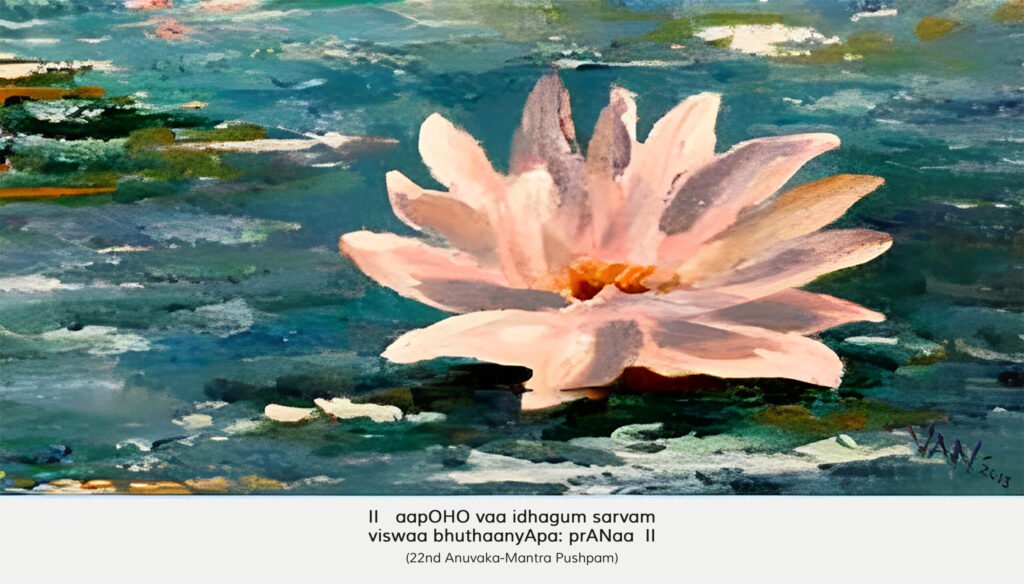
The design begins with the lotus flower, a symbol revered across Indian traditions. In Hinduism, Buddhism, Jainism, and Sikhism alike, the lotus represents purity, enlightenment, and rebirth rising from muddy waters into perfect bloom. For the Bahá’í Faith, which the temple serves, the lotus becomes a fitting metaphor for the unity of humanity and the blossoming of the spirit.
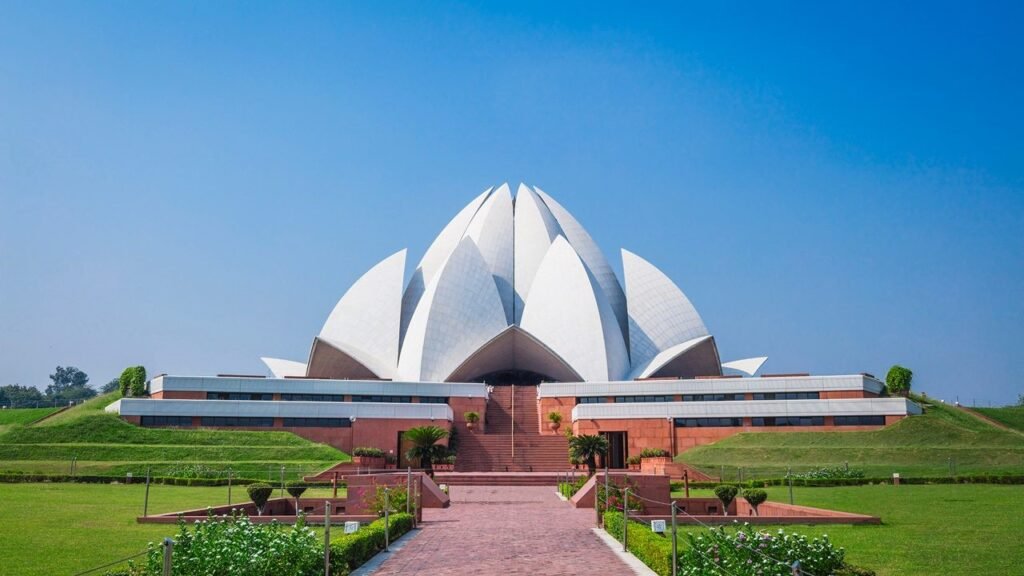
As architects, we are trained to abstract ideas into form. Yet the Lotus Temple is remarkable because it does not abstract the lotus beyond recognition; instead, it embraces its image with bold literalism, and through engineering genius, makes it sublime rather than kitsch. The temple’s 27 free-standing marble “petals”, arranged in clusters of three to form nine sides, unfold to create a geometry that is at once simple and infinite. To see the temple from above is to see a flower eternally blooming in stone.

Geometry and Structure
What makes the Lotus Temple truly breathtaking is not just its symbolic form, but its structural clarity. The building is organized in nine sides, each symbolizing openness to the world’s directions and people. The nine doors open onto a central hall, reinforcing the Bahá’í principle of universality—anyone, regardless of faith or background, may enter.

The 27 petals are more than sculptural gestures; they are feats of engineering. Constructed of white marble panels from the Penteli mountain in Greece, the same marble used in the Parthenon, they are supported by a system of ribs and shells that distribute weight evenly. The petals are arranged in three layers: the innermost petals curve inward to enclose the central hall; the middle layer arches over the entrances; the outermost layer opens outward, forming canopies that shelter visitors. This rhythm of inward and outward curves creates a sense of expansion and embrace, as if the building itself were breathing.
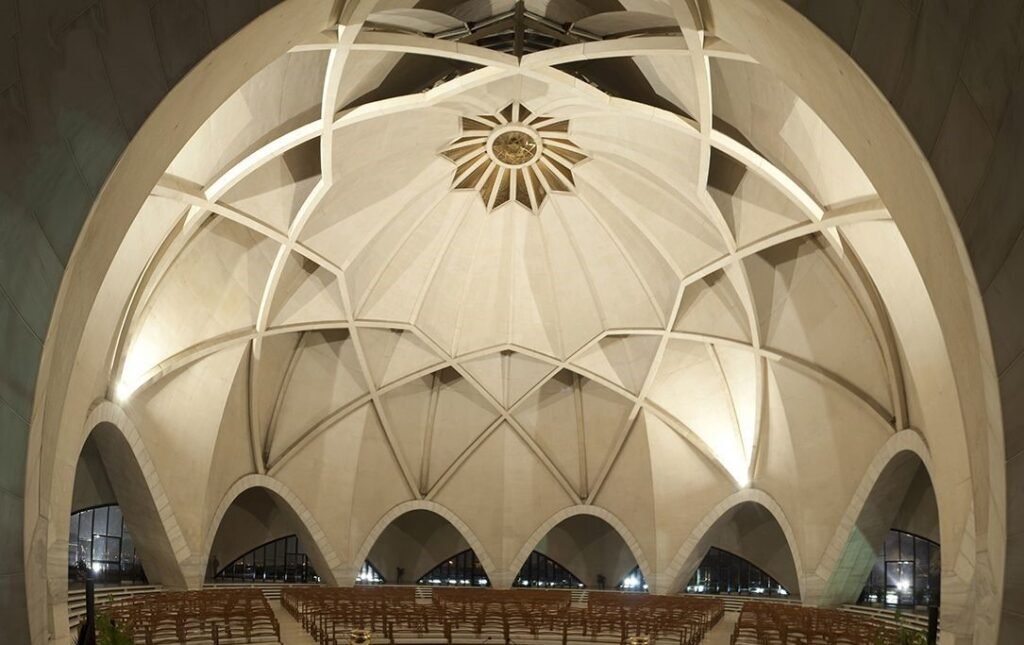
Inside, the hall rises to a height of 34 meters, flooded not with ornament but with light. The petals double as skylights, admitting daylight that filters softly through the gaps, creating an atmosphere of serenity. For me, this is where the building transcends metaphor: the lotus is no longer just an image but a spatial experience, where architecture and nature merge in light.
Materiality: The Purity of Marble
Marble was chosen not for ostentation but for its symbolic and sensory qualities. Its whiteness recalls purity, while its smooth surfaces catch light in ways that make the petals glow from within. Walking close to the structure, one realizes the precision of the craftsmanship: each petal’s curvature required meticulous formwork and an intimate dialogue between architect, engineer, and craftsman.

Yet what strikes me most is how the marble tempers the chaos of Delhi. Against the dust and heat, the Lotus Temple remains cool and calm, a literal oasis of white amid the city’s tumult. This contrast is deliberate: the temple was designed to be not an escape from reality but a refuge within it.
The Play of Water and Landscape
No lotus can exist without water. Sahba extended the metaphor by surrounding the temple with nine reflecting pools, which serve both symbolic and climatic functions. The pools mirror the petals, making the building appear to float, and they also cool the air that passes into the temple.

As an architect, I see this as a brilliant integration of form and environment. Too often, water features are ornamental afterthoughts. Here, they are essential: the pools complete the lotus image, regulate microclimate, and frame the approach, slowing visitors into contemplation. Walking toward the temple, one is enveloped by the reflection of sky and marble, as if stepping into a realm suspended between earth and heaven.
A Temple Without Images
One of the most striking aspects of the Lotus Temple is its absence of icons. Unlike most religious structures, there are no statues, no altars, no ritual paraphernalia. The central hall is bare except for seating and a lectern. This is not emptiness, but intentional universality: the Bahá’í Faith emphasizes unity beyond dogma, and the temple embodies this in architecture.
For me, this minimalism is radical. In a culture where sacred spaces are often defined by layers of ornament, the Lotus Temple suggests that silence and light are enough. The petals, the pools, and the play of daylight become the “ornament,” reminding us that spirituality does not require embellishment it requires openness.
Engineering as Poetry
From an architect’s perspective, what makes the Lotus Temple extraordinary is the marriage of engineering and poetry. Its structural system was designed with the help of advanced analysis for its time, using a combination of concrete ribs and shells that allowed such free curves to be realized. Each petal is self-supporting yet contributes to the stability of the whole, like the interdependence of petals in a real flower.
Yet the engineering never overwhelms the form. Unlike some modern megastructures, where technology becomes the spectacle, here technology disappears into the elegance of the gesture. Visitors do not see concrete, steel, and rebar they see a flower opening to the sky. That, I believe, is the highest aim of architecture: to make the difficult appear effortless, to turn weight into weightlessness.
Light as Sacred Space
The most powerful element of the Lotus Temple is not marble or water it is light. The central hall is illuminated almost entirely by natural daylight, filtering through the gaps in the petals and reflected from the pools outside. The effect is constantly changing, as the sun shifts across the day and the seasons. At times, the light is sharp and crystalline; at others, it is diffuse and ethereal.

As architects, we often speak of light as our primary material, but rarely is it allowed to be the sole ornament of a sacred space. In the Lotus Temple, light itself becomes prayer, binding earth and sky. The silence of the hall is not empty; it is filled with this luminous presence.
Urban Context: A Lotus in Delhi
Placing such a structure in Delhi was both bold and necessary. The city is a palimpsest of religions, dynasties, and architectural styles Mughal domes, colonial axes, modernist concrete. Amid this cacophony, the Lotus Temple does not compete. Instead, it offers something different: a universal symbol that belongs to no single tradition yet resonates with all.
It has become one of Delhi’s most visited sites, drawing millions each year, not only Bahá’ís but Hindus, Muslims, Christians, Buddhists, Sikhs, and countless others. In a city often divided by faith, the temple functions as a civic as much as a sacred space. This, to me, is its greatest success: it is not just architecture for a community but for humanity.
Lessons for Architects
Reflecting on the Lotus Temple, several lessons emerge.
- Symbolism matters. At a time when much contemporary architecture seeks neutrality, the Lotus Temple demonstrates the enduring power of symbols, provided they are handled with clarity and integrity.
- Structure can be poetry. The engineering of the petals is not hidden, but it does not dominate. It serves the form and disappears into its elegance.
- Light is enough. Ornament is not necessary when light is allowed to shape space with honesty.
- Openness is architecture’s highest ethic. By welcoming all faiths and all people, the temple transforms from a religious building into a universal sanctuary.
Conclusion
The Lotus Temple is not simply a building; it is an experience. It proves that architecture can be simultaneously literal and abstract, symbolic and functional, monumental and intimate. For me, as an architect, it is a reminder that our work is not only to solve problems of space and structure but to touch the intangible to create places where silence, light, and form awaken something within us.
In Delhi’s unrelenting energy, the Lotus Temple stands as a pause, a breath, a bloom of stone and light. It is an architecture that disappears into its metaphor, and in doing so, becomes timeless. When one leaves its hall, the memory is not of marble or geometry, but of a feeling: that for a moment, amid the petals, one was open to the world, and the world was open in return.