Most hospitality projects start with a food and beverage program and then add landscape as an attractive perimeter. “The Park” in Khammam flips that logic. The project narrative begins with a simple observation made by the client, who also owns the “Haveli” restaurant in Khammam: families were visiting in large numbers, children were more excited …
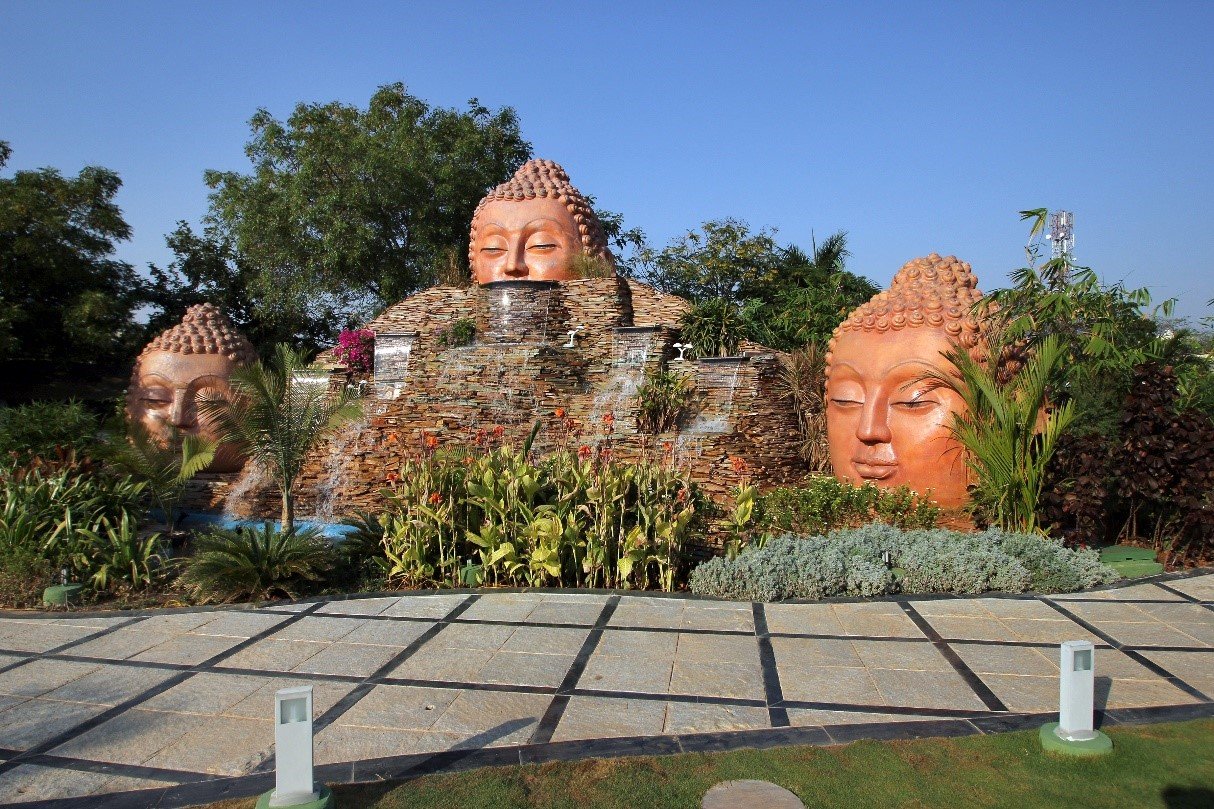
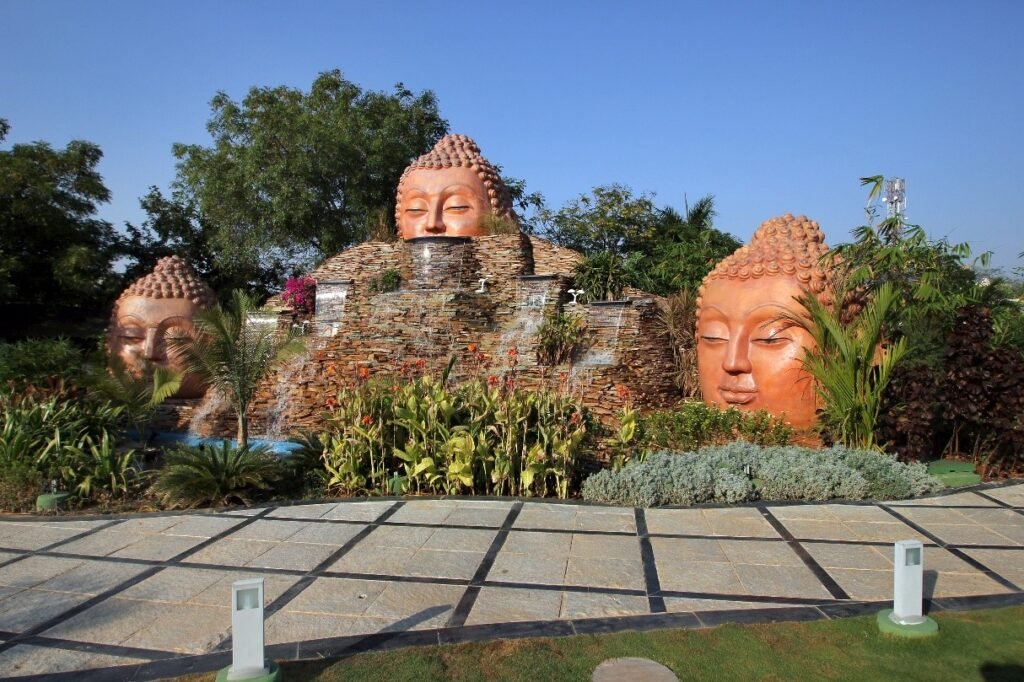
Table of Contents
- Project snapshot
- Why this project is relevant beyond Khammam
- The waterfront condition: asset, risk, and responsibility
- The real program: two parallel user journeys
- The child journey
- The adult journey
- Theme park, but in a landscape-first way
- Native species as a strategic decision, not a sustainability label
- Transitional elements: what this likely means in experience design
- The site as a loop: why loops outperform dead-ends
- Designing for family supervision: sightlines are the real luxury
- Age diversity: designing for toddlers, teens, and grandparents at once
- The dining relationship: making food and landscape feel like one product
- Waterfront comfort: microclimate is part of hospitality
- Materials and durability: public use without public-sector maintenance
- Safety, boundaries, and the invisible rules of a family park
- Event value: the hidden revenue stream of landscaped destinations
- Why “The Park” is a strong typology for tier two cities
- Closing: a waterfront that behaves like a community living room
Most hospitality projects start with a food and beverage program and then add landscape as an attractive perimeter. “The Park” in Khammam flips that logic. The project narrative begins with a simple observation made by the client, who also owns the “Haveli” restaurant in Khammam: families were visiting in large numbers, children were more excited by the surrounding play areas, and adults were enjoying the dining experience. The gap was clear. If children are engaged, families stay longer, return more often, and convert a meal into an outing.
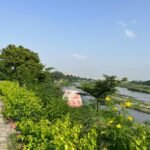
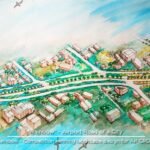
That observation became the core driver for a waterfront development that was meant to work equally for children and adults. The client purchased a waterfront parcel described on the project page as 3.5 acres, while the project listing also mentions an overall scale of 5 acres. Within that context, VANZSCAPE’s response is summarized as a landscape strategy built primarily on native species, combined with transitional elements to create multiple experiences that engage all age groups.
This blog elaborates on what that strategy means in practical design terms and why it is a strong model for restaurant-led destination landscapes in tier two cities. It is written to be faithful to the project’s stated intent, while expanding the architectural and landscape logic behind making a waterfront property feel safe, memorable, and commercially successful over time.
Project snapshot
- Project name: The Park (Water front property)
- Location: Khammam
- Timeline: 2013 to 2014
- Listed scale: 5 acres
- Land purchase noted in description: 3.5 acres of waterfront land
- Project intent: a theme park experience that caters to both children and adults, built as a waterfront development connected to The Park Restaurant
- Landscape approach stated: primarily native species with transitional elements to create different experiences for all age groups
Why this project is relevant beyond Khammam
A restaurant that becomes a family destination is no longer competing only on cuisine. It is competing on time value. Families are effectively choosing between a mall, a park, a cinema, a highway drive, and a meal. The winning places are the ones that can combine multiple needs in a single trip: food, play, safety, comfort, and a sense of occasion.
“The Park” is interesting because it acknowledges that truth directly. It does not treat play as an accessory. It treats play and landscape as the magnet that makes hospitality viable at a larger, more repeatable scale.
In business terms, a landscape-led destination can shift a restaurant’s performance in several ways:
- Longer dwell time, which increases secondary spending.
- Higher repeat visits, because children remember places more than menus.
- Better group accommodation, because open space absorbs crowds that indoor dining cannot.
- Stronger brand identity, because the setting becomes a recognizable signature.
- Expanded operating windows, because outdoor environments encourage evening use when designed well.
The design challenge is that none of these benefits arrive automatically. They appear only when the landscape is planned as a complete experience system, not as scattered décor.
The waterfront condition: asset, risk, and responsibility
A waterfront property immediately signals premium potential. Water brings cooler microclimates, open views, and psychological calm. It also comes with constraints that impact both design and operations:
- Safety and edge control, especially around children
- Seasonal water level variation
- Mosquito and hygiene management
- Soil stability and erosion risk near the edge
- Maintenance access and long-term durability
- The need for lighting, surveillance, and clarity after dark
A successful waterfront development, especially one intended for family use, must turn the water edge into a controlled experience. The goal is not to block the water. The goal is to make it legible, accessible in the right places, and protected in the wrong places.
Even without a published plan, the project’s stated intent implies a key point: the waterfront is not being used only as a view. It is being used as a reason to develop a theme park-like environment that can keep multiple age groups engaged.
The real program: two parallel user journeys
When a project says it must cater equally to children and adults, it is describing two journeys that run in parallel on the same site.
The child journey
Children typically seek movement, novelty, and quick transitions. They respond to:
- short loops and paths that invite running
- changing textures underfoot
- visually readable play territories
- interactive edges, such as sand, water-safe features, or climbable forms
- clear boundaries, because children push limits when limits are ambiguous
The adult journey
Adults often seek comfort, visibility, and a sense of control. They respond to:
- shaded seating with good sightlines
- comfortable walking paths with resting points
- calm landscape moments that feel restorative
- privacy gradients, where they can choose social or quiet zones
- convenience, such as direct access to dining, washrooms, and parking
The best family destinations do not try to force everyone into one space. They design overlap. Adults can watch without hovering. Children can explore without leaving safe territory. The site becomes a choreographed coexistence.
The Park’s narrative begins with this exact behavioral insight, observed at the client’s existing restaurant context. That makes the project inherently user-based, not style-based.
Theme park, but in a landscape-first way
The term “theme park” can mean many things. It can become overly artificial, loud, and difficult to maintain. For a restaurant-linked waterfront development, a more durable interpretation of “theme” is experiential variety. The “theme” is not a costume. The theme is the sequence of experiences.
This is where VANZSCAPE’s stated approach becomes important: native species combined with transitional elements to create different experiences. That phrasing suggests a landscape-driven theme rather than a prop-driven theme.
In practice, experience-driven theming is often achieved through a few dependable design moves:
- Create distinct zones, each with a different mood and activity profile.
- Connect them with an intuitive loop so visitors naturally circulate.
- Use landscape changes, such as planting character and landform, to signal transitions.
- Place the most active elements away from the most relaxed dining zones, but keep visual connection.
- Allow discovery, so people feel the site offers more than one “main attraction.”
This is how a destination stays interesting across repeat visits.
Native species as a strategic decision, not a sustainability label
The project description explicitly says the landscape strategy is primarily native species. In a waterfront family destination, this is not only an ecological preference. It is a commercial and operational advantage.
Native planting typically supports:
- lower water demand once established
- better tolerance to local heat, soil conditions, and seasonal variability
- reduced risk of sudden plant failure, which makes the place look neglected
- lower long-term replacement cost
- stronger sense of place, because the landscape feels locally rooted rather than imported
For destination landscapes, visual consistency matters. A restaurant environment that looks stressed or patchy quickly loses its premium feel. Native planting reduces that risk.
It also makes the landscape more resilient to imperfect maintenance, which is a real-world condition in many privately operated public environments.
Transitional elements: what this likely means in experience design
The project notes “transitional elements” used to create different experiences for all age groups. Without inventing specific built details, it is still possible to explain what transitional elements typically mean in landscape architecture.
In most landscape systems, transition is how you control behavior. It can include:
- changes in paving texture that signal a slower, calmer zone
- shifts in planting density, from open lawns to shaded groves
- subtle level changes that create separation without walls
- gateways, pergolas, or framed openings that mark a new “chapter”
- sound transitions, such as moving away from play zones toward water-edge quiet
- lighting transitions that guide evening movement and indicate where families should gather
These are not decorative gestures. They are navigation tools and psychological cues. When done well, people rarely notice them consciously, but they move exactly as the designer intended.
For a family destination, transitions also manage risk. You do not want children sprinting directly from play equipment to the water edge. Transitional zones can slow movement, change direction, and create supervision-friendly buffers.
The site as a loop: why loops outperform dead-ends
Family destinations work best when they have a loop circulation logic. Loops encourage exploration, distribute crowds, and reduce the sense of being stuck in one place. They also make the site feel larger than it is.
A loop system often achieves the following:
- Visitors naturally complete a circuit, increasing exposure to all amenities.
- Children burn energy safely because they can keep moving without leaving the site’s readable boundaries.
- Adults can pick their preferred pace, from short strolls to longer walks.
- Staff can monitor activity more easily, because movement patterns are predictable.
In a 3.5 to 5 acre waterfront development, this matters. The site is not huge. It must feel layered. Loop circulation is one of the most reliable ways to achieve that.
Designing for family supervision: sightlines are the real luxury
In family-oriented hospitality environments, the premium experience is not only aesthetics. It is peace of mind.
Adults need to be able to see. This is where landscape planning becomes critical:
- Dining and seating should align with primary play zones.
- Planting near play areas should be low or visually permeable, not dense screening.
- Path alignments should avoid hidden corners that break supervision.
- Key nodes should feel open, even if surrounding zones feel lush.
- Lighting must support visibility in evening hours, because many family outings happen after daytime heat reduces.
A waterfront site adds another layer: water edges must either be visually monitored or physically controlled. The most successful projects combine both. Physical edge safety with landscape cues that keep children within safe territories.
Age diversity: designing for toddlers, teens, and grandparents at once
When a brief says “all age groups,” it is easy to design for a generic “family” and fail to address the edges. Toddlers need different environments than teens. Older adults need comfort and accessibility that typical play environments ignore.
A well-considered age-inclusive destination typically includes:
- toddler-friendly zones with softer surfaces and low-risk play
- active zones for older children that allow climbing, running, and challenge
- flexible spaces for teens, often informal, where they can gather without being treated as “in the way”
- shaded seating for elders that feels dignified, not like waiting benches
- smooth, accessible paths so mobility is not a barrier
Even if a site does not include every category explicitly, the landscape can support them through varied micro-spaces: open lawns, shaded groves, small amphitheatre-like steps, promenade-like edges, and calm garden pockets.
This is where “different experiences” becomes more than a phrase. It becomes a spatial strategy.
The dining relationship: making food and landscape feel like one product
A restaurant linked to a theme park landscape cannot treat the two as separate businesses. The best outcomes happen when dining and landscape are designed as one continuous customer experience.
That typically involves:
- ensuring the restaurant has strong visual connection to the landscape
- creating outdoor dining spill-over that feels comfortable, not exposed
- planning service routes so staff movement is efficient and not disruptive
- providing waiting experiences for peak hours, so guests are not frustrated
- placing key landscape attractions within convenient walking distance from dining areas
If children are engaged while adults dine, the restaurant gains a competitive advantage that is difficult to replicate with interior design alone. The Park’s origin story is exactly this linkage between play enthusiasm and dining enjoyment.
Waterfront comfort: microclimate is part of hospitality
A waterfront can be cooler, but it can also be harsher if wind and glare are unmanaged. Comfort design typically involves:
- shade planning, using trees and built shade where needed
- glare control near water-facing seating
- wind moderation through planting placement and landform
- surface temperature control, avoiding expansive dark hardscape that heats up
- careful selection of seating locations, so people can choose sun or shade
In South Indian climates, the viability of outdoor environments is primarily a comfort problem. Good design expands usable hours. Poor design restricts use to a small window.
For a family destination, comfort also influences safety. Overheated surfaces and lack of shade increase irritation, fatigue, and shorter visits.
Materials and durability: public use without public-sector maintenance
Private destination parks often face a unique challenge: they receive public-scale footfall but are maintained with private systems that may not have municipal-level crews. That means detailing must anticipate wear.
A robust material approach usually includes:
- hardscape that tolerates staining and abrasion
- edge details that do not break or chip easily
- surfaces that remain slip-resistant in monsoon conditions
- simple, repeatable components that can be repaired quickly
- planting beds designed to resist trampling at desire lines
This is also where native planting helps. It reduces the maintenance burden and stabilizes the landscape’s appearance.
Safety, boundaries, and the invisible rules of a family park
Theme parks succeed when they feel free, but they are actually controlled. The controls must be quiet and integrated.
Common integrated safety strategies include:
- subtle boundary planting that discourages entry into restricted areas
- gentle level changes that slow movement without acting like barriers
- clear path edges that keep circulation orderly
- lighting that reduces hidden pockets
- seating placement that encourages adult supervision
For waterfront properties, one additional rule dominates: the water edge must not be ambiguous. Guests should immediately understand where the safe public edge is and where it is not.
Event value: the hidden revenue stream of landscaped destinations
A landscape-led restaurant destination often unlocks event programming: birthdays, small celebrations, corporate gatherings, and seasonal festivals.
The design implications are practical:
- spaces that can host groups without blocking regular users
- flexible lawns or plazas that can accept temporary setups
- power and lighting provisions planned early
- circulation that can handle peak-event crowd movement
- acoustic planning so events do not destroy the dining environment
Even if events are not the primary intent, they tend to emerge naturally when a place becomes popular. A good design makes that emergence manageable rather than chaotic.
Why “The Park” is a strong typology for tier two cities
Khammam is representative of a broader urban pattern in India. As cities grow, family leisure demand rises faster than public open space supply. Private landscapes begin to fill that gap, but only when they offer genuine value and not just a photo corner.
The Park’s model, as described, responds to that demand by making the landscape the main attraction and letting dining become one part of a larger family outing.
This typology works when it does three things:
- Delivers a safe, comfortable, and engaging environment.
- Maintains a clear identity so it becomes a destination, not just a restaurant.
- Uses resilient landscape strategies so the place stays attractive year after year.
The stated use of native species and experience-driven transitions aligns with exactly those long-term requirements.
Closing: a waterfront that behaves like a community living room
“The Park” in Khammam is described as a waterfront development anchored by a restaurant context and driven by a behavioral insight: children were drawn to play, adults were drawn to dining, and the future lay in designing for both equally. VANZSCAPE’s response, as stated on the project page, is a landscape strategy built primarily on native species and transitional elements, shaping multiple experiences intended to engage all age groups.
That approach is credible because it treats landscape as the main operating system of the destination. It is not ornament. It is the mechanism that creates comfort, safety, memory, and commercial repeatability.