In a world that never stops talking where billboards blink, cities hum, and our phones buzz at us constantly silence has become a luxury. Architecture, traditionally seen as monumental and loud in its gestures, is quietly reinventing itself. Instead of skyscrapers shouting their presence, or cultural centers flexing for attention, a new philosophy has emerged: …
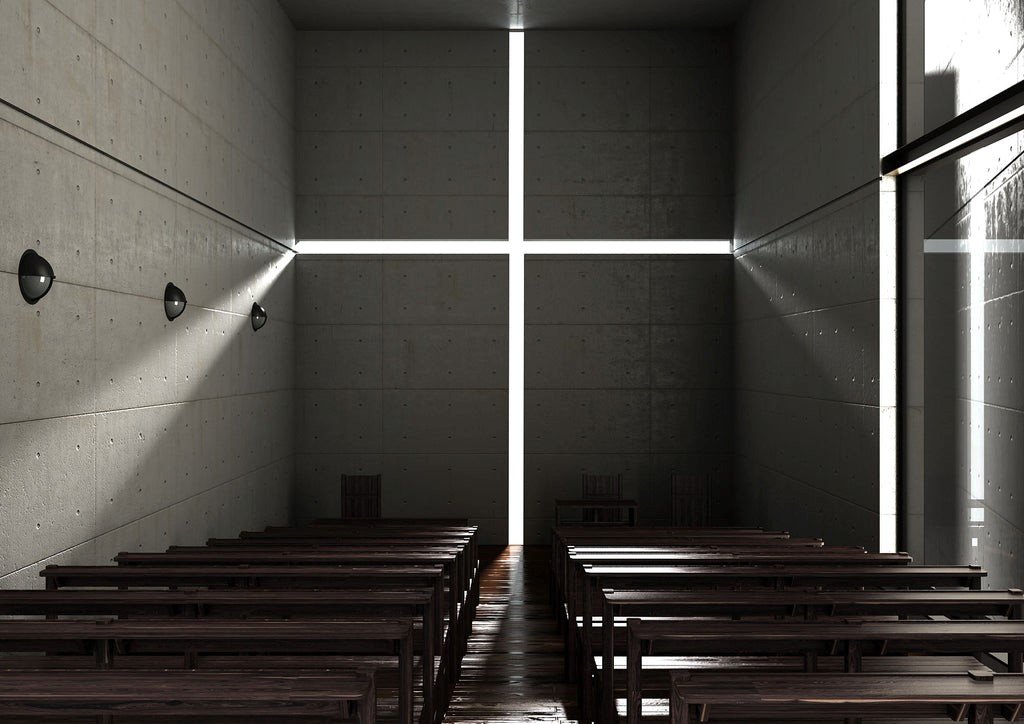
Table of Contents
- What Exactly Is “Quiet Architecture”?
- Why the World Needs Quiet Architecture
- Principles of Quiet Architecture
- Global Examples of Quiet Architecture
- Beyond Aesthetics: The Psychology of Quiet Spaces
- The Critique: Is Quiet Architecture Just Minimalism 2.0?
- The Future of Quiet Architecture
- Conclusion: The Strength of Silence
In a world that never stops talking where billboards blink, cities hum, and our phones buzz at us constantly silence has become a luxury. Architecture, traditionally seen as monumental and loud in its gestures, is quietly reinventing itself. Instead of skyscrapers shouting their presence, or cultural centers flexing for attention, a new philosophy has emerged: Quiet Architecture.
This isn’t about buildings that disappear, nor is it simply “minimalism.” Quiet architecture is about creating spaces that reduce sensory clutter, foster wellbeing, and remind us of the value of subtlety. It’s design that doesn’t scream for your attention, yet stays with you long after you’ve left.
What Exactly Is “Quiet Architecture”?
Quiet architecture is the art of designing places that soothe rather than overwhelm. It thrives on restraint not in the sense of doing less, but of doing only what’s essential. Every line, every material, and every shaft of light serves a purpose.
Think of it as architecture that whispers:
- It’s modest in its presence, blending into context instead of competing with it.
- It privileges sensory balance light, acoustics, and materiality over spectacle.
- It feels timeless, designed not to impress in the short term but to endure.
Where modernist minimalism often stripped spaces bare to make a visual statement, quiet architecture focuses on emotional outcomes. It asks: How can this place help someone feel calmer, more focused, or more present?
Why the World Needs Quiet Architecture
- Cognitive Overload
Urban environments are visually and aurally overwhelming. From traffic noise to neon lights, most of us live in constant stimulation. Quiet spaces give the brain a break a reset button in built form.
- Health and Wellbeing
Healthcare designers know that stress-reducing spaces aid recovery. Schools recognize that calm environments improve focus. Workplaces realize that reduced noise increases productivity. Quiet architecture aligns with these goals, turning design into a health intervention.
- Sustainability by Restraint
Rather than demolish and build a new, quiet architecture often favors adaptive reuse working with what’s there, minimizing waste, and extending a building’s life. It’s less about novelty, more about stewardship.
- Emotional Intelligence in Design
We’re learning to measure the success of architecture not just in awards or aesthetics, but in how it makes people feel. Quiet architecture is empathetic designed with the end-user’s mental state in mind.
Principles of Quiet Architecture
To understand this movement, it helps to break down its recurring principles:
- Context First: Buildings that respond to surroundings instead of dominating them.
- Material Honesty: Natural finishes like stone, timber, or raw concrete that reveal their texture rather than hide behind ornament.
- Light as Architecture: Carefully orchestrated daylight to create rhythm, shadow, and calm.
- Acoustic Comfort: Sound is treated as design, with soft surfaces, spatial sequencing, and natural barriers.
- Human Scale: Spaces feel approachable and proportional, never overwhelming.
- Enduring Simplicity: Designs that age gracefully rather than chase trends.
Global Examples of Quiet Architecture
Quiet architecture isn’t confined to one culture or climate. It’s a global language, appearing in healthcare, education, spirituality, and even commercial projects. Let’s explore some standout examples.
1. Maggie’s Centres, UK
These cancer care centers, scattered across the UK, are perhaps the clearest real-world embodiment of quiet architecture. Each is designed by renowned architects (like Norman Foster, Zaha Hadid, and Snohetta), but none scream their architect’s “signature style.” Instead, they prioritize warmth, daylight, and human-scaled spaces where patients and families feel supported.
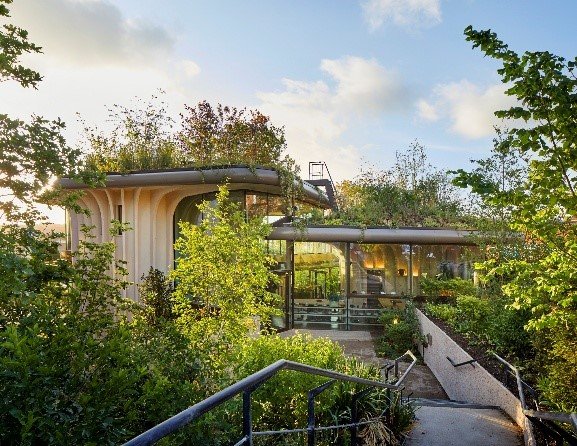
The architecture avoids clinical sterility, replacing it with domestic warmth timber, soft colors, and carefully framed gardens. They prove that quiet architecture isn’t about anonymity, but about empathy.
2. Therme Vals, Switzerland (Peter Zumthor)
Peter Zumthor is often called the patron saint of quiet architecture. His spa complex in Vals is carved into the mountainside, using local quartzite stone. The experience is not about visual spectacle but sensory immersion: the sound of water, the smell of minerals, the coolness of stone underfoot.
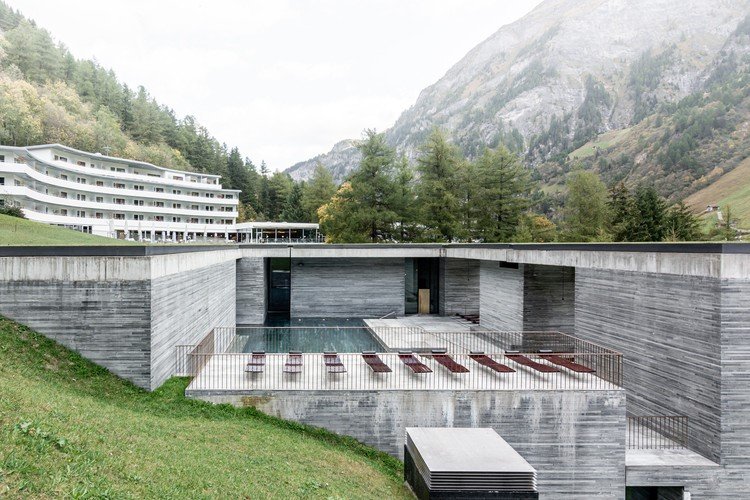
Therme Vals teaches us that architecture can be felt as much as it is seen. It doesn’t need to shout; the hush of the experience is its power.
3. Church of the Light, Japan (Tadao Ando)
In Ibaraki, Japan, Ando’s Church of the Light epitomizes restraint. The space is bare concrete, interrupted only by a cruciform opening where daylight pierces the darkness. It’s architecture that strips away distractions, leaving worshippers with a distilled encounter between light, space, and spirit.
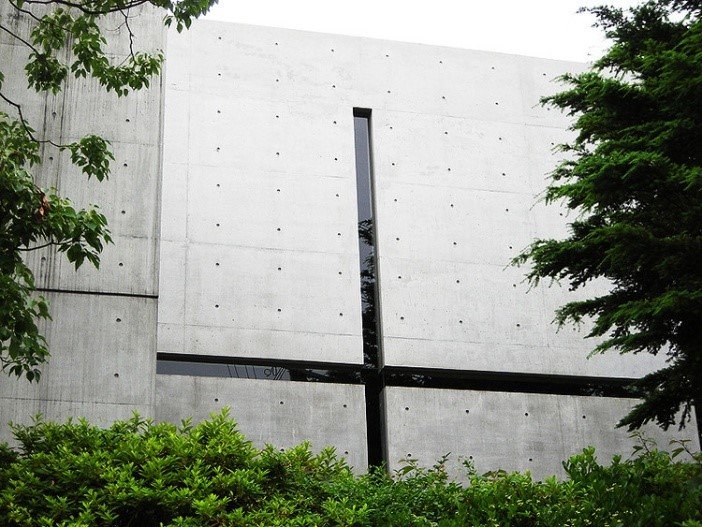
Ando’s work reminds us that quiet architecture can be deeply spiritual without being ornate. Silence, in his hands, is sacred.
4. The Bruder Klaus Field Chapel, Germany (Peter Zumthor)
Another Zumthor project, this chapel is formed by casting concrete around a tent of tree trunks, later burned away to leave a textured void. The interior is dark, raw, and intimate, illuminated only from above.
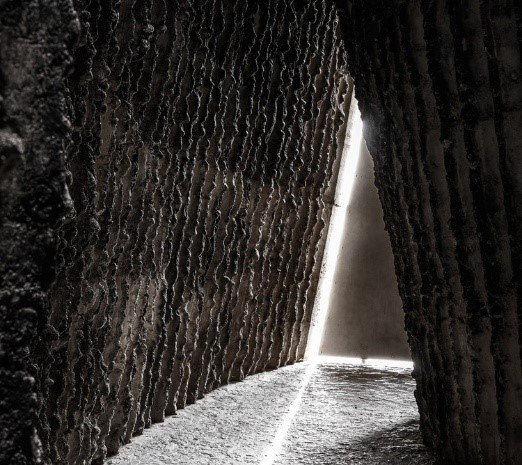
It embodies the paradox of quiet architecture: simplicity achieved through immense craft. Visitors describe it less as “seeing a building” and more as feeling an atmosphere.
5. Koshino House, Japan (Tadao Ando)
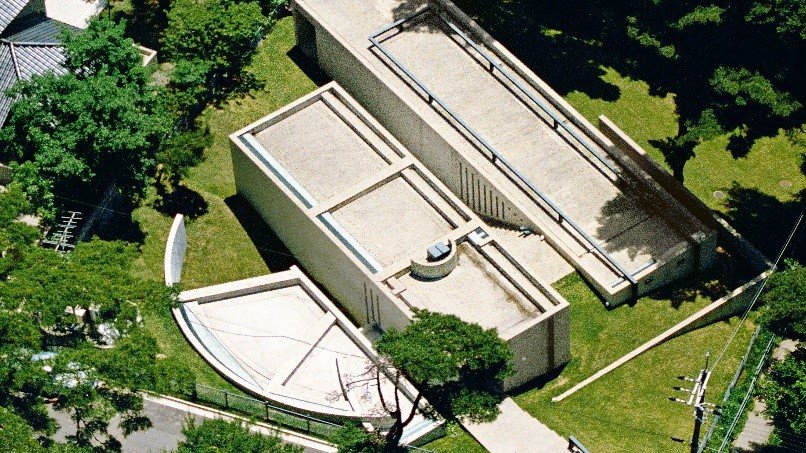
This private residence demonstrates how quiet design translates to domestic life. Again, Ando uses concrete walls, but orchestrates them with natural light and the landscape. The home feels contemplative, a retreat from the chaos of Osaka nearby.
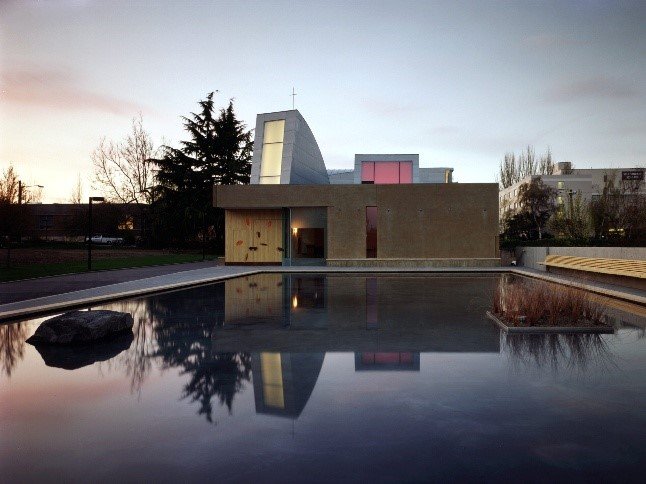
6. Chapel of St. Ignatius, USA (Steven Holl)
In Seattle, Holl designed this chapel as “seven bottles of light in a stone box.” Each pocket of light represents a different aspect of spiritual life. While not as stark as Ando’s work, it shares the same philosophy: reducing form to amplify experience.
7. Muji Stores, Global
Not every quiet space is religious or healthcare-related. Japanese retailer Muji has exported its design philosophy worldwide. Its stores avoid aggressive branding and visual clutter, instead using plain materials, clear layouts, and soft lighting. Shopping becomes less about hype, more about presence.

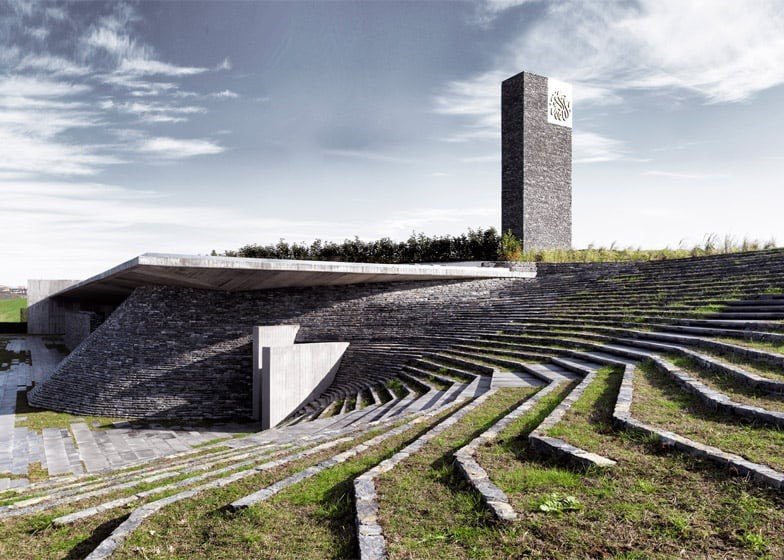
8. Sancaklar Mosque, Turkey (Emre Arolat Architects)
Instead of building a towering minaret or ornate façade, this mosque is sunk into the landscape near Istanbul. From the outside, it’s barely visible, merging with its site. Inside, light and shadow do most of the work. Worshippers describe it as profoundly serene.
Beyond Aesthetics: The Psychology of Quiet Spaces
Psychologists studying “restorative environments” find that calm, non-intrusive architecture lowers stress and improves focus. Biophilic elements views of nature, natural materials, soft daylight reduce cortisol levels and even improve healing rates in hospitals.
Quiet architecture taps into this science. It’s not just about visual peace but about regulating the nervous system. Spaces that whisper, in other words, are healthier for us.
The Critique: Is Quiet Architecture Just Minimalism 2.0?
Skeptics argue that quiet architecture is little more than minimalism rebranded. But the difference lies in intention. Minimalism was often about a visual ideology stripping things down to achieve purity. Quiet architecture is less doctrinaire. It’s not about austerity for its own sake but about outcomes: calmness, wellbeing, contextual harmony.
Quiet spaces don’t have to be bare. They can include texture, detail, and warmth as long as those elements don’t compete for attention.
The Future of Quiet Architecture
As cities densify and digital life accelerates, demand for quiet architecture will only grow. Expect to see:
- Schools designed for sensory balance, helping neurodiverse students thrive.
- Workplaces with “decompression zones” that buffer stress.
- Hospitals where quiet design is as important as medical equipment.
- Urban retreats libraries, meditation centers, even bus stops that prioritize calm over advertising.
In a way, quiet architecture is activism by design. It resists the culture of constant noise and consumption, proving that calm can be powerful.
Conclusion: The Strength of Silence
The most memorable buildings aren’t always the tallest or loudest. Sometimes they’re the ones that, years later, you recall with a sense of calm the way light fell across a stone wall, or the hush you felt stepping inside.
Quiet architecture doesn’t aim for applause; it aims for resonance. In a noisy world, that might be the most radical statement design can make.