Vastu Shastra is an ancient body of knowledge that addresses the relationship between human habitation and the forces of nature. It is not merely a system of construction rules but a comprehensive science that evolved from the observation of natural laws and cosmic order. The introduction of Vastu Shastra establishes it as a discipline rooted …
Vastu Shastra is an ancient body of knowledge that addresses the relationship between human habitation and the forces of nature. It is not merely a system of construction rules but a comprehensive science that evolved from the observation of natural laws and cosmic order. The introduction of Vastu Shastra establishes it as a discipline rooted in harmony, balance, and proportion, emphasizing that human life flourishes best when built spaces resonate with natural energies. This science developed as a response to humanity’s fundamental need for shelter that supports physical health, mental clarity, and spiritual well being.
The origins of Vastu Shastra can be traced back to the earliest phases of Indian civilization, where sages and scholars studied the environment with great attentiveness. They observed the movement of the sun, the direction of winds, the flow of water, and the qualities of land. These observations were not abstract but deeply practical. They were meant to ensure that dwellings, settlements, and sacred structures supported life rather than disrupted it. Over time, these observations were codified into principles that later came to be known collectively as Vastu Shastra.
The word Vastu refers to a dwelling place or site, while Shastra denotes a systematic body of knowledge. Together, they signify a structured science of habitation. This science does not limit itself to buildings alone but extends to villages, towns, cities, temples, and even furniture placement. The introductory texts clarify that Vastu Shastra views space as a living entity influenced by cosmic forces. Every site is believed to possess its own energy field, shaped by geographical features, climate, and celestial movements.
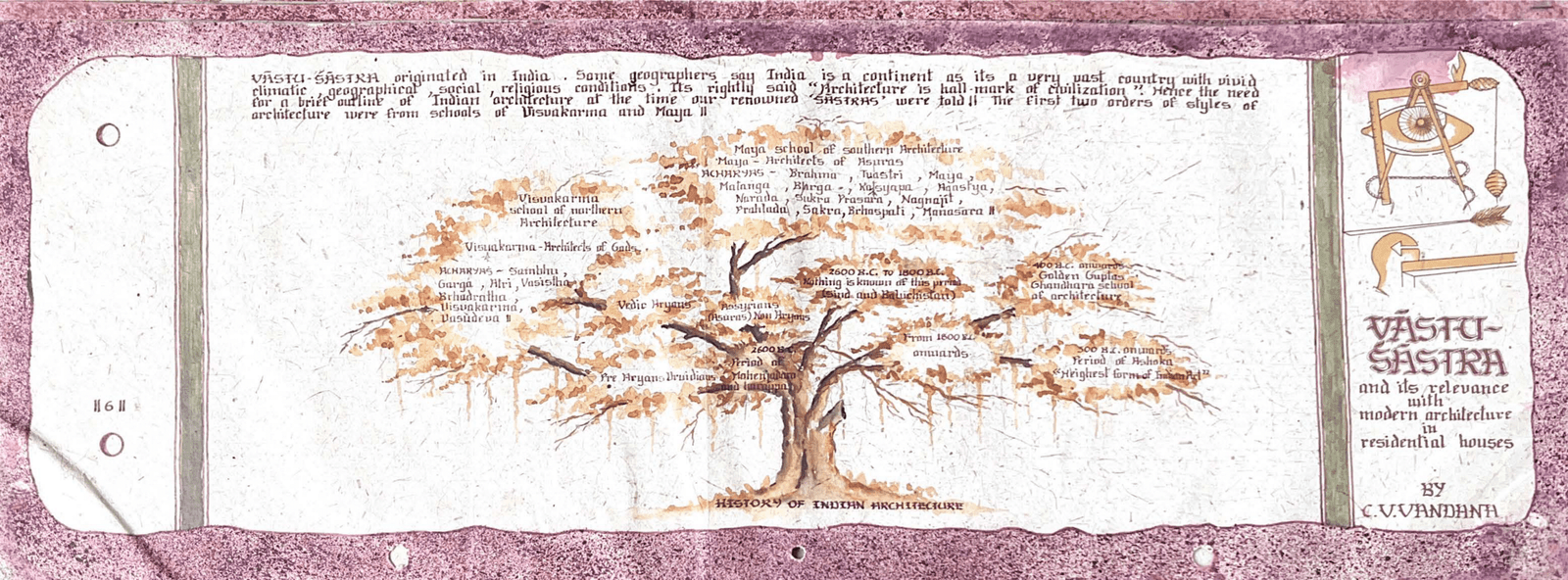
Vastu Shastra is closely connected with the Vedas, particularly the Atharva Veda, where references to dwelling, land selection, and spatial harmony appear. These early references demonstrate that architecture in ancient India was never separated from philosophy or spirituality. A house was not just a shelter but a microcosm of the universe. By aligning a structure with universal principles, inhabitants could live in accordance with cosmic rhythm rather than in opposition to it.
One of the fundamental ideas introduced in Vastu Shastra is that nature operates through five basic elements known as Panchabhutas. These elements are earth, water, fire, air, and space. The introduction explains that these elements exist both in the external environment and within the human body. When a building is designed in a way that balances these elements, it supports health and prosperity. When this balance is disturbed, it can result in discomfort, instability, or decline.
The science also emphasizes that land is not inert. Different types of soil, slopes, vegetation, and surrounding features influence the suitability of a site. Ancient scholars classified land based on color, smell, taste, and texture. These classifications were practical tools for assessing whether a site would support long term habitation. Fertile, stable, and well drained land was preferred, while land with irregular features or negative qualities was avoided.
The introduction highlights that Vastu Shastra developed through centuries of empirical knowledge. It was not created by a single individual but refined by generations of practitioners. Knowledge was transmitted orally and later recorded in classical texts. These texts served as manuals for architects, craftsmen, and rulers, ensuring consistency and continuity in building practices across regions and time periods.
Another important concept discussed in the introduction is the relationship between the macrocosm and the microcosm. The universe is seen as an ordered system governed by natural laws. Human beings and their dwellings are smaller reflections of this larger system. When a structure aligns with universal order, it becomes a supportive environment that enhances human potential. This idea forms the philosophical foundation of Vastu Shastra.
The introductory section also explains that Vastu Shastra is not rigid or dogmatic. While it provides principles and guidelines, it allows for adaptation based on local conditions, climate, and cultural practices. This flexibility is one of the reasons it remained relevant across centuries. Builders were encouraged to apply wisdom rather than blindly follow rules, ensuring that structures remained functional and contextually appropriate.
The role of energy is central to the science. Vastu Shastra recognizes subtle energies that influence human life. These energies are affected by light, air circulation, spatial arrangement, and material use. Proper planning ensures that positive energy flows freely through a structure, while obstructions or imbalances can hinder this flow. The introduction establishes that awareness of these forces is essential for meaningful design.
The text also underscores that Vastu Shastra addresses both material and intangible aspects of life. It considers comfort, safety, and utility alongside mental peace and spiritual growth. A well designed space is one where inhabitants feel secure, focused, and at ease. This holistic approach distinguishes Vastu Shastra from purely technical building systems.
Historically, Vastu principles were applied to royal palaces, temples, urban layouts, and common dwellings alike. This universality demonstrates that the science was meant for society as a whole, not restricted to elite or religious contexts. The introduction suggests that harmonious spaces contribute to social stability and collective well being.
The transmission of Vastu knowledge was often linked to guilds of craftsmen and architects. These practitioners combined theoretical understanding with hands on experience. Their expertise ensured that principles were translated into practical solutions. This integration of theory and practice strengthened the credibility and longevity of the science.
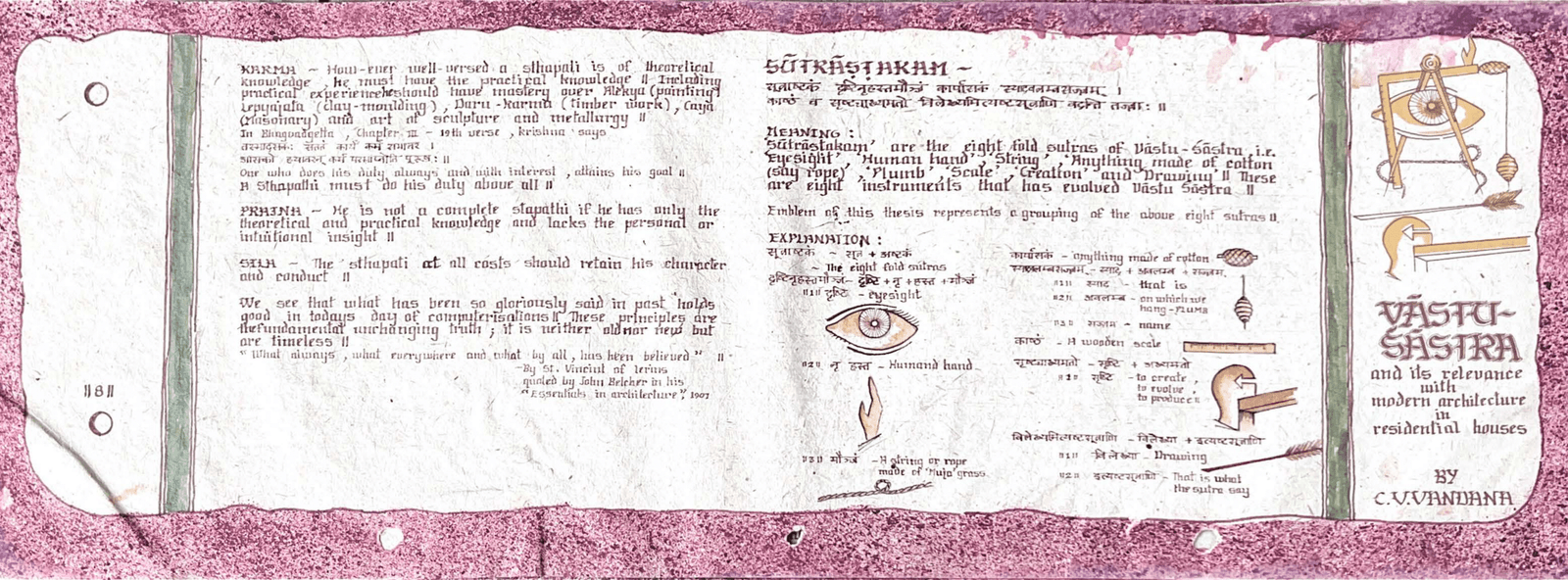
The introductory material also explains that Vastu Shastra evolved alongside advancements in mathematics, astronomy, and geometry. Measurements, proportions, and alignments were calculated with precision. This scientific approach ensured structural stability while maintaining symbolic and energetic alignment. Geometry was not used merely for aesthetics but as a tool for achieving balance and coherence.
Another key aspect highlighted is the ethical responsibility of builders. Constructing a dwelling was considered a sacred act that impacted not only the inhabitants but also the surrounding environment. Respect for nature and careful resource use were implicit values within Vastu practice. This perspective aligns closely with contemporary concerns about sustainability and ecological balance.
The introduction further clarifies that Vastu Shastra is not superstition but an applied science based on observation and experience. While symbolic language is often used, the underlying principles relate to natural phenomena such as sunlight exposure, airflow, and spatial efficiency. When understood correctly, these principles remain relevant even in modern contexts.
The adaptability of Vastu Shastra is emphasized through its continued application in changing architectural styles. Whether in traditional homes or contemporary buildings, the core objective remains the same. The aim is to create spaces that support life in all its dimensions. This continuity demonstrates the enduring relevance of the science.
The introductory section also touches upon the spiritual dimension of space. A dwelling is viewed as an extension of the human self. Just as internal balance leads to well being, external balance within living spaces supports inner harmony. This interdependence between mind, body, and environment is a recurring theme in Vastu philosophy.
The origin narratives of Vastu Shastra often reference mythological and symbolic accounts. These stories serve as allegories that communicate complex ideas in accessible forms. While symbolic in nature, they reinforce the idea that space is sacred and deserves thoughtful consideration.
The introduction concludes by positioning Vastu Shastra as a bridge between ancient wisdom and practical living. It invites readers to view architecture not merely as construction but as a discipline that shapes human experience. By understanding the origins and foundational principles, one gains insight into how space influences behavior, health, and prosperity.
In essence, the introductory portion establishes Vastu Shastra as a comprehensive system that integrates science, philosophy, and spirituality. It underscores the belief that human life thrives when aligned with natural order. This foundational understanding sets the stage for deeper exploration of specific principles and applications, which are addressed in subsequent sections.