A gated community is not a product, it is a lived system Most villa communities are sold as a promise: quiet streets, greenery, security, and a better daily rhythm than the city can offer. The hard part begins after sales. Residents arrive with different lifestyles, different tastes, and different expectations of what “premium living” should …
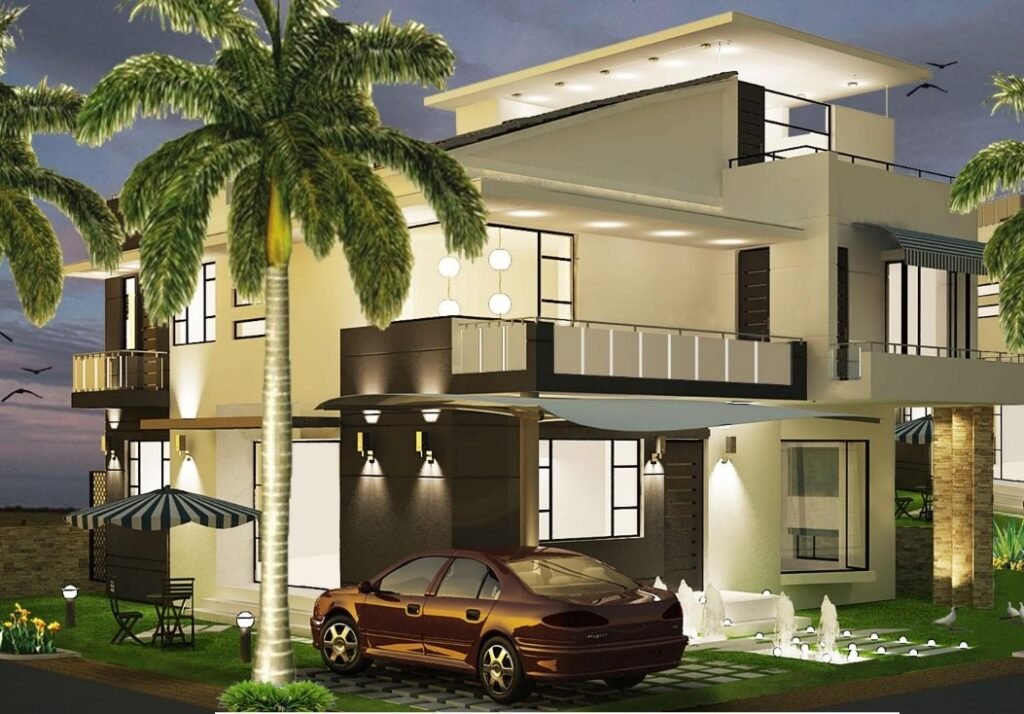
Table of Contents
- A gated community is not a product, it is a lived system
- Project snapshot, based on VANZSCAPE’s published description
- The central challenge: 60 owners, one coherent neighborhood
- Masterplanning 30 acres: making a large site feel walkable and social
- A legible movement hierarchy
- A continuous wellness loop
- Parks as distributed “living rooms”
- Courtyard landscape: the most timeless villa device
- Gazebos and the social grammar of the landscape
- Villa orientation and Vastu: tradition as an organizing discipline
- Bay windows: light, view, and micro-spaces
- Double height living: perceived luxury through volume
- Terraced balconies: outdoor life without leaving home
- Open kitchens: contemporary lifestyle as a planning signal
- Meditation nooks: wellness designed into the monotony of routine
- The shared amenities: clubhouses, parks, and jogging tracks as a daily operating system
- Clubhouses: formal community life
- Parks: family rhythm and safety
- Jogging tracks: habit formation
- Personalization without disorder: how 60 villas can still feel curated
- The experience goal: a community that supports calm, not just security
- Conclusion: a masterplan that balances belief, budget, and belonging
A gated community is not a product, it is a lived system
Most villa communities are sold as a promise: quiet streets, greenery, security, and a better daily rhythm than the city can offer. The hard part begins after sales. Residents arrive with different lifestyles, different tastes, and different expectations of what “premium living” should feel like. If the masterplan is generic, the place becomes repetitive and emotionally flat. If every home is fully bespoke, the project becomes financially and operationally unmanageable.
Westend Greens, described by VANZSCAPE as a gated community of 30 acres with 60 villas and community amenities, sits directly in that tension. The project narrative is clear about the ambition: it had to be trendy and traditional at once, cost-effective, and capable of catering to the individual tastes of 60 different owners.
That combination is not a style brief. It is a planning and systems brief. It demands a masterplan that can standardize what should be standardized, while preserving enough flexibility for each family to feel their home is theirs.
This blog expands on the logic embedded in VANZSCAPE’s published description and explains what it typically takes to deliver that kind of community: a strong public realm structure, climate-aware landscape planning, villa typologies that support daily life, and a customization strategy that does not break budgets or coherence.
Project snapshot, based on VANZSCAPE’s published description
- Project type: gated community villa development
- Scale: 30 acres
- Units: 60 villas
- Amenities: clubhouses, parks, jogging tracks
- Architectural and landscape elements highlighted: courtyard landscape, gazebo, bay windows, double height living, terraced balconies, open kitchens
- Lifestyle layer: meditation nooks
- Orientation and planning rule: villas designed to be east facing or west facing, aligned with Vastu-sastra norms
- Timeframe indicated: 2018 to 2019
The central challenge: 60 owners, one coherent neighborhood
The phrase “individual tastes of 60 different owners” is the most revealing line in the published narrative. It implies the project was never only about creating a beautiful prototype villa. It was about building a neighborhood framework that can hold variation without chaos.
In practical terms, this kind of project requires two parallel design strategies:
- A strong common language, so the community reads as one place. This typically comes from consistent planning logic, consistent street and landscape rules, and a controlled palette for shared elements.
- A planned allowance for personal expression, so each villa can adapt to its owner without breaking the project’s identity. This typically comes from flexible internal layouts, optional features, and a limited set of “swap points” where customization can occur safely.
Without this dual structure, villa communities tend to drift into one of two failures:
- Either they become monotonous, where every home feels like a copy.
- Or they become visually fragmented, where each home is a separate aesthetic agenda and the street loses cohesion.
Westend Greens is explicitly positioned as both trendy and traditional, which suggests the design intent was to allow modern living preferences while maintaining culturally familiar planning cues, particularly through Vastu alignment.
Masterplanning 30 acres: making a large site feel walkable and social
A 30 acre gated community is large enough to feel like a small town, and large enough to become disconnected if the public realm is not designed as a structure.
Amenities like clubhouses, parks, and jogging tracks are listed as part of the project. The important question is not whether these exist, but how they are stitched together. In successful communities, amenities are not isolated objects. They operate as a network that shapes routine.
A robust masterplan for this typology typically includes:
A legible movement hierarchy
- Main entry and primary spine that establishes orientation
- Secondary streets that distribute movement evenly
- Local clusters that slow traffic and create quieter residential pockets
When this hierarchy is clear, the community feels intuitive. Residents do not need to “learn” the site for weeks. They begin using it comfortably from the first days.
A continuous wellness loop
Jogging tracks, when treated as a loop rather than fragments, become the most used amenity in the entire development. A loop encourages:
- morning walks and evening strolls as default routines
- informal neighbor interactions
- safe exercise within the community
- a sense of place through repeated daily movement
The simple fact that jogging tracks are part of the amenity set indicates the project narrative values daily life infrastructure, not only weekend clubhouse moments.
Parks as distributed “living rooms”
If a community has one central park only, many residents will be too far to use it casually. The best masterplans distribute open space in a hierarchy:
- one larger central green for events and gatherings
- a few mid-sized parks for daily family use
- smaller pocket greens that serve as quiet breaks near clusters
This is also how children’s play becomes safer and more visible. Parents prefer parks that feel close, observable, and integrated with paths and seating.
Courtyard landscape: the most timeless villa device
VANZSCAPE highlights a courtyard landscape as part of the project’s design elements. Courtyards are not a nostalgic move. They are one of the most effective climate and lifestyle tools in Indian residential design.
A courtyard, when designed well, can simultaneously deliver:
- daylight without harsh glare
- cross ventilation support
- an internal green view that makes homes feel larger
- a calm transitional zone between public and private spaces
- a family anchor where daily rituals can happen
In villa communities, courtyards also help solve a common problem: the edge condition. Villas often sit close to neighbors or streets, which can compromise privacy. A courtyard pulls the “primary outdoor” experience inward, allowing openness without exposure.
From a cost-effectiveness perspective, a courtyard can be a high value move because it adds spatial quality without adding built-up area in the same proportion. It creates perceived luxury through volume, light, and greenery, rather than through purely expensive materials.
Gazebos and the social grammar of the landscape
The project narrative also mentions gazebos. In gated community landscapes, gazebos are not just ornamental. They often serve as:
- pause points along walking loops
- shaded social nodes for elders
- informal meeting points for teenagers
- locations for small celebrations without booking the clubhouse
The key is placement. A gazebo that is too hidden feels unsafe and unused. A gazebo that is too exposed feels uncomfortable in summer. The best placement is typically along a primary pedestrian desire line, with good visibility, shade, and nearby seating options.
When a community includes both clubhouses and gazebos, it creates a two-scale social structure:
- the clubhouse for planned, formal gatherings
- the gazebo for everyday, casual interaction
That mix is what turns a residential project into a neighborhood.
Villa orientation and Vastu: tradition as an organizing discipline
VANZSCAPE notes that all villas are either east facing or west facing and are designed to comply with prevailing Vastu-sastra norms. In many Indian housing markets, Vastu is not a preference. It is a purchase filter. Treating it as a first-order planning constraint is often essential for market acceptance.
However, the deeper architectural interest is this: when Vastu is integrated early, it can become a discipline that improves planning clarity. It forces designers to think about:
- entry placement and threshold rituals
- zoning of public, semi-private, and private areas
- kitchen placement and functional adjacency
- sleeping zone hierarchy
- daylight and ventilation strategy
The design risk, if handled poorly, is that Vastu compliance becomes a rigid checklist that produces awkward layouts. The value, if handled well, is that it becomes a coherent framework that many residents already understand intuitively.
In a 60-villa project, a consistent orientation rule (east or west facing) also supports masterplanning coherence. It reduces random street conditions where every villa turns differently. It can help establish consistent setbacks, consistent landscaping zones, and a more orderly streetscape identity.
The modern living layer: bay windows, double height living, and terraced balconies
VANZSCAPE lists bay windows, double height living, and terraced balconies among the key design elements. These are not decorative add-ons. Each supports specific lived outcomes.
Bay windows: light, view, and micro-spaces
Bay windows do three things in villa environments:
- They expand the view angle, making rooms feel more connected to gardens and streets.
- They bring daylight deeper into interiors.
- They create small perching zones that residents use naturally, for reading, phone calls, and quiet time.
This is particularly valuable in a gated community where the outside is calmer than a typical city street. A bay window becomes a way to enjoy the community landscape without leaving the home.
Double height living: perceived luxury through volume
Double height living spaces are a premium signal because they create:
- strong spatial drama at entry
- better stack ventilation potential if detailed correctly
- opportunities for daylighting via high-level windows
- visual connection between floors, which supports family interaction
They are also a careful cost decision. Double height volume can increase perceived luxury without increasing built-up area in the same way a larger floor plate would. In a cost-effective concept, this is a strategic move, not indulgence.
Terraced balconies: outdoor life without leaving home
Terraced balconies contribute to:
- private outdoor space for each villa
- planting and micro-gardens that residents personalize
- shading and façade depth, which can reduce heat gain
- social visibility, where streets feel safer because homes “watch” the public realm
In gated communities, balconies also help create a layered street section. Instead of flat compound walls and blank façades, terraced balconies introduce depth and softness.
Open kitchens: contemporary lifestyle as a planning signal
Open kitchens are explicitly mentioned in the project narrative. This is a strong marker of modern domestic life. Open kitchens change how families interact. Cooking becomes part of social space rather than a separated task.
In Indian homes, open kitchens also need careful handling:
- ventilation and odor management must be planned well
- storage must be integrated to avoid visible clutter
- the kitchen’s relationship to dining and family zones must support both everyday use and hosting
When designed thoughtfully, open kitchens:
- reduce the sense of hierarchy between “front” and “back” of house
- support informal hosting and family time
- make villas feel contemporary without relying on cosmetic styling
In a project that aims to be trendy and traditional, open kitchens are a modern choice that can still coexist with traditional planning principles, provided the zoning and thresholds remain legible.
Meditation nooks: wellness designed into the monotony of routine
One of the most distinctive elements mentioned is the inclusion of meditation nooks, introduced so clients can “live creatively in the monotony.” This is a sophisticated statement because it recognizes a real issue in residential planning: most homes are designed for functions, not for states of mind.
Meditation nooks, when treated seriously, can be:
- small pockets of silence within a busy family home
- places for prayer, reading, music practice, or journaling
- transitional spaces that support decompression after work
- micro-rooms that allow introversion without isolation
In villa typologies, these nooks can be integrated into:
- a stair landing with daylight
- a bay window alcove
- a corner of the courtyard edge
- a small balcony pocket
- a double height overlook zone
The value is not the square footage. The value is permission. The architecture gives residents permission to pause.
This aligns with a broader trend in premium housing: wellness is no longer only a clubhouse gym feature. It is embedded in daily domestic patterns.
Cost-effective, yet premium: the discipline behind “trendy and traditional”
The project is described as a cost-effective concept that is both trendy and traditional. This balance usually requires disciplined decisions in three areas.
1) Repeat what matters structurally, vary what matters experientially
In multi-villa developments, cost control typically comes from:
- repeating structural grids and core construction logic
- standardizing service zones and wet area stacking
- using a controlled palette of materials
Variation is then introduced through:
- façade articulation like bay windows and balcony configurations
- landscape personalization
- internal layout options within a stable envelope
This keeps procurement and execution manageable while preserving individuality.
2) Invest in high-impact spatial moves, not in everywhere-expensive finishes
Double height living and courtyard landscapes are examples of high-impact spatial moves. These features create luxury through space, light, and greenery, rather than through maximum material spend.
3) Let landscape do the emotional work
Community identity is often built more effectively by landscape than by façades. Parks, walking loops, gazebos, and courtyards shape memory. When landscape is strong, architecture can be calmer and more efficient.
The shared amenities: clubhouses, parks, and jogging tracks as a daily operating system
The amenities listed are not unusual on paper, but their success depends on how they are programmed.
Clubhouses: formal community life
A clubhouse can support:
- private events and celebrations
- indoor recreation and group activities
- co-working or reading lounges, depending on program
- guest hosting beyond the villa
For 60 villas, a clubhouse has the opportunity to feel intimate rather than oversized. The design focus should be on comfort and flexibility, not on grand scale.
Parks: family rhythm and safety
Parks in gated communities are not just greenery. They are:
- children’s social ecosystems
- elder comfort zones
- places where households intersect naturally
- the settings for festivals and small community events
If parks are visible, shaded, and connected to walking loops, they become the most used parts of the project.
Jogging tracks: habit formation
A jogging track is one of the few amenities that creates a habit. A habit creates attachment. Attachment creates community identity.
In projects that aim to elevate daily living, jogging tracks are often the strongest investment because they are used not occasionally, but repeatedly, across seasons.
Personalization without disorder: how 60 villas can still feel curated
A development that must cater to 60 individual tastes needs a controlled customization system. This is where many projects struggle.
A credible approach typically includes:
- a base villa typology that is consistent in proportion and planning
- a pre-defined set of options for certain elements, such as balcony treatments, bay window configurations, and courtyard edge details
- finish palettes that offer choice within a limited range, so the streetscape remains coherent
- landscape zones where owners can personalize planting without disrupting public realm consistency
This kind of approach produces the best of both worlds:
- residents feel ownership and individuality
- the community still reads as designed, not as a collection of unrelated houses
VANZSCAPE’s own narrative that the concept had to cater to 60 different owners strongly suggests this kind of controlled flexibility was central to the project logic.
The experience goal: a community that supports calm, not just security
Gated communities often sell security as the primary benefit. But residents stay for calm. Calm comes from design choices that shape daily experience:
- streets that feel slow and safe for children
- landscape that provides shade and softness
- a clear public realm where people can walk without negotiating cars constantly
- pockets for solitude, such as meditation nooks and quieter parks
- social nodes that encourage neighborly interaction without forcing it
Westend Greens’ emphasis on meditation nooks and lifestyle amenities indicates the project was aiming for exactly this kind of calm, habit-based community life.
Conclusion: a masterplan that balances belief, budget, and belonging
Westend Greens is described by VANZSCAPE as a 30-acre gated community with 60 villas and shared amenities including clubhouses, parks, and jogging tracks, shaped with design elements like courtyard landscapes, gazebos, bay windows, double height living, terraced balconies, open kitchens, and meditation nooks, with villas oriented east or west to align with Vastu-sastra norms.
The value of that combination is clear. It positions the community as:
- traditional enough to feel culturally grounded
- modern enough to support contemporary family life
- structured enough to remain coherent across 60 owners
- cost-disciplined enough to be buildable without diluting experience
In well-designed villa communities, the success metric is not only how the homes look at handover. It is how people live a year later: whether they walk more, meet neighbours more, sit outdoors more, and feel that the place supports their best routines. Westend Greens, as framed in the published narrative, is fundamentally aimed at that outcome.