Louis I. Kahn once wrote, “A great building must begin with the immeasurable, must go through measurable means when it is being designed, and in the end must be immeasurable.”For any architect who has ever stood before a blank sheet of paper that haunting, luminous void that seems to wait for an idea to descend …
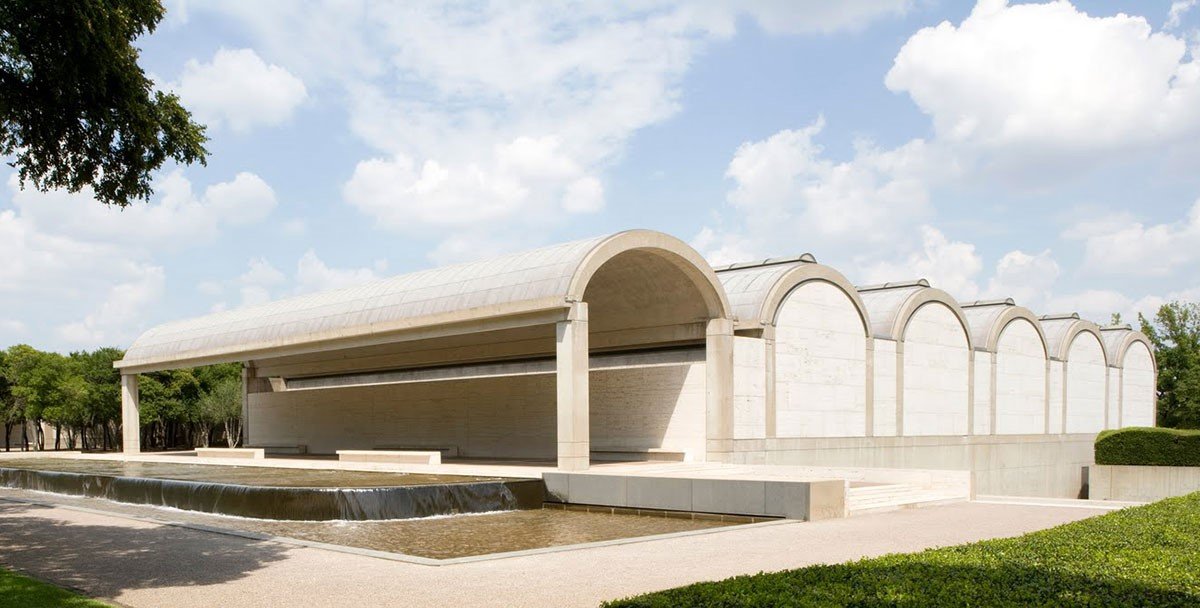
Table of Contents
- The Immeasurable Beginning: The Spirit Before the Form
- Through the Measurable: The Rational Translation
- The Return to the Immeasurable: When the Building Breathes
- Kahn’s Museum of Light: The Temple as a Vessel of the Immeasurable
- The Vaulted Ceiling as a Vessel of Light
- Light as Structure, Structure as Light
- The Spiritual Geometry of the Vault
- Silence and Light: The Soul of the Temple
- The Architect as a Seer
- The Timeless Lesson for Architects
- A Contemporary Reflection
- Conclusion: Returning to the Source
Louis I. Kahn once wrote, “A great building must begin with the immeasurable, must go through measurable means when it is being designed, and in the end must be immeasurable.”
For any architect who has ever stood before a blank sheet of paper that haunting, luminous void that seems to wait for an idea to descend this statement strikes directly at the soul of the creative process. It’s both a challenge and a consolation. Kahn’s words remind us that architecture is neither merely about construction nor about abstract dreaming; it’s the reconciliation of the eternal with the temporal, the spiritual with the structural, the intangible with the tangible.
As architects, we dwell in this strange intersection between math and myth, between the human hand that draws and the human spirit that yearns. To Kahn, architecture was not a profession, it was a prayer. And his quote on the immeasurable and the measurable is perhaps the most profound articulation of what it means to bring the divine into built form.
The Immeasurable Beginning: The Spirit Before the Form
The “immeasurable” in Kahn’s statement refers to that moment before form is born when an idea exists as pure feeling, pure intent. It’s the sacred moment before geometry takes hold, before material, proportion, or cost enters the room. It’s the idea of “what architecture wants to be” before the architect even knows what the client wants.
For Kahn, this stage was not about functionality or even beauty; it was about truth. He sought the “nature” of things. What is the nature of a wall? Of a window? Of a roof? What is the nature of light? These were not rhetorical questions he believed that architecture had an inner essence, a spiritual purpose that must be discovered rather than invented. The immeasurable is the conversation the architect has with that essence before the drawing begins.
This resonates deeply with every architect who has ever sat in silence before starting a project that quiet, expectant pause when you try to feel what the building wants to be. Kahn believed that architecture begins with that silent dialogue. The immeasurable is the soul of the building before it is clothed in structure.
It’s worth noting that Kahn used the word immeasurable not as a synonym for “abstract” or “vague.” For him, it was a real dimension the metaphysical layer of architecture that gives meaning to all the measurable ones. Without it, a building might stand, but it wouldn’t live.
Through the Measurable: The Rational Translation
Once the idea has been conceived, the architect must enter the measurable realm the world of proportion, geometry, structure, cost, and code. This is where inspiration meets limitation, and where poetry must survive the assault of practicality.
This is the crucible in which the immeasurable is tested. Here, the architect becomes a translator converting the language of the soul into the syntax of engineering and construction. The challenge is not to lose the original spirit in the process. Kahn insisted that the measurable stage was not about compromise but about clarity. Measurement was not the enemy of imagination; it was the instrument through which imagination finds its physical voice.
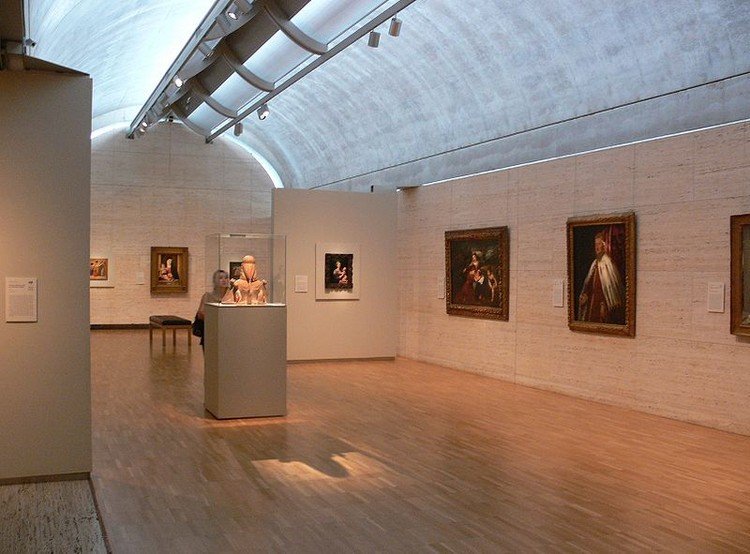
Kahn’s mastery lay in his ability to use measurable means brick, concrete, geometry to express immeasurable qualities like light, silence, and reverence. He famously said, “The sun never knew how great it was until it hit the side of a building.”
This statement perfectly captures how Kahn treated measurable tools (walls, vaults, apertures) as devices to reveal the immeasurable light and shadow, time and stillness.
The measurable is not just the technical stage of design. It’s a disciplined meditation. The architect works with drawings, dimensions, and materials, yet constantly asks, “Does this still carry the spirit of the idea?” The process becomes an act of faith that through proportion and precision, something transcendent might emerge.
The Return to the Immeasurable: When the Building Breathes
And finally, when the building is complete, when it stands in its own light, something miraculous can happen. The measurable gives birth once more to the immeasurable not as an idea now, but as an experience.
A great building, when visited, has a silence that cannot be measured. It evokes something primal, something wordless. Kahn’s buildings do this: they do not shout, they hum. You feel their gravity, their dignity, their patience. You are not just inside a structure; you are inside a thought a still, contemplative one.
This is the immeasurable end that Kahn speaks of. The circle is complete: from the immeasurable inspiration, through the measurable making, back into the immeasurable experience. The building has become what it was meant to be not a thing, but a presence.
Kahn’s Museum of Light: The Temple as a Vessel of the Immeasurable
Among Kahn’s many explorations of light and spirit, one of the most poetic was his concept for the Temple of Light sometimes referred to as the Museum of Light an unbuilt project that has taken on mythical status in architectural discourse.
The project was conceived as a kind of spiritual building, not tied to any single religion or ritual. It was to be a place where light itself would be the subject, the teacher, the deity. Kahn’s idea was to design a “temple for the unmeasurable” a space where one could experience light as an architectural material, not just as an environmental factor.
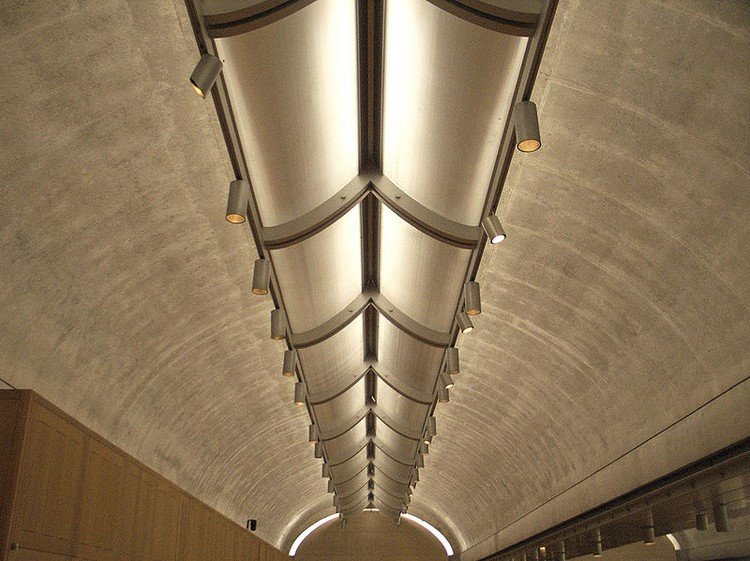
In his drawings and sketches, Kahn envisioned vaulted ceilings that would receive and modulate light in profound ways. These vaults were not decorative; they were the lungs of the building breathing light and shadow, orchestrating the passage of time within space.
The Vaulted Ceiling as a Vessel of Light
The vaulted ceiling, for Kahn, was an ancient form rediscovered. He admired the Romanesque and the Gothic, not for their ornamentation but for their clarity of purpose. A vault was not merely structure; it was geometry that gave shape to light.
In the Temple of Light, the vaults were designed to create a rhythm a procession of illuminated chambers, each with a different intensity and character of light. The vaults acted like lenses, filtering daylight from above and diffusing it in gradients across stone surfaces.
Kahn often spoke of the “unmeasurable quality of natural light” how it changes, how it reveals, how it transforms the mood of a space. In his Temple of Light, he sought to choreograph that transformation. He wanted the visitor to move through zones of brightness and shadow, awareness and mystery a journey of light as metaphor for consciousness itself.
The design was not about windows; it was about openings that speak. Each aperture was calculated not only to admit light but to reveal its character whether the soft, indirect glow of dawn or the piercing beam of noon. The vaults framed these experiences, creating a living dialogue between the measurable form and the immeasurable phenomenon.
Light as Structure, Structure as Light
One of Kahn’s revolutionary ideas was that structure itself could be an instrument of light. He despised the notion of light being “applied” as if it were a secondary layer added after form was established. Instead, he designed the building’s geometry so that its very bones were light-bearing.
In the Temple of Light, the vaults, walls, and apertures were conceived as a unified system each element defined by its relationship to illumination. The structure was a script for light.
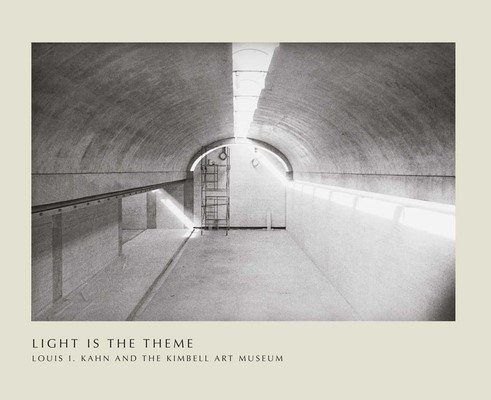
Kahn’s vaults were massive, but they did not oppress. Their solidity was softened by the way light grazed their curves, emphasizing volume rather than weight. The interplay of brightness and darkness revealed the architecture’s logic you could read the space through its light.
In this, Kahn echoed the great masters of sacred architecture the Pantheon in Rome, the Hagia Sophia in Istanbul buildings where light defines structure and space becomes sacred through illumination. His Temple of Light was to be a modern continuation of that lineage a “museum” not of artifacts, but of light itself.
The Spiritual Geometry of the Vault
Geometry, for Kahn, was not a mathematical exercise; it was a moral one. He saw proportion as a language of truth a way to express harmony between the measurable and the immeasurable.
The vaults in the Temple of Light followed a sacred geometry that invited contemplation. They were not arbitrary; they were generated from the circle and the square timeless symbols of unity and earth. The circular vault suggested infinity, while the square suggested grounding. Their intersection created a dialogue between heaven and earth between the divine and the human.
Kahn once said, “Form is what nature does; design is what man does.” In the Temple of Light, he sought to let form return to nature to design a space that felt inevitable, as though it had always existed and only needed to be revealed. The vaults were not imposed; they grew organically from the idea of light seeking space.
Silence and Light: The Soul of the Temple
Kahn often spoke of “Silence and Light” two of his favorite words, often capitalized in his notes as if they were sacred beings. For him, Silence was the realm of the immeasurable the place of ideas before form. Light was the realm of the measurable the moment when the idea becomes visible.
In the Temple of Light, these two forces meet. The vaults hold silence within them, while light penetrates that silence and gives it voice. The visitor experiences this as a profound calm the feeling that the building itself is breathing with you.
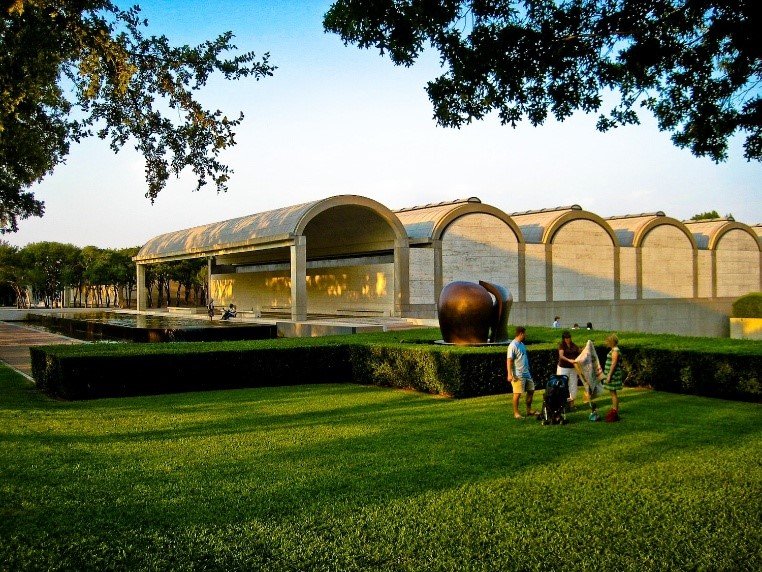
It’s no coincidence that Kahn’s most spiritual spaces like the Salk Institute’s courtyard, the Kimbell Art Museum’s cycloid vaults, and the National Assembly in Dhaka all create a similar sensation. You don’t simply see them; you feel them seeing you back. They awaken awareness, not through ornament or spectacle, but through light and proportion.
The Temple of Light was to be the purest distillation of that vision a building stripped of everything but light, geometry, and silence. It would not instruct; it would invite. It would not dominate; it would reveal.
The Architect as a Seer
To design such a space requires a special kind of vision not the sight of the eyes, but of the soul. Kahn believed that the architect’s task was to see the unseeable to intuit the immeasurable essence that wants to take form. The architect becomes a seer, a medium between the world of spirit and the world of matter.
The Temple of Light, in this sense, was Kahn’s own spiritual autobiography. It embodied his belief that architecture must always begin with reverence. He once said, “Even a brick wants to be something.”
This was not poetic exaggeration; it was metaphysical conviction. He believed every material had a destiny, and it was the architect’s duty to help it fulfill that destiny.
In the Temple of Light, concrete and stone were not inert; they were participants in a divine act the shaping of light. The vaults were not simply built; they were consecrated.
The Timeless Lesson for Architects
From an architect’s perspective, Kahn’s quote about the immeasurable and the measurable is more than a poetic observation it’s a professional compass. It reminds us that architecture cannot live on function alone. We can meet every code, satisfy every client, achieve LEED Platinum, and still build something lifeless.
The immeasurable is what gives architecture soul the whisper behind the drawing. But that soul must pass through the measurable, or it will remain a dream. Kahn teaches us that our job is not to choose between imagination and reality, but to reconcile them.
The process of design, then, becomes a pilgrimage. The initial sketch that spontaneous, immeasurable gesture begins the journey. The drawings, models, details, and meetings are the measurable trials we must endure. And if we are faithful to the idea, if we protect its essence through all the compromises and constraints, the finished building may, by grace, return us to the immeasurable not as concept, but as lived experience.
This is why Kahn remains such a beacon for architects: he reminds us that architecture is not about style, but about spirit. His Temple of Light was not an object but an offering a prayer in stone and light.
A Contemporary Reflection
If Kahn were alive today, in our digital age of parametric design and algorithmic optimization, his words would resonate even more urgently. We have more measurable tools than ever BIM, AI modeling, environmental simulation yet the danger is that we forget the immeasurable origins of architecture.
The Temple of Light would challenge us to ask: Where is the silence in our cities? Where is the space for light to speak? We have become masters of efficiency but apprentices of wonder. Kahn would remind us that the immeasurable is not ineffable it’s just neglected.
His Temple of Light stands as an eternal reminder that architecture’s ultimate purpose is not to shelter the body, but to awaken the spirit. In its vaulted ceilings, light becomes time, space becomes awareness, and the measurable world once again opens to the immeasurable.
Conclusion: Returning to the Source
Louis I. Kahn’s vision of a “great building” moving from the immeasurable to the measurable and back again is not a linear process but a cycle one that mirrors the creative act itself. We begin in intuition, we labor through precision, and we arrive at revelation.
The Temple of Light with its monumental vaults and choreographed illumination embodies that cycle perfectly. It begins with an immeasurable idea: light as the divine. It takes shape through measurable means: geometry, material, structure. And it returns to the immeasurable in experience: awe, silence, transcendence.
For architects, this is the eternal task to make the invisible visible, and through the visible, return to the invisible. Kahn’s words remind us that the greatest buildings are not measured in square feet but in moments of stillness, in the way they make us aware of light, of time, of being.
In the end, the immeasurable is what endures. The drawing fades, the structure ages, but the light the idea remains. That is the true architecture.