In the heart of Alabama, amidst the red clay and the sprawling landscapes of the rural South, architecture takes on a profoundly human role. It is here, in Hale County, that Rural Studio, founded by Samuel Mockbee in 1993, transformed the way we understand the purpose of design. Far removed from the prestige of glossy …
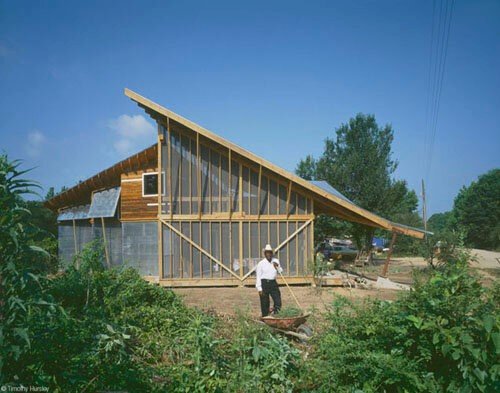
Table of Contents
- Samuel Mockbee: The Architect as Advocate
- The Pedagogy of Building
- The Philosophy of Dignity
- Example: The Bryant House
- Example: Newbern Fire Station
- Innovation Through Constraints
- Sustainability and Local Knowledge
- The Role of Community
- Social Activism Through Design
- Educational Impact
- Awards and Recognition
- The Continuing Legacy
- Conclusion: Architecture as Human Service
In the heart of Alabama, amidst the red clay and the sprawling landscapes of the rural South, architecture takes on a profoundly human role. It is here, in Hale County, that Rural Studio, founded by Samuel Mockbee in 1993, transformed the way we understand the purpose of design. Far removed from the prestige of glossy skyscrapers or urban museums, Rural Studio places architecture directly into the hands of those who need it most: low-income families, marginalized communities, and people often overlooked by society.
For Mockbee, architecture was never just about aesthetics or technical mastery. It was about justice, compassion, and dignity. It was about creating spaces that acknowledge the humanity of the occupants while responding intelligently to context, climate, and culture. At Rural Studio, students learn to build not for accolades or fame, but for people often with limited resources, unconventional materials, and immense ingenuity. The studio demonstrates that social purpose and design excellence are not mutually exclusive; in fact, they reinforce each other.
Samuel Mockbee: The Architect as Advocate
Samuel Mockbee’s journey into socially engaged architecture began with a deep sense of moral responsibility. Born in 1944 in California, Mockbee trained at Auburn University and later taught at its School of Architecture. While he excelled in conventional architectural practice, he became increasingly frustrated by the detachment of professional architecture from the needs of ordinary people.
The rural South of the 1980s and 1990s presented a stark contrast to the polished environments of urban design. Communities in Hale County and surrounding areas faced poverty, substandard housing, and neglect. Many families lived in structures that were unsafe, poorly insulated, or entirely inadequate for human dignity. Mockbee recognized a moral imperative: architects had knowledge, creativity, and resources that could alleviate suffering and transform lives.
In 1993, along with co-founder D.K. Ruth, he established Rural Studio as a hands-on educational program within Auburn University. Mockbee’s philosophy was revolutionary in its simplicity: students would learn by building, and architecture would be measured not only by awards or visual impact, but by the lives it improved.
He famously articulated his vision in what became known as the “Rural Studio Creed”: architecture should matter, it should respond to human need, and it should use imagination and resourcefulness to make beauty accessible to everyone. For Mockbee, it was never enough to design well; design had to be ethical.
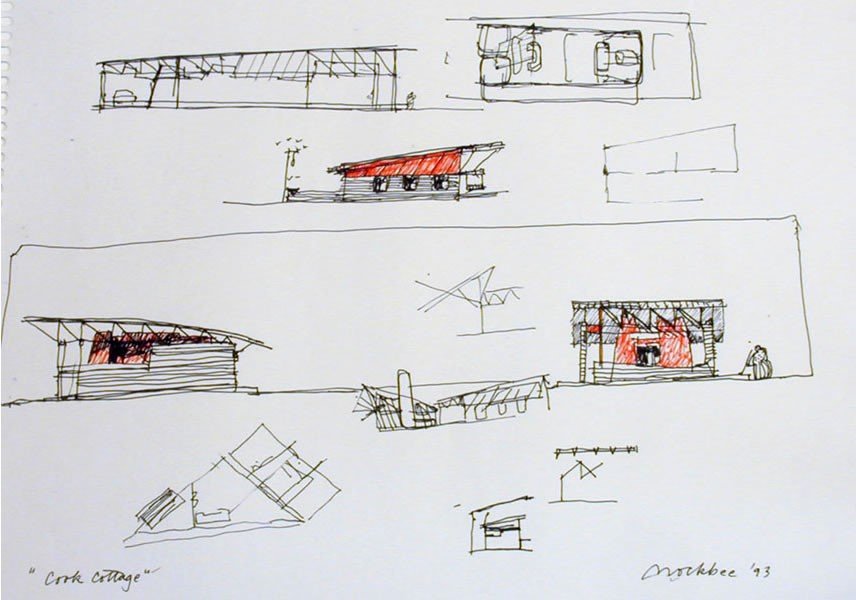
The Pedagogy of Building
At Rural Studio, education and social service are inseparable. Students live and work in the rural South, immersing themselves in the communities they serve. They study construction techniques, environmental responsiveness, and architectural theory, but always in tandem with real-world applications.
This hands-on approach challenges conventional architectural education. Students do not simply create drawings or models; they construct full-scale, habitable structures. They work with unconventional materials salvaged wood, recycled steel, old tires, concrete rubble learning to transform limitations into opportunities. In doing so, they cultivate creativity, problem-solving skills, and empathy.
One of the most radical aspects of this pedagogy is the emphasis on responsibility to community. Unlike traditional projects that remain abstract or purely academic, each Rural Studio project has a client: a real person or family whose life will be impacted by the building. Students cannot retreat to theory; they must negotiate needs, expectations, and realities. They learn that architecture is not a solitary pursuit but a collaborative, socially embedded practice.
The Philosophy of Dignity
Central to Mockbee’s vision was the idea that architecture could confer dignity. He observed that many people living in poverty were subjected to environments that communicated neglect, indifference, and invisibility. Rural Studio seeks to reverse this pattern. Every project, no matter how modest, is designed with care, beauty, and integrity.
Mockbee often said that architecture should “provide a roof, but also hope.” His designs are pragmatic, responsive to local climate, and structurally sound, yet they also possess elegance and poetic sensibility. They show that even the humblest materials, when thoughtfully deployed, can create spaces that honor human life.
This philosophy is evident in the careful attention to light, ventilation, spatial arrangement, and cultural context. Rooms are designed to feel expansive, welcoming, and safe. Even small homes can have porches, gardens, and windows that invite connection with the outdoors. The architecture communicates a simple yet profound message: the inhabitants are valued, and their lives matter.
Example: The Bryant House
One of Rural Studio’s most emblematic projects is the Bryant House, built in 1994 for a low-income family in Hale County. This small, single-story home exemplifies the principles of dignity, resourcefulness, and sensitivity that define the studio’s work.
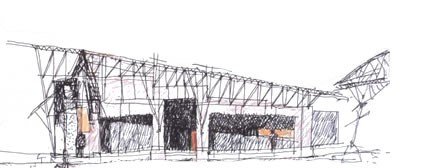
The Bryant House is constructed primarily from salvaged materials: reclaimed wood for framing and siding, and concrete blocks made from locally sourced clay. Despite the modest materials, the house achieves a remarkable balance of beauty and practicality. Windows are strategically placed to maximize daylight, ventilation, and privacy. A raised foundation protects against flooding and moisture, demonstrating thoughtful environmental responsiveness.
The interior is open and fluid, with spaces that feel larger than their footprint suggests. A simple pitched roof creates a sense of shelter and permanence, while a modest porch fosters connection with the surrounding landscape and neighborhood.
The Bryant House did more than provide shelter; it transformed the family’s relationship to home. For the Bryants, the house was a statement of care and visibility. For students, it was an opportunity to experience the full impact of architecture as a tool for empowerment.
Example: Newbern Fire Station
Rural Studio’s impact extends beyond residential housing. The Newbern Fire Station, completed in 2000, is a public project that embodies the studio’s ethos of civic responsibility. Located in a small rural town, the station was designed to meet practical needs while also serving as a landmark of community pride.
The building incorporates local materials, including concrete blocks and timber salvaged from nearby construction sites. Its form is simple but expressive, with open bays that provide shelter for fire trucks while framing views of the surrounding landscape. The station includes communal spaces for firefighters and the public, reinforcing the idea that civic architecture can foster connection and safety.
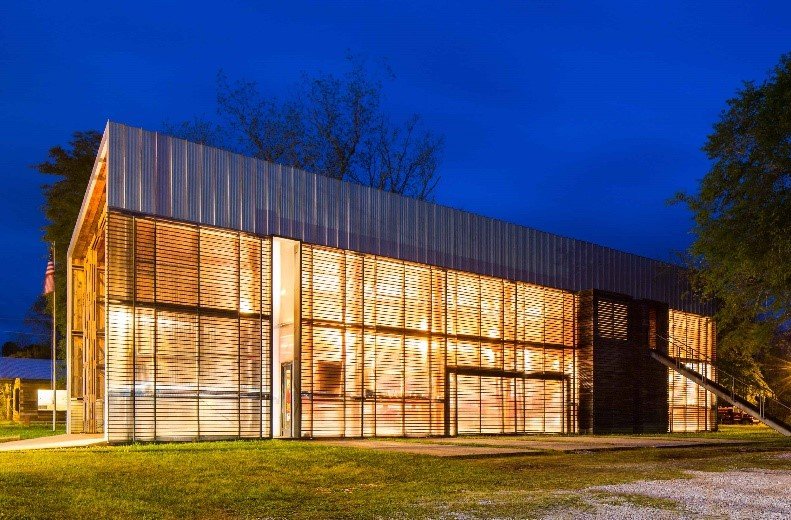
In this project, students learned to navigate technical challenges, local regulations, and public expectations. They discovered that architecture could have far-reaching social consequences shaping not only function but identity and morale.
Innovation Through Constraints
A hallmark of Rural Studio is its inventive approach to constraints. Limited budgets, scarce materials, and challenging sites force students to think creatively. What emerges is not merely functional, but often strikingly innovative.
One striking example is the 20K House, a series of affordable homes designed to cost roughly twenty thousand dollars. Using minimal resources and clever construction techniques, students developed homes that were not only safe and durable but also visually compelling. Sloped roofs, textured surfaces, and playful geometry create homes that are joyful to inhabit.
The 20K House demonstrates that high-quality design does not require extravagance. On the contrary, constraints can be liberating, pushing architects to experiment with form, light, and material in ways that luxury budgets might discourage. Rural Studio shows that necessity and beauty are not opposing forces, but allies.
Sustainability and Local Knowledge
Sustainability is integral to Rural Studio’s philosophy. Projects are designed to respond to the local climate, reduce environmental impact, and use resources judiciously. Students study passive cooling techniques, insulation strategies, and water management, often relying on local knowledge and vernacular forms.
For example, many homes incorporate deep porches and overhangs to protect against the hot Alabama sun, while elevated floors and proper drainage address seasonal flooding. The use of salvaged materials not only reduces waste but also teaches students the value of resourcefulness and stewardship.
This approach underscores a critical lesson: sustainability is not about high-tech gadgets or expensive energy systems, but about intelligence, observation, and care. By designing in harmony with the environment, Rural Studio projects demonstrate that ecological responsibility and social responsibility are inseparable.
The Role of Community
Community engagement is the lifeblood of Rural Studio. Projects begin with conversations, site visits, and interviews. Students listen to families, understand their routines, and incorporate their needs and aspirations into the design. The result is architecture that is genuinely user-centered, culturally sensitive, and socially embedded.
Mockbee insisted that architects must earn the trust of the community. He often emphasized that the act of building together architects, students, and residents is as transformative as the physical structures themselves. Construction becomes a shared ritual, where knowledge, effort, and creativity circulate in ways that strengthen social bonds.
This participatory approach challenges traditional hierarchies in architecture. Students learn humility and empathy, understanding that the value of design is measured not by awards but by human impact. Families learn that their voices matter, that they can contribute to shaping their environment, and that architecture can be a source of empowerment rather than exclusion.
Social Activism Through Design
At its core, Rural Studio is a model of architecture as activism. The studio confronts inequality directly, using design skills to address social injustice. By providing safe, dignified, and beautiful housing, the studio challenges the notion that poverty is inevitable or unworthy of care.
Mockbee argued that architects have a moral duty to engage with society’s most pressing problems. He rejected the idea that design excellence is reserved for the wealthy or the elite. Instead, he demonstrated that creativity, intelligence, and skill can elevate lives regardless of economic status.
Projects like the Glass Chapel, built for a rural church in Newbern, illustrate this principle. Constructed with limited funds and volunteer labor, the chapel is simple yet transcendent. Its translucent panels allow light to flood the interior, creating a contemplative atmosphere. Here, architecture achieves social and spiritual activism simultaneously giving a small rural community a sense of pride and belonging.
Educational Impact
Beyond the buildings themselves, Rural Studio has reshaped architectural education. It demonstrates that learning is most profound when theory and practice are inseparable. Students graduate not only with technical knowledge but with an ethical framework, a sense of social responsibility, and a deep appreciation for the human impact of design.
Alumni of Rural Studio carry these lessons into professional practice, influencing projects across the United States and beyond. Many continue to prioritize community engagement, affordability, and sustainable design in their work. In this way, Samuel Mockbee’s vision extends far beyond Hale County, creating a ripple effect in architectural culture.
Awards and Recognition
Despite its modest, rural setting, Rural Studio has received widespread recognition for its innovation, pedagogy, and social impact. It has been celebrated in architecture journals, museums, and conferences worldwide. Yet the studio measures success differently. Awards are secondary to the transformative effect on lives and communities.
Samuel Mockbee, posthumously, is remembered not only as an architect but as a moral force. His work inspired generations of architects to see the profession as a tool for justice, empathy, and human dignity. Rural Studio remains a living testament to his belief that good architecture is inseparable from ethical purpose.
The Continuing Legacy
After Mockbee’s death in 2001, Rural Studio continued under the guidance of co-founders, faculty, and students, maintaining his philosophy while expanding its scope. Recent projects include energy-efficient homes, community centers, and public infrastructure, all designed with the same attention to context, culture, and social need.
The studio also explores contemporary challenges, such as disaster relief, climate resilience, and affordable urban housing. Its work continues to demonstrate that architecture can address systemic inequality, environmental crisis, and social marginalization simultaneously.
Rural Studio has become more than a program; it is a model for how architecture can engage meaningfully with the world. It proves that when students, architects, and communities collaborate, buildings become instruments of justice and hope.
Conclusion: Architecture as Human Service
Rural Studio teaches a profound lesson: architecture is not merely about form, aesthetics, or profit. At its best, it is an instrument of social change. Samuel Mockbee’s vision reminds us that the profession has a moral dimension to serve, to uplift, and to dignify.
Through innovative design, thoughtful engagement, and a commitment to resourcefulness, Rural Studio demonstrates that architecture can be beautiful, functional, sustainable, and socially transformative at the same time. Homes, schools, chapels, and community centers built in Hale County are more than structures; they are statements of care, justice, and possibility.
The studio exemplifies that constraints poverty, limited materials, and challenging sites do not diminish creativity; they amplify it. Students learn that design excellence and social purpose are intertwined, that the measure of a building is not how it appears in a magazine, but how it changes lives.
Rural Studio embodies the enduring power of architecture to serve humanity. It is a testament to Samuel Mockbee’s belief that architects have a responsibility to the most vulnerable and that dignity, beauty, and hope can be built into every wall, every roof, every doorway. In Hale County, architecture is activism, and activism is architecture. Through Rural Studio, the built environment becomes a medium of justice, a canvas for empathy, and a stage for the transformative power of human care.