To walk into a building by Jean Nouvel is to enter a world suspended between imagination and precision. His architecture does not simply occupy a place; it becomes that place, transfiguring its spirit through material, light, and shadow. For Nouvel, every building is a story one written in the language of its context, its culture, …
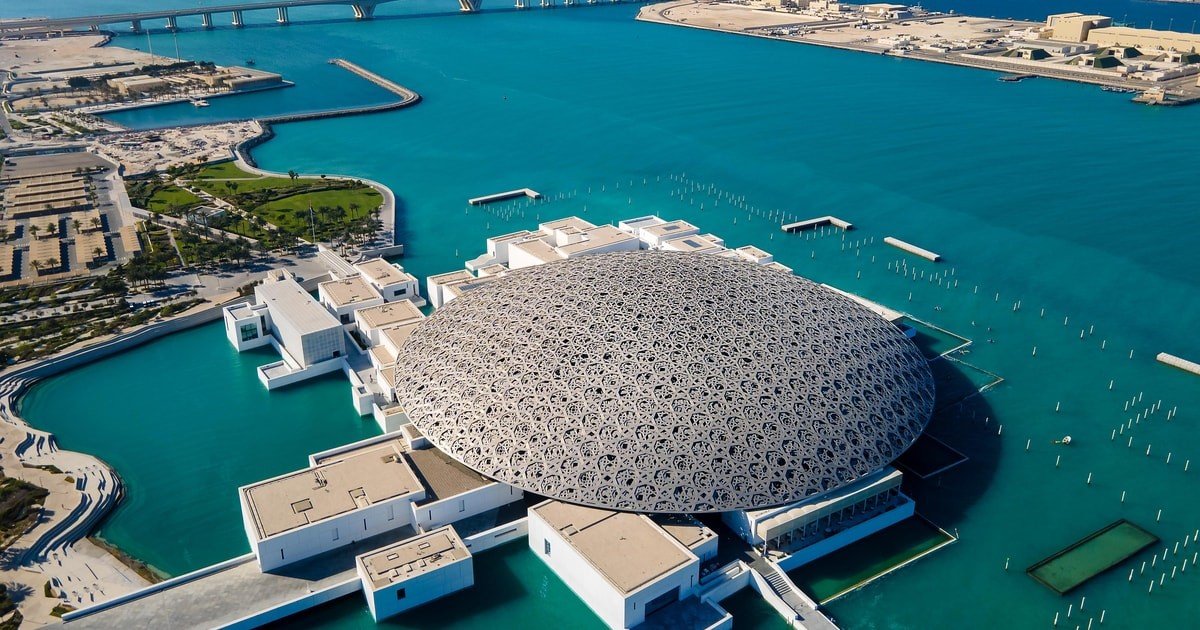
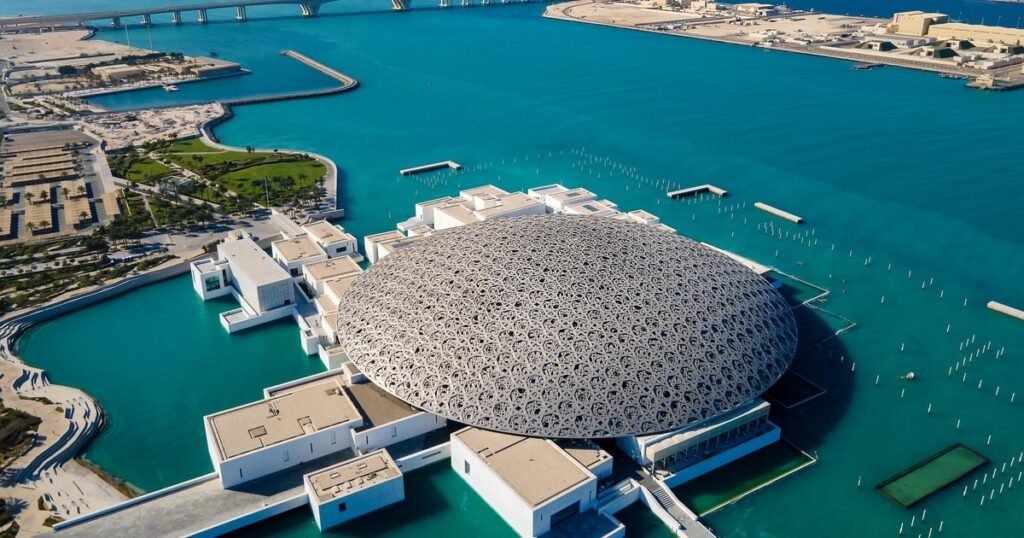
Table of Contents
- The Making of a Rebel Architect
- Context as Catalyst
- Institut du Monde Arabe: A Dialogue of Civilizations
- The Drama of Light
- Fondation Cartier: Transparency and Reflection
- Torre Agbar: The Living Skin of Barcelona
- Louvre Abu Dhabi: The Dome of Light
- The Architect as Dramatist
- Against the Global Template
- Culture as Compass
- The Poetics of Material and Reflection
- Legacy and the Spirit of Invention
- Conclusion: The Theater of Light and Life
To walk into a building by Jean Nouvel is to enter a world suspended between imagination and precision. His architecture does not simply occupy a place; it becomes that place, transfiguring its spirit through material, light, and shadow. For Nouvel, every building is a story one written in the language of its context, its culture, and its time.
He is an architect of paradoxes: romantic yet rational, sculptural yet restrained, philosophical yet intensely practical. His work stretches from Paris to Doha, from Barcelona to Abu Dhabi, and yet each project seems rooted not in repetition, but in reinvention. Nouvel does not design buildings; he designs encounters between light and surface, between history and modernity, between the familiar and the visionary.
If architecture is a mirror of civilization, then Jean Nouvel’s mirror is ever-changing, reflecting not his own ego but the multiple faces of the world. His is an architecture of drama and dialogue where every beam of light, every shadow, every reflection participates in the performance of meaning.
The Making of a Rebel Architect
Jean Nouvel was born in 1945 in Fumel, a small town in southwestern France, into a modest family that valued discipline and education. His parents hoped he would become a painter, but it was architecture that ultimately became his canvas. He studied at the École des Beaux-Arts in Paris, where he absorbed both the rigors of classical training and the rebellious spirit of the 1960s.
Paris at that time was a city in flux intellectually charged, politically restless, and culturally experimental. The young Nouvel emerged from this crucible with an instinct to challenge convention. He rejected the notion of a “Nouvel style,” insisting that each building must be born of its own circumstances. For him, architecture was not a formula but a conversation between the specific and the universal.
This refusal to be categorized has defined his career. Where some architects build a recognizable signature, Nouvel has built a philosophy of contextual invention. He once said, “Each new situation requires a new architecture.” In this simple sentence lies his entire ethos a belief that architecture is not a self-contained art but a responsive act, a living dialogue with culture, geography, and time.
Context as Catalyst
For Nouvel, context is not a constraint; it is a muse. He approaches each site as a detective and a dramatist, searching for clues the angle of sunlight, the texture of local materials, the rhythms of street life, the memories embedded in a place. He then transforms these observations into a design that both belongs to and reinterprets its environment.
He does not mimic context in a superficial way, as pastiche or nostalgia. Instead, he seeks to intensify it to distill its essence into architecture that feels both inevitable and surprising. This is what makes his buildings so diverse. The Institut du Monde Arabe in Paris bears little resemblance to the Torre Agbar in Barcelona, yet both emerge from the same principle: to reveal the hidden identity of their surroundings.
Nouvel’s architecture never denies its time, but it always acknowledges what came before. He often plays with layers of light, of history, of meaning allowing the past and present to coexist in a subtle tension. This layering becomes his language of place, a form of spatial storytelling that transcends mere aesthetics.
Institut du Monde Arabe: A Dialogue of Civilizations
Few buildings capture Nouvel’s philosophy as eloquently as the Institut du Monde Arabe (IMA) in Paris, completed in 1987. It was the project that catapulted him to international prominence and remains one of the most poetic expressions of cultural dialogue in contemporary architecture.
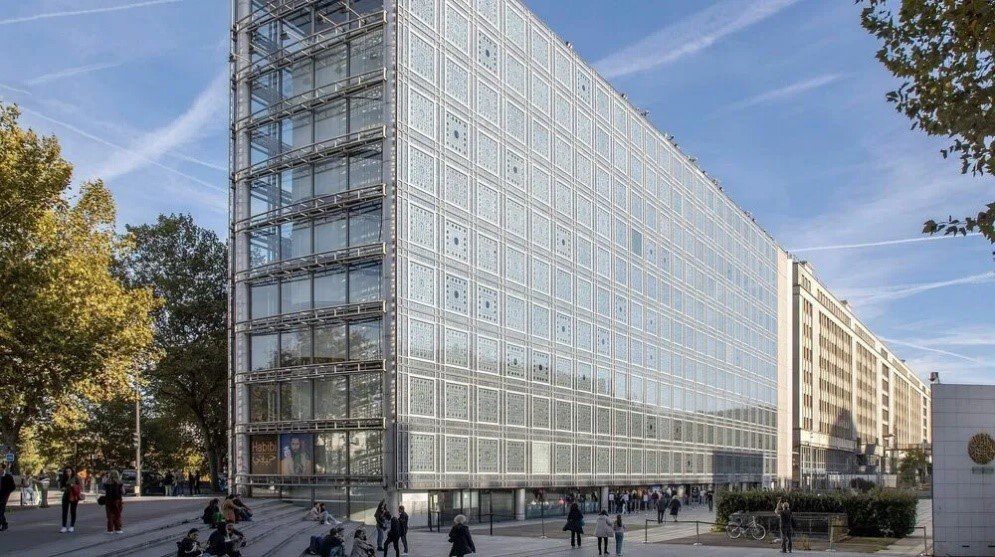
Located on the banks of the Seine, the IMA was conceived as a bridge between Arab and Western cultures. The challenge was immense: how to create a building that embodies both modern French rationalism and the sensual geometries of Islamic art.
Nouvel responded with an extraordinary synthesis of technology and tradition. The southern façade, facing the sun, is a shimmering screen of 240 mechanical apertures metal diaphragms inspired by the mashrabiya, the lattice screens used in traditional Islamic architecture to filter light and maintain privacy. These diaphragms open and close in response to sunlight, creating a constantly changing pattern of brightness and shadow across the interior.
This façade is not decoration; it is intelligence made visible. It translates an ancient principle into a modern mechanism, blending cultural symbolism with environmental performance. Inside, the filtered light creates an atmosphere that is neither European nor Arab, but something in between a new territory of shared sensibility.
The building itself acts as a metaphor for dialogue: two worlds meeting across a threshold of light. It captures the spirit of coexistence that defined Nouvel’s vision that architecture should not erase difference, but celebrate it.
The Drama of Light
If context is Nouvel’s material, then light is his medium. His buildings are laboratories of illumination, where light is sculpted, reflected, refracted, and dramatized. He once said, “Light is the soul of architecture.” In his hands, it becomes both a painter’s brush and a philosopher’s pen.
Unlike many modernists who chase uniform brightness, Nouvel embraces contrast darkness as much as light. He understands that shadow gives depth, that mystery sharpens perception. His spaces often unfold in chiaroscuro, with shafts of sunlight cutting through dim volumes, or reflections shimmering across glass and metal.
This theatrical treatment of light is not gratuitous; it serves narrative purpose. In the IMA, light is filtered and sacred. In the Fondation Cartier in Paris, it is transparent and fluid. In the Louvre Abu Dhabi, it becomes cosmic a celestial rain of illumination that connects the earthly and the divine.
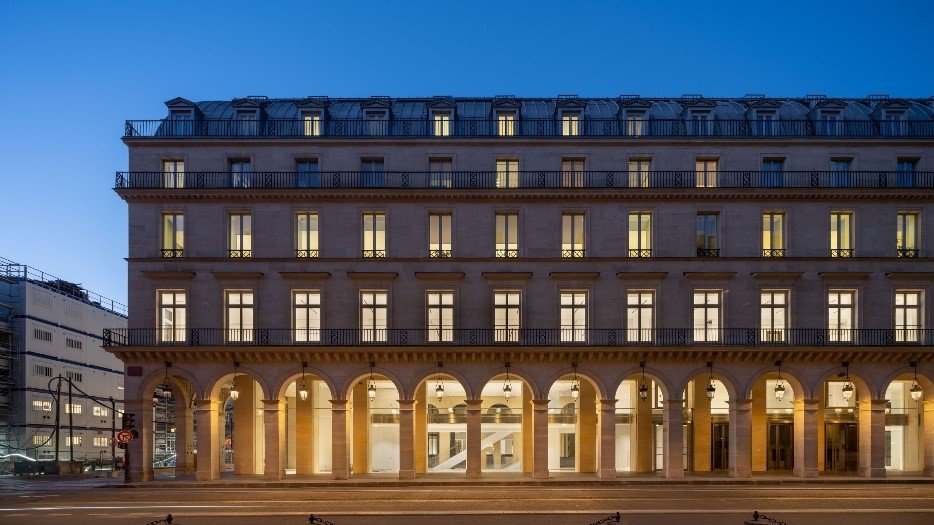
Light, for Nouvel, is not merely a physical phenomenon but a cultural one. He uses it to evoke emotion, to express the mood of a place, to choreograph experience. His buildings are not static objects; they are performances of light that change with every hour, every season, every step.
Fondation Cartier: Transparency and Reflection
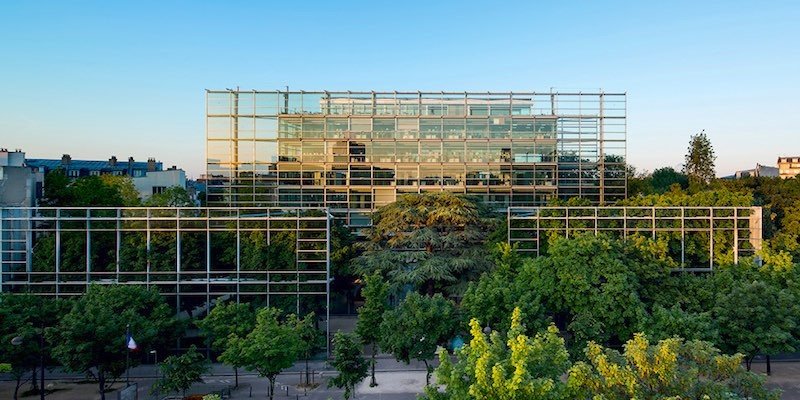
Completed in 1994, the Fondation Cartier pour l’Art Contemporain in Paris is another masterclass in Nouvel’s manipulation of light and context. Situated along Boulevard Raspail, it is both a building and a mirage a presence and an absence.
The structure consists of two parallel glass boxes, one nested inside the other, surrounded by a transparent façade that dissolves the boundary between architecture and nature. Trees, reflections, and sky become part of the building’s visual composition. The effect is both fragile and profound a meditation on transparency, perception, and the relationship between art and environment.
Nouvel described the Fondation Cartier as “a building that disappears.” Indeed, its greatest achievement is its invisibility. It refuses to impose itself, allowing the city and the garden to merge into one continuous space. The glass reflects passing clouds and pedestrians, so that the building seems to breathe with its surroundings.
Inside, the galleries are simple, luminous volumes where light filters softly through layers of glass. The absence of heavy structure creates a feeling of weightlessness, as if the air itself were carrying the space. This transparency becomes a metaphor for the mission of the foundation to make art accessible, open, and connected to life.
Here, Nouvel’s generosity of spirit is palpable. He offers the city not a monument, but a mirror one that reflects its beauty back to itself.
Torre Agbar: The Living Skin of Barcelona
When Jean Nouvel designed the Torre Agbar in Barcelona, completed in 2005, he was not trying to create an icon yet the result became one of the city’s most recognizable silhouettes. Rising like a shimmering geyser at the edge of the city, the tower captures the energy of Barcelona while paying homage to the local landscape and culture.
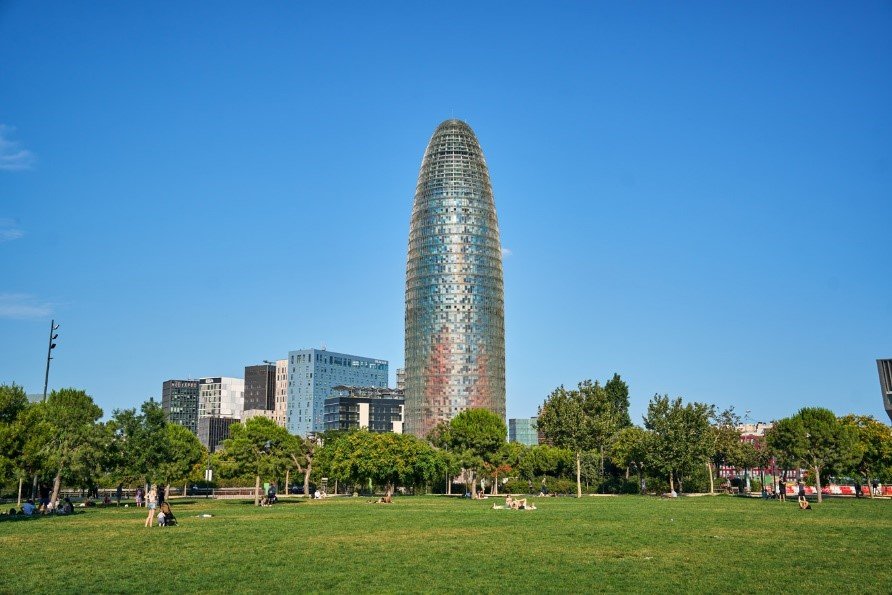
Nouvel was inspired by both the natural forms of Montserrat Mountain and the works of Antoni Gaudí. The tower’s curving shape suggests a water jet appropriate for the headquarters of the Agbar water company while its colorful skin echoes Gaudí’s mosaics and the Mediterranean light.
The façade is composed of more than 60,000 painted aluminum panels and 4,500 glass louvers, which change color and opacity depending on the angle of sunlight. By day, the building glows with subtle gradations of blue, red, and silver; by night, it becomes a radiant beacon, its surface animated by digital light.
Here, Nouvel transforms technology into poetry. The building responds to light like a living organism, constantly shifting its appearance. It stands as both sculpture and instrument a dialogue between the natural and the artificial, the tactile and the digital.
While some critics initially dismissed it as playful spectacle, the Torre Agbar has since been recognized as a profound exploration of light, color, and urban identity. It captures the vitality of Barcelona while remaining deeply rooted in its climate and culture a building that breathes with its city.
Louvre Abu Dhabi: The Dome of Light
Perhaps the culmination of Nouvel’s lifelong exploration of context, culture, and light is the Louvre Abu Dhabi, opened in 2017. This project, set on Saadiyat Island, is a work of breathtaking ambition a museum that seeks to embody a “universal humanity” through both its art and its architecture.
Nouvel approached the design not as a replication of the Paris Louvre, but as an entirely new cultural phenomenon rooted in the Arab world. His guiding vision was to create a “museum city” a cluster of white pavilions spread across the water, unified beneath a vast perforated dome.
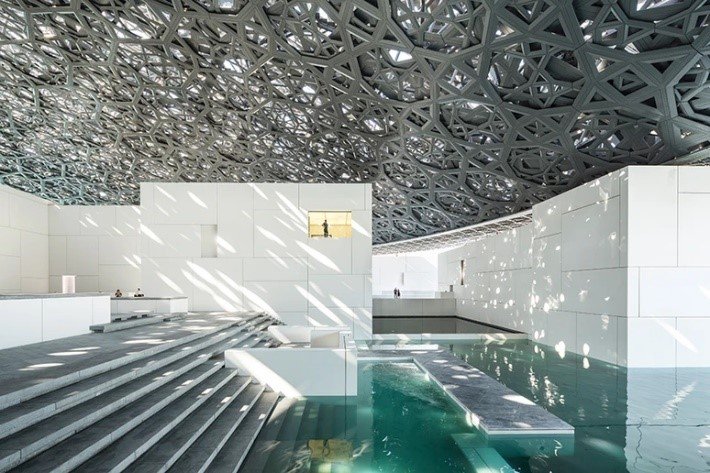
This dome, 180 meters wide, is a marvel of engineering and imagination. Composed of eight layers of interlocking geometric patterns, it filters sunlight through thousands of openings, creating what Nouvel calls a “rain of light.” The effect is mesmerizing: shafts of light dance across the ground and water, shifting with the movement of the sun.
The experience of walking beneath this dome is both intimate and cosmic. The architecture does not dominate the art; it frames it within a poetic environment of light and shadow. It is a modern reinterpretation of traditional Arabic architecture, where courtyards, shade, and filtered light define comfort and beauty.
In the Louvre Abu Dhabi, Nouvel creates a place that belongs to its geography and its people. The building’s whiteness reflects the desert sun, its dome recalls the palm frond canopies of ancient souks, and its interplay of water and sky evokes the Gulf’s maritime heritage.
Yet, beyond symbolism, the building captures something universal the human desire to find meaning in light. It is not only a museum of objects, but a temple of illumination.
The Architect as Dramatist
Jean Nouvel often compares architecture to theater. Each building, he believes, is a stage on which light, shadow, and human life perform together. The architect’s role is not to dictate the script but to set the conditions for experience to orchestrate suspense, revelation, and emotion.
This dramatic sensibility can be seen throughout his work. The angled glass façades of the Guthrie Theater in Minneapolis frame the Mississippi River like cinematic screens. The Philharmonie de Paris, with its shifting metallic scales, captures sound and light as if they were characters in a play. Even his smaller projects hotels, offices, apartments carry this sense of narrative, of unfolding scenes shaped by light and movement.
Nouvel’s drama is not theatrical excess but sensory truth. He invites us to see architecture, not as static form but as living time as the choreography of light and presence. His buildings are not meant to be understood all at once; they reveal themselves gradually, like stories told through light.
Against the Global Template
In an age of globalized architecture, where cities are populated by interchangeable glass towers, Jean Nouvel stands defiantly apart. He refuses to design “anywhere” buildings. For him, architecture must belong to a place, to a moment, to a culture.
He has often criticized the homogenization of cities under the banner of modernity, warning that the loss of local identity erodes meaning. His response is an architecture that celebrates difference that treats every project as a specific response rather than a universal solution.
This commitment to uniqueness makes his work unpredictable. He has no signature style, no single material palette. What unites his buildings is not form but attitude an attitude of curiosity, empathy, and invention. He treats each commission as an opportunity to rediscover what architecture can be in that particular context.
In this sense, Nouvel’s work is profoundly humanist. It is architecture as dialogue, not dominance; as translation, not imposition.
Culture as Compass
Culture, for Nouvel, is both the source and the subject of architecture. He believes that buildings should not only serve functional needs but also reflect the aspirations, memories, and contradictions of the societies that create them.
His sensitivity to culture allows him to navigate diverse contexts with authenticity. Whether designing a museum in the Middle East, a theater in America, or a residential tower in Europe, he immerses himself in the local language its light, materials, traditions, and desires.
He is particularly drawn to the way culture expresses itself through light. In the Arab world, light is filtered and sacred; in the Mediterranean, it is brilliant and playful; in Northern Europe, it is subdued and introspective. His architecture absorbs these nuances, transforming them into atmosphere.
Through this cultural empathy, Nouvel redefines what it means for architecture to be modern. For him, modernity is not the rejection of tradition but its renewal a living continuity between the old and the new, between the local and the global.
The Poetics of Material and Reflection
While Nouvel is best known for his handling of light, his use of material is equally poetic. Glass, metal, concrete, and stone become instruments in his orchestra of perception. He treats surfaces as mirrors and membranes boundaries that both reveal and conceal.
In the Institut du Monde Arabe, the metal screens turn light into ornament. In the Fondation Cartier, glass becomes a veil that dematerializes structure. In the Torre Agbar, color and reflection transform aluminum into a living skin. In the Louvre Abu Dhabi, the dome’s lattice of steel becomes a cosmic filter of daylight.
What connects all these materials is their responsiveness. Nouvel’s buildings change with the weather, the hour, the movement of the sun. They are never fixed; they live. In a sense, they are self-portraits of time architecture not as object but as phenomenon.
This mutable quality makes his work deeply sensual. To touch the cool metal of a Nouvel façade, to watch sunlight ripple across glass, to feel the shift from glare to shade these are experiences that engage the body as much as the eye.
Legacy and the Spirit of Invention
Jean Nouvel’s influence on contemporary architecture is immense, yet difficult to categorize. He is part engineer, part artist, part philosopher. He has won nearly every major award in his field, including the Pritzker Prize in 2008, yet he remains restless, skeptical of orthodoxy.
His legacy lies not in a particular style but in an attitude a belief that architecture must always begin anew. He resists repetition, even of his own successes. Each project is a new experiment in meaning, material, and light.
In an era dominated by digital spectacle and speed, Nouvel insists on patience, precision, and reflection. He reminds us that architecture, at its best, is not a commodity but a cultural act a dialogue between people and place, between the visible and the invisible.
He has given the world buildings that feel alive, responsive, and poetic. They are not monuments to power, but meditations on presence. They do not shout; they shimmer.
Conclusion: The Theater of Light and Life
Jean Nouvel’s architecture teaches us to see. To see the subtleties of light, the richness of shadow, the beauty of context, the intelligence of culture. His buildings are not spectacles to be consumed but experiences to be inhabited each one a stage where the world performs itself anew.
He builds not from ego but from empathy. He listens to places, to histories, to atmospheres, and lets them speak through material and light. His work is proof that architecture can be both deeply local and universally resonant, both intellectual and sensuous, both dramatic and serene.
To enter a Nouvel building is to witness an ongoing dialogue between light and darkness, stillness and movement, modernity and memory. It is to understand that architecture is not the frozen music of structure but the living poetry of experience.
In every reflection on glass, in every shifting shadow, in every glimmer of illumination, we see his philosophy made tangible: that architecture is the art of giving context a body, culture a voice, and light a soul.
Jean Nouvel has built not merely with steel and glass, but with meaning itself and in doing so, he reminds us that light, in all its drama and delicacy, is perhaps the most human material of all.