Architecture has always stood at the intersection of art and necessity. It is an expression of human ingenuity, emotion, and identity, but also a response to the functional needs of society. The quote, “Architecture is a pragmatic art. To become art it must be built on a foundation of necessity,” captures this dual nature perfectly. …
Architecture has always stood at the intersection of art and necessity. It is an expression of human ingenuity, emotion, and identity, but also a response to the functional needs of society. The quote, “Architecture is a pragmatic art. To become art it must be built on a foundation of necessity,” captures this dual nature perfectly. Buildings that endure in memory and meaning are not those that merely astonish the eye, but those that harmonize utility with imagination. Among the many examples in the modern world, the Louvre Pyramid in Paris stands as an iconic manifestation of this principle. Designed by the Chinese-American architect I. M. Pei, the Pyramid is a perfect demonstration of how architectural beauty can emerge directly from functional necessity how the pragmatic challenges of a museum’s operation could inspire a design that became a global symbol of artistic innovation. The Louvre Pyramid is not just a structure of glass and steel; it is a dialogue between past and present, between necessity and vision, between reason and emotion.
Before the Pyramid came into being, the Louvre faced a profound dilemma. By the late twentieth century, the Louvre Museum, already one of the world’s largest and most visited cultural institutions, was struggling under the weight of its own success. Originally constructed as a royal palace in the twelfth century and later converted into a museum after the French Revolution, the Louvre had expanded over time into a sprawling complex. However, its infrastructure had not evolved to accommodate the growing influx of millions of visitors from around the world. The entrance through the Cour Napoléon courtyard was insufficient, leading to long queues, bottlenecks, and confusion. The internal circulation of visitors was equally chaotic narrow corridors and disconnected galleries created a maze-like experience that made navigation difficult and diminished the impact of the art itself. The museum’s management recognized that to preserve the Louvre’s cultural prestige, it needed to transform its spatial organization and visitor experience. This was not a superficial problem of aesthetics but a deeply practical challenge that demanded architectural ingenuity.
When I. M. Pei was commissioned in 1983 by then-President François Mitterrand to design the new entrance, he faced immense public scrutiny. The idea of inserting a modern structure into the historical heart of Paris, surrounded by the classical Renaissance and Baroque façades of the Louvre Palace, was seen by many as an act of cultural desecration. Critics argued that modern architecture had no place in such a revered setting. Yet Pei understood that the project’s goal was not to mimic history but to serve the museum’s evolving needs. He realized that true respect for heritage did not mean freezing it in time but ensuring its continued vitality. His design sought to resolve the practical necessity of accessibility while creating a work of art that would honor the spirit of the Louvre’s timeless grandeur.

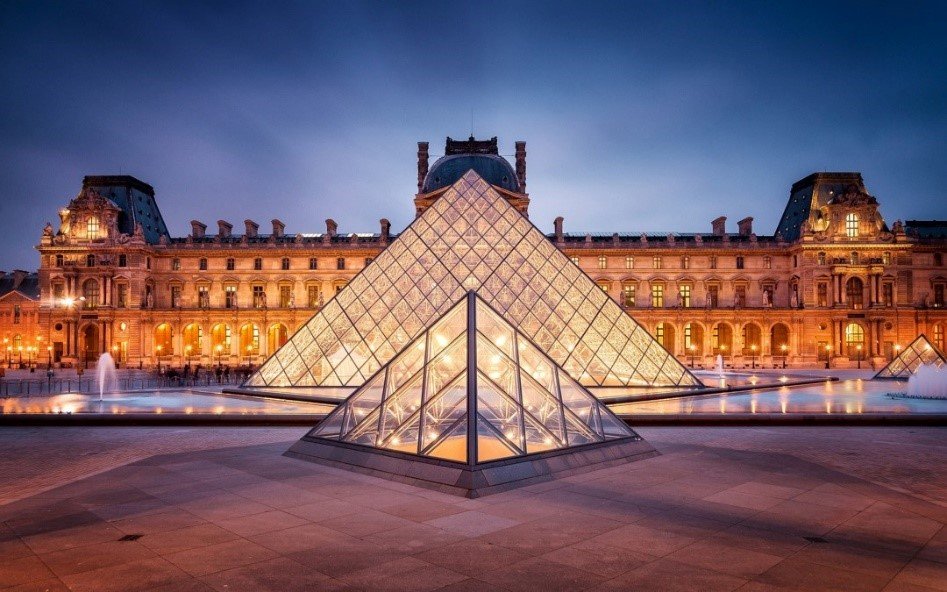
The solution Pei envisioned was radical yet simple a large glass and steel pyramid placed at the center of the Cour Napoléon courtyard. Beneath this pyramid would lie a vast underground entrance hall connecting the various wings of the museum, creating a unified circulation system for visitors. On the surface, the pyramid would act as both a skylight and a visual beacon, drawing people naturally toward the central entrance. This design achieved several pragmatic goals simultaneously: it provided a spacious and efficient entry point capable of accommodating large crowds; it centralized museum circulation, linking previously fragmented sections of the complex; and it introduced natural light into the underground spaces, transforming what could have been a dark, claustrophobic area into one of luminous serenity. In Pei’s words, “The pyramid is pure geometry it belongs to the Louvre.” Through this clarity of form and function, the architect turned a logistical problem into an artistic revelation.
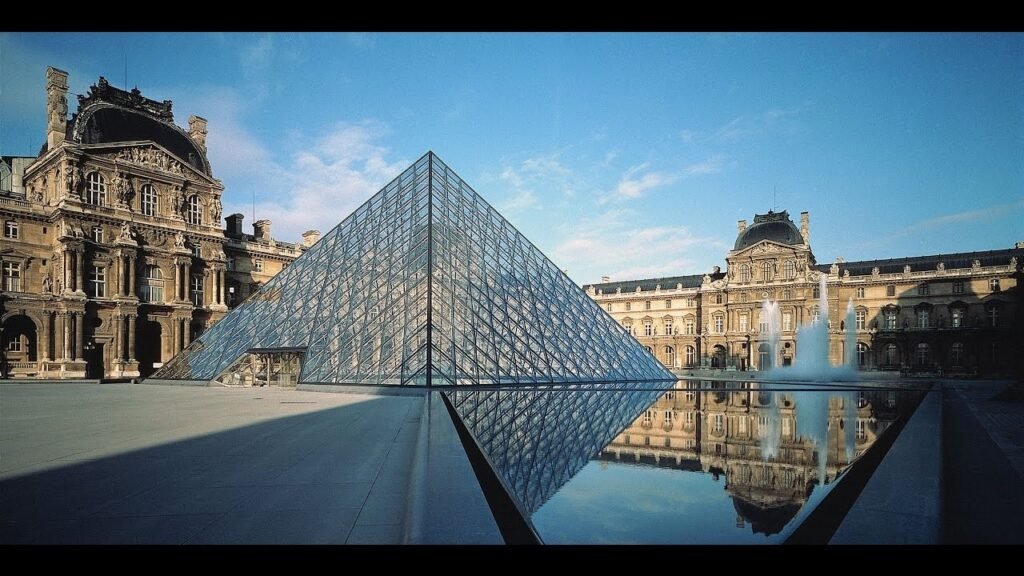
The Louvre Pyramid’s geometry itself is deeply symbolic and practical. The pyramid form, one of humanity’s oldest architectural shapes, carries connotations of timelessness, order, and transcendence. By employing glass and steel materials associated with modernity Pei fused ancient symbolism with contemporary technology. The 21.6-meter-high structure consists of 673 glass panes precisely arranged to form a transparent, crystalline surface. Its transparency is crucial; it allows the surrounding façades of the Louvre Palace to remain visible, ensuring that the modern intervention complements rather than competes with the historical context. The pyramid’s placement at the geometric center of the courtyard reinforces the spatial harmony of the entire complex. Beneath it, the underground concourse known as the Hall Napoléon unfolds like an inverted mirror of the pyramid above a convergence of functionality and form that guides visitors intuitively toward the treasures of the museum.
The genius of Pei’s design lies in how necessity became the seed of beauty. The Louvre Pyramid is a quintessential example of how architecture, when grounded in purpose, can transcend mere utility. The need to reorganize the museum’s circulation led to the creation of an architectural form that now defines the Louvre’s global identity. Visitors entering through the glass pyramid descend into an open, light-filled space that not only facilitates movement but also provides a moment of reflection and awe. The experience of passing through transparent glass into the earth, then emerging into the historical galleries above, becomes an allegory for the journey through time that the Louvre represents a passage from modernity to antiquity, from the visible to the eternal.

When the Pyramid was inaugurated in 1989, the public reaction was sharply divided. Many Parisians derided it as an intrusion, calling it “an eyesore” and “a monstrosity.” Traditionalists felt betrayed that a modernist architect had been allowed to tamper with France’s cultural crown jewel. However, over time, perception changed dramatically. As visitors experienced the efficiency and elegance of the new entrance, and as the structure became an integral part of the museum’s identity, criticism gave way to admiration. Today, the Louvre Pyramid is celebrated as one of the most beloved architectural landmarks in the world. Its image has become inseparable from that of the museum itself proof that architecture rooted in necessity can achieve the status of art.
What makes the Louvre Pyramid such a powerful embodiment of pragmatic art is not merely its form or function, but the philosophical balance it achieves between the two. Pei’s design reflects a profound understanding that beauty is not a luxury added to architecture but a consequence of clarity, order, and purpose. The Pyramid does not attempt to imitate the Louvre’s classical style, nor does it rebel against it. Instead, it engages in a respectful dialogue transparent, modest, and precise. This dialogue mirrors the relationship between past and present that defines all great architecture. The modern glass pyramid rises lightly within the stone courtyard, bridging centuries of human creativity in a single gesture. The result is not a clash of eras but a seamless continuation of the Louvre’s evolution a living museum that embraces both heritage and progress.
The Louvre Pyramid also exemplifies how technology and craftsmanship can serve art when guided by necessity. Each pane of glass was custom-made to ensure structural integrity and visual clarity. The engineering required to support the delicate framework without visible joints was a marvel of precision. The underground excavation beneath the historic palace demanded extreme care to preserve the stability of existing structures. Every technical challenge was resolved not by compromising the design but by refining it. This commitment to precision underscores Pei’s philosophy that functionality and beauty are inseparable. The Pyramid’s transparency, achieved through technological innovation, is not merely aesthetic it fulfills the practical need for natural light, energy efficiency, and spatial openness.
Beyond its architectural and engineering significance, the Louvre Pyramid carries deep cultural meaning. It stands as a metaphor for France’s openness to the world and its willingness to reinterpret tradition. By choosing a Chinese-American architect to redesign the heart of Paris, President Mitterrand made a bold statement about the universality of art and the value of cross-cultural exchange. Pei’s design, influenced by both Eastern and Western traditions, embodies a synthesis of philosophies: the Confucian ideal of harmony and balance, the Western pursuit of rational order, and the modernist faith in simplicity and transparency. The Pyramid thus becomes a symbol not just of architectural innovation but of cultural dialogue a structure that transcends borders and ideologies through the universal language of form.
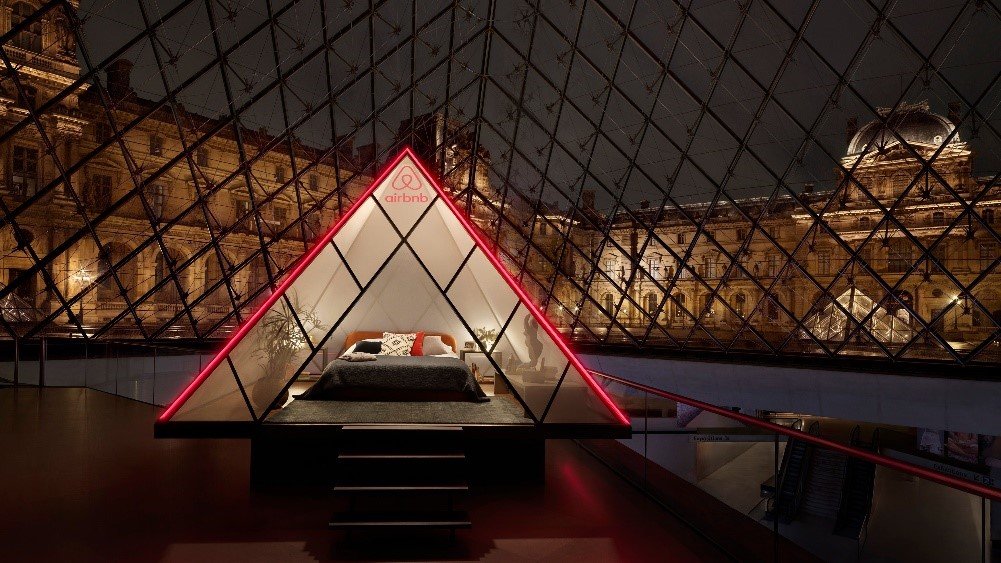
In broader architectural discourse, the Louvre Pyramid challenges the false dichotomy between modernism and historicism. Many architects have struggled with how to intervene in historically significant sites without diminishing their integrity. Pei’s solution offers a timeless lesson: contrast can be harmony when guided by respect and necessity. The Pyramid’s modern materials and geometry might seem at odds with the Louvre’s ornate façades, yet their juxtaposition heightens the beauty of both. The glass reflects the sky and the surrounding architecture, creating a play of light that constantly changes with time and weather. The old and new coexist dynamically, each enhancing the other’s presence. This relationship epitomizes the idea that architecture, when rooted in necessity and clarity, becomes a living art form capable of reconciling opposites.
Furthermore, the Pyramid’s success demonstrates that necessity can be a catalyst for creativity rather than a limitation. Faced with practical problems crowd control, circulation, lighting, and accessibility Pei did not merely solve them through functional design but elevated them into an aesthetic experience. His approach reveals that architecture’s artistic dimension arises precisely when it addresses human needs with imagination and empathy. The Louvre Pyramid transforms what could have been a mundane solution into a moment of wonder. Each visitor, upon entering the glass structure, participates in a ritual of transition, moving from the open sky into the subterranean realm of art, guided by light and geometry. This experiential quality born from functional logic illustrates how necessity can inspire poetry in architecture.
The Pyramid also reshaped the identity of the Louvre Museum itself. Before its construction, the museum was perceived primarily as a repository of classical art. The addition of the Pyramid redefined it as a living institution, one that embraces innovation while honoring its legacy. The juxtaposition of modern architecture with ancient masterpieces like the Mona Lisa and the Venus de Milo reinforces the continuity of human creativity across time. The Louvre today is not a relic but a dialogue between epochs, and the Pyramid is the mediator of that conversation. This transformation reflects the very essence of the quote that inspired this discussion: architecture becomes art only when it serves necessity, when it solves real problems in ways that elevate human experience.
In the years since its completion, the Louvre Pyramid has inspired countless architects and designers around the world. It has become a case study in architectural education, a benchmark for integrating modern design into historical contexts. Its influence can be seen in projects that seek to reconcile old and new, such as the British Museum’s Great Court by Norman Foster or the Reichstag Dome by Norman Foster in Berlin. In each of these, one can trace the legacy of Pei’s philosophy that functionality and beauty are not opposing forces but interdependent aspects of architecture’s purpose.
Pei’s work on the Louvre Pyramid also invites reflection on the nature of necessity itself. Necessity in architecture is not limited to physical or technical requirements; it encompasses cultural, emotional, and symbolic needs as well. The Louvre did not simply need a new entrance; it needed to reaffirm its relevance in a changing world. The Pyramid answered that need by offering an architecture that speaks to both the intellect and the senses. It fulfills practical demands while expressing ideals clarity, openness, and continuity. In this sense, the Pyramid’s necessity was existential as much as functional: it was necessary for the Louvre to evolve, to remain alive as an institution of art and knowledge.
Today, as millions of visitors pass through the Pyramid each year, few remember the controversies that once surrounded its creation. What remains is the experience the quiet awe of descending through glass and light, the seamless flow through the museum’s galleries, the harmony between stone and steel, history and modernity. This experience is what transforms the Louvre Pyramid from a mere architectural solution into a work of art. It demonstrates that when architecture arises from necessity and is executed with vision, it transcends its utilitarian origins and enters the realm of the sublime.
The story of the Louvre Pyramid ultimately teaches that architecture, at its best, is not about spectacle or imitation but about meaning. It is the art of giving form to function, of transforming the practical into the poetic. Pei’s design stands as a testament to the enduring truth that necessity is not the enemy of art but its foundation. Without necessity, art risks becoming superficial; without art, necessity remains mute. The fusion of the two produces works that resonate across generations structures that serve and inspire, that solve and elevate.
In the quiet transparency of the Louvre Pyramid, one can read the history of human aspiration: the desire to order space, to capture light, to connect the past with the present. It is a reminder that architecture is not only about shelter or style but about the human spirit’s need for coherence and beauty. The Pyramid’s sharp lines and luminous form speak to our rational mind, while its symbolism and harmony speak to our soul. It embodies the balance between what must be and what could be the pragmatic and the poetic.
In conclusion, the Louvre Pyramid is far more than a museum entrance; it is a philosophical statement rendered in glass and steel. It shows that architecture becomes true art when it rises from necessity and transcends it through creativity. Pei’s masterpiece unites practicality and poetry, function and form, tradition and innovation into a single coherent vision. It stands today as a beacon of architectural wisdom a timeless reminder that the path to beauty begins with purpose. The Pyramid’s story affirms that necessity is not a constraint on art but its greatest muse. Through it, we understand that the highest expression of architecture is not to decorate necessity but to reveal its inherent grace.