Architecture Beyond Form: Humanity and Sharing in the Vision of Hoang Thuc Hao In the world of architecture, where glass towers and sleek lines often dominate the imagination, there exists a quieter, humbler force reshaping the meaning of design. This is the world of Hoang Thuc Hao, a Vietnamese architect whose philosophy expands far beyond …
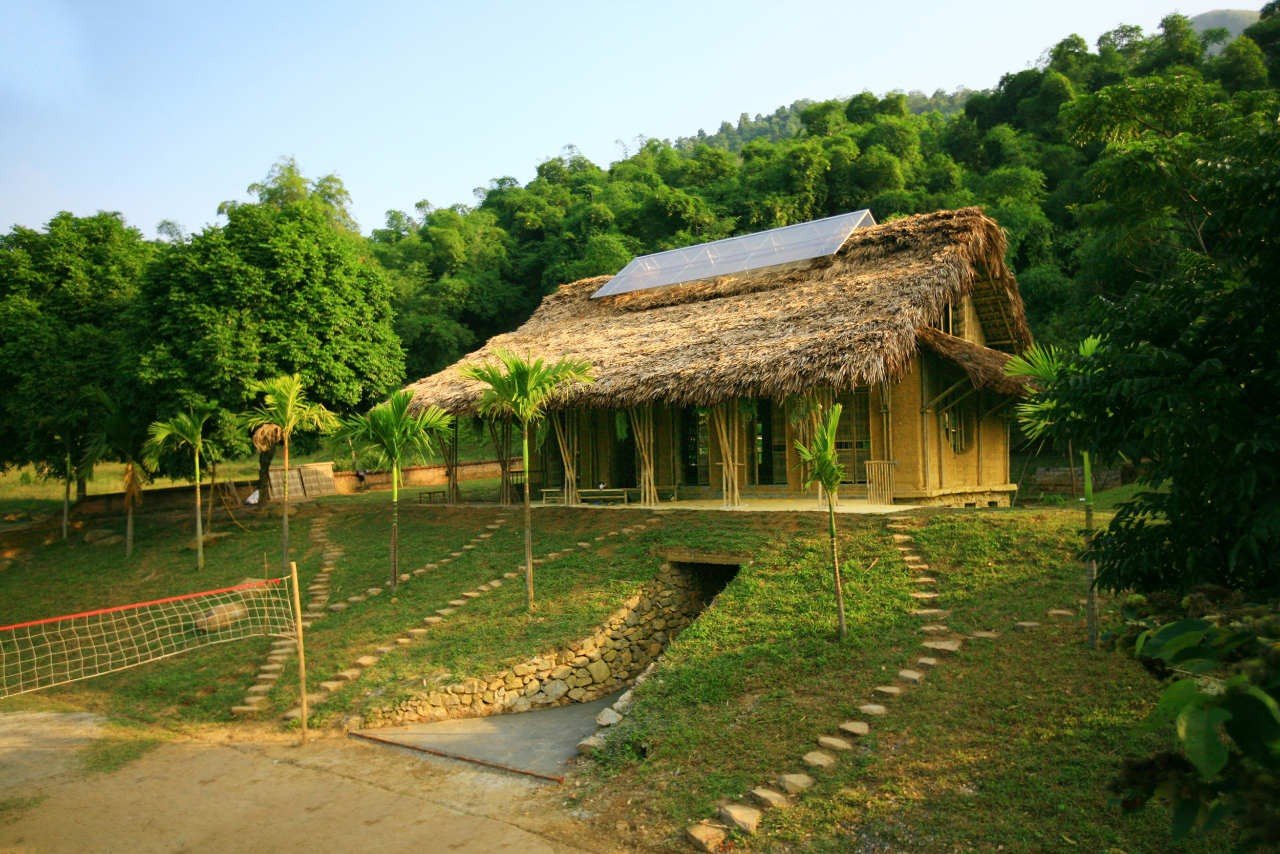
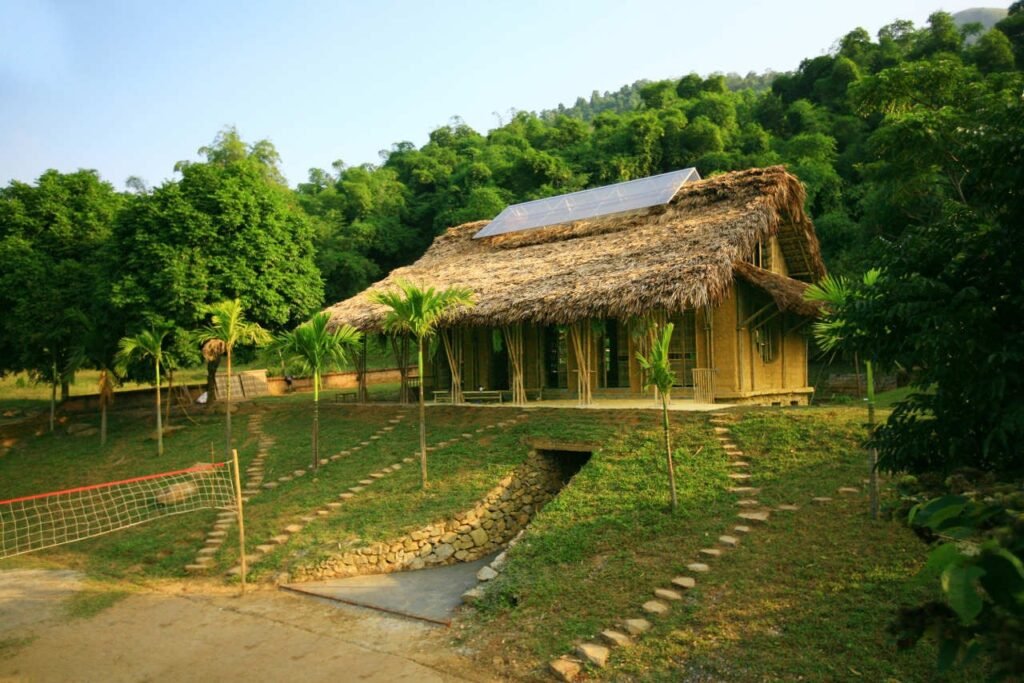
Table of Contents
Architecture Beyond Form: Humanity and Sharing in the Vision of Hoang Thuc Hao
In the world of architecture, where glass towers and sleek lines often dominate the imagination, there exists a quieter, humbler force reshaping the meaning of design. This is the world of Hoang Thuc Hao, a Vietnamese architect whose philosophy expands far beyond aesthetics or technical mastery. For Hao, architecture is not simply a craft of creating beautiful forms or structures; it is an act of empathy, a medium through which the spirit of community, culture, and humanity finds tangible expression. His statement, “Architecture is not only about form, but about humanity and sharing,” captures the heart of a design philosophy that is both deeply local and profoundly universal.
To understand the depth of Hao’s words, one must first understand the landscape that shapes his vision. Vietnam, with its lush topographies, layered history, and resilient people, is a land where architecture cannot be detached from life itself. Buildings here do not exist merely as shelters; they are repositories of memory, social cohesion, and survival. In rural areas especially, architecture becomes an act of storytelling, binding generations through shared space and collective experience.
Hoang Thuc Hao’s work thrives at this intersection between traditional wisdom and contemporary needs, between material simplicity and spiritual richness. Among his many projects, one stands as a luminous embodiment of his human-centered approach: the Suoi Re Community Centre, located in the mountainous Hoa Binh province. This project does not simply exemplify his philosophy; it is a living, breathing proof that architecture, when guided by compassion and collaboration, can become a tool for empowerment and dignity.
The Context: Understanding Vietnam’s Rural Challenges
The village of Suoi Re sits amidst rolling hills and terraced fields in the highlands of northern Vietnam. Like many rural communities in the country, it has faced persistent challenges poverty, limited access to education, and the gradual erosion of cultural identity due to modernization and urban migration. For generations, the villagers have relied on agriculture as their livelihood, but as the young move toward cities in search of opportunities, traditional ways of life risk disappearing.
When Hoang Thuc Hao and his team from 1+1>2 Architects began engaging with the village, they recognized that what Suoi Re needed was not simply a building, but a space that could bring people together, nurture education, and celebrate the community’s shared identity. Rather than imposing a foreign concept of design, Hao sought to listen. He entered the project not as an outsider bearing architectural expertise, but as a collaborator eager to learn from the wisdom of the people themselves.
This act of humility and respect became the cornerstone of the project. Hao’s approach embodied the idea that architecture begins not with drawings or blueprints, but with conversations with understanding the rhythms of daily life, the climate, the culture, and the dreams of those who will inhabit the space.
The Birth of an Idea: Architecture as a Shared Journey
The Suoi Re Community Centre was envisioned as more than a building; it was to be a living framework for education, gathering, and creativity. Hao’s goal was to design a structure that reflected both the physical and spiritual landscape of the village. It needed to serve the immediate needs of the people providing space for learning, meetings, and cultural activities but also to embody values of sustainability, inclusion, and pride in local craftsmanship.
The name of his firm, 1+1>2, already hints at his approach: collaboration multiplies impact. Hao’s process was never about a single architect dictating design but about co-creation. Villagers were invited to participate in every phase of the projectfrom discussing ideas to physically building the structure. This approach gave them ownership of the project, transforming architecture into a collective act of creation.
Hao’s guiding philosophy, that architecture is about sharing, was not metaphorical here. He shared knowledge and technical expertise, while the villagers shared their skills, materials, and cultural insight. In the process, both sides learned from each other. This relationship dissolved the traditional barrier between architect and user, turning the building into a dialogue rather than a product.
Design Philosophy: Merging Tradition with Modern Sensibility
One of the most remarkable aspects of the Suoi Re Community Centre lies in its sensitive design language. Hao did not attempt to impose urban or international aesthetics on a rural setting. Instead, he drew inspiration from the vernacular architecture of the region stilt houses, bamboo structures, and roofs that echo the contours of the surrounding mountains.
The building rests lightly on the earth, respecting the terrain rather than dominating it. Its form is reminiscent of the traditional stilt house common among ethnic minority groups in northern Vietnam, which serves practical and symbolic purposes. Elevated floors protect against flooding and humidity, while open spaces beneath become areas for social interaction. This design not only suits the local climate but also maintains continuity with cultural heritage.
Hao combined these traditional forms with subtle modern interventions. While the structure celebrates local craftsmanship, it also employs sustainable design principles passive ventilation, natural lighting, and the strategic use of locally available materials like bamboo, stone, and earth. These choices were not made for aesthetic novelty but for environmental and social practicality. Bamboo, for instance, is abundant in the area, easy to work with, and renewable, making it ideal for both cost efficiency and sustainability.
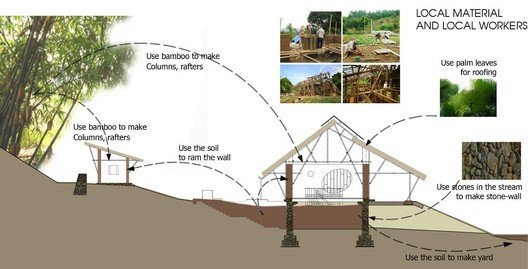
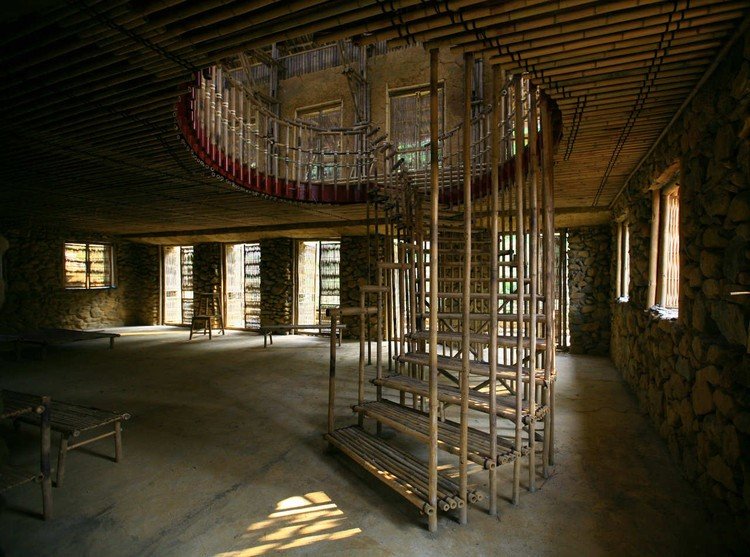
The roof, made of corrugated metal and local thatch, creates a play of textures and layers that mirrors the natural surroundings. The openness of the structure allows wind to flow freely through the interior, providing natural cooling during hot seasons. Sunlight filters through bamboo slats, creating a dappled glow that shifts with the time of day a gentle reminder of nature’s rhythm in the heart of the building.
Community Participation: The Human Dimension of Building
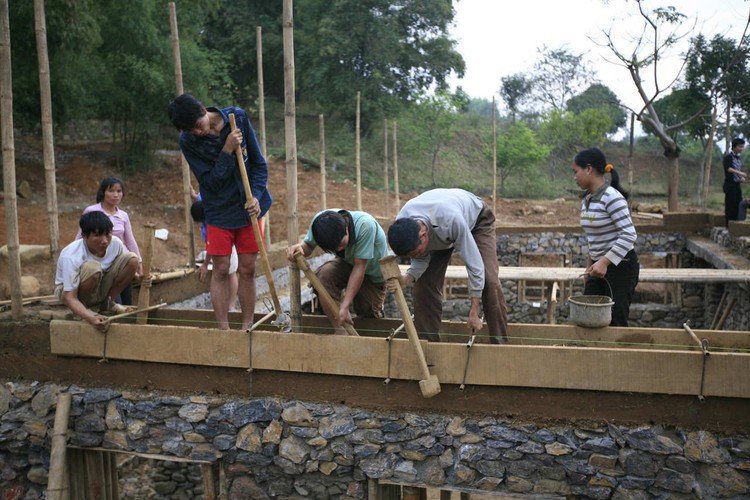
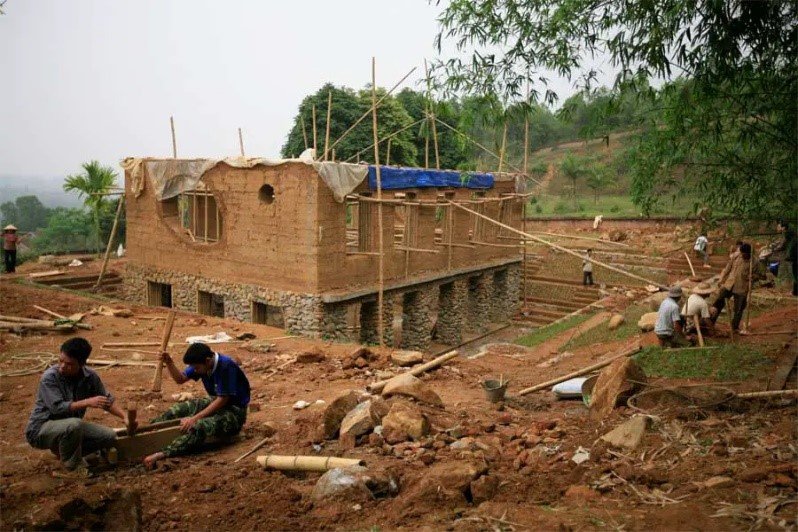
If one were to identify the most powerful lesson from the Suoi Re Community Centre, it would be the process of co-creation. The villagers themselves built the structure, guided and trained by Hao’s team. For many, this was their first encounter with architectural design, yet they quickly became active participants in the process.
This act of building together became transformative. It fostered not just a physical space but a renewed sense of unity and self-worth. In rural areas, where economic hardship can lead to feelings of marginalization, being part of such a project restored pride and confidence. The villagers saw tangible proof that their hands could shape something meaningful that their traditions and knowledge were valuable in the modern world.
Through the process, traditional construction techniques were revived and celebrated. The use of bamboo weaving, mud plastering, and local joinery reconnected the community with ancestral craftsmanship. In this sense, the Suoi Re Centre is not only a building but a school of culture a place where both young and old can rediscover the artistry embedded in their heritage.
Hao’s team intentionally kept the design open-ended, allowing flexibility and adaptation over time. The villagers could modify or expand the building as their needs evolved. This adaptability mirrors the resilience of rural life itself, where change is constant and resourcefulness is key.
The Building as a Social Space
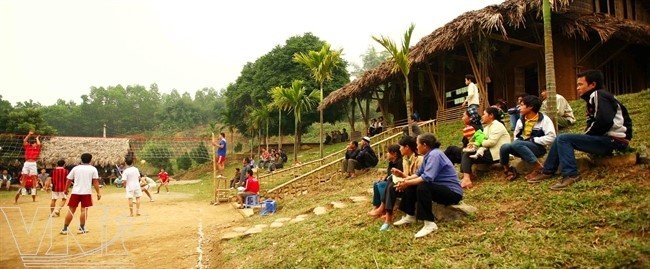
When completed, the Suoi Re Community Centre quickly became the heart of the village. It serves as a classroom for children, a meeting hall for elders, a stage for performances, and a venue for local ceremonies. During harvest festivals, it fills with laughter and music. On ordinary days, it becomes a space for informal gatherings and storytelling.
The structure’s openness encourages interaction. There are no rigid boundaries between interior and exterior, between learning and leisure, or between formal and informal use. This fluidity mirrors the organic way communities function in traditional Vietnamese villages. The building breathes with life, shaped not by walls but by the energy of the people who inhabit it.
Perhaps the most profound achievement of the project is that it restores dignity through architecture. For the villagers of Suoi Re, the centre is a visible affirmation that their culture and identity matter. It is a space built with their hands, reflecting their spiritnot something imported or imposed. Through this, Hao’s idea of “sharing” transcends physical collaboration and becomes a form of emotional and cultural exchange.
Sustainability Beyond Green
While the Suoi Re Community Centre is often praised for its sustainability, Hao’s interpretation of that concept goes far beyond environmental metrics. For him, true sustainability includes the well-being of people, the endurance of culture, and the vitality of community networks.
The use of local materials reduced costs and carbon footprint, but it also reinforced a circular economy within the village. Every resource from bamboo poles to reclaimed wood came from the land or nearby sources, ensuring minimal environmental disruption. The construction methods were low-tech and replicable, meaning other communities could learn and apply them without dependence on expensive machinery or imported materials.
In this sense, the building became a model for what Hao calls “humane architecture” design that empowers rather than exploits, that values process as much as product. It stands as a counterpoint to the dominant global trend of flashy, monumental architecture that often alienates rather than connects.
The Aesthetics of Empathy
Aesthetically, the Suoi Re Community Centre is understated yet profoundly beautiful. Its beauty does not scream for attention; it whispers in textures, shadows, and stories. The play of light through bamboo panels creates patterns reminiscent of woven textiles. The earthy tones blend harmoniously with the surrounding hillsides, making the building appear as if it has grown from the land itself.
This kind of beauty cannot be replicated in sterile, corporate environments because it is born of empathy. Every element carries meaning. The open framework encourages communication. The hand-built textures speak of care and time. The proportions respect the human scale, ensuring comfort rather than grandeur. In every sense, the building is a manifestation of Hao’s belief that architecture should be a “shared emotion” between designer, builder, and user.
Hao’s approach reminds us that design is not about perfection but connection. In an era where digital tools and artificial intelligence can generate flawless forms, his work stands as a reminder that imperfection the uneven surfaces, the visible joints, the handwoven panel carries warmth and humanity.
The Impact: From Local to Global Recognition
The Suoi Re Community Centre has received international acclaim, earning awards and features in architectural publications around the world. Yet, what makes this recognition meaningful is that it amplifies the story of a small village and its people. Hao often emphasizes that these accolades belong not to him alone but to the entire community that built the project.
More importantly, the project has inspired similar initiatives in other rural areas of Vietnam and beyond. Hao and his firm have continued to design community-oriented buildings libraries, schools, and cultural centers using the same participatory methods and commitment to social value. Through these works, he demonstrates that architecture can be a catalyst for sustainable development and cultural revival.
The Philosophy in Practice: Humanity and Sharing
When Hoang Thuc Hao says, “Architecture is not only about form, but about humanity and sharing,” he challenges the very foundation of how we think about design. In a profession often preoccupied with visual spectacle, he reminds us that the essence of architecture lies in relationships between people, between people and their environment, and between past and future.
For Hao, form is secondary. It is the vessel that holds human intention. The true purpose of architecture is to serve, to connect, to heal. It is an act of generosity. To share in architecture is to share knowledge, resources, and care. It means building not for people, but with them.
In the Suoi Re project, sharing took many forms. It was the sharing of technical skill from architect to villagers, of cultural wisdom from villagers to architect, of time, labor, and mutual respect. Each nail, each beam, each woven panel carries the imprint of shared human effort. This reciprocity transforms the building from a static structure into a living symbol of cooperation.
Lessons for the Future of Architecture
The story of the Suoi Re Community Centre invites architects, planners, and citizens alike to rethink what progress means. It poses difficult but necessary questions: Should architecture always aim to impress, or can it aim to embrace? Can buildings become instruments of social justice, tools of empowerment, and bridges between tradition and modernity?
Hao’s work suggests that they can. His architecture teaches that innovation does not always come from new technology; sometimes, it comes from returning to the roots of human experience. By listening, engaging, and sharing, architects can create spaces that nurture both people and the planet.
In a time when urbanization threatens to homogenize cultures, projects like Suoi Re act as gentle resistances. They preserve diversity through design. They remind us that every community, no matter how remote, holds knowledge worth honoring.
Furthermore, Hao’s practice challenges the idea of the architect as an isolated genius. Instead, he envisions the architect as a facilitator, a mediator of voices. This shift from ego to empathy is revolutionary in itself. It opens the door to architecture that is democratic, inclusive, and deeply humane.
The Emotional Legacy
Perhaps the most moving legacy of the Suoi Re Community Centre is not the structure itself but the stories it continues to nurture. Children who once lacked a place to learn now attend classes beneath its bamboo rafters. Elders gather to share songs and tales that might otherwise have faded into memory. Visitors from other regions come not to admire a monument but to witness a living example of communal strength.
In the soft hum of daily activity, one can sense that the building has a soul. It breathes with the laughter of children, the rhythm of footsteps, and the whispers of wind through bamboo. It stands quietly, fulfilling its role as a bridge between generations a testament to the idea that architecture, at its best, is a vessel for human connection.
Hao himself has said that he hopes his buildings will “make people happier.” This simple statement encapsulates a profound truth: architecture cannot change the world alone, but it can improve the quality of life, one community at a time.
A Broader Reflection
In many ways, the Suoi Re Community Centre reflects the larger narrative of Vietnam’s evolution a country balancing the preservation of its heritage with the pursuit of progress. Hoang Thuc Hao’s architecture captures that tension gracefully, showing that modernization need not mean erasure.
His projects teach that true development respects identity. It uplifts rather than replaces. By using local materials and techniques, Hao proves that modern architecture can emerge from tradition rather than in opposition to it. His buildings become cultural dialogues, where the old and new coexist harmoniously.
This philosophy is particularly relevant in today’s globalized world, where architectural sameness often erases local character. Glass towers look the same in New York, Dubai, and Shanghai. Against this backdrop, Hao’s humble bamboo and earth structures stand out not for grandeur but for authenticity. They remind us that architecture’s deepest beauty lies not in its form, but in its purpose.
Conclusion: Building for the Heart
“Architecture is not only about form, but about humanity and sharing.” In these words, Hoang Thuc Hao offers both a manifesto and a moral compass. He urges architects to look beyond the surface, beyond awards and fame, to the essence of why we build in the first place to create spaces where life can flourish.
The Suoi Re Community Centre is not merely an architectural success; it is a human story told through timber, bamboo, and community spirit. It proves that architecture rooted in empathy can change not only landscapes but lives. Its beauty lies not in symmetry or perfection but in its heart a heart that beats in rhythm with the people it serves.
In an age when architecture often seems disconnected from the everyday struggles of ordinary people, Hoang Thuc Hao reminds us of its true calling. To build is to care. To design is to listen. To create is to share.
And so, in the green valleys of Suoi Re, a modest structure of bamboo and earth continues to whisper a timeless truth: architecture, when infused with humanity, becomes more than shelter. It becomes hope made visible.