In an age of architectural spectacle, where skyscrapers pierce clouds and façades glimmer with technological bravado, one man has quietly and consistently defied the noise. Glenn Murcutt, the celebrated Australian architect and Pritzker Prize laureate, has spent his entire career crafting buildings that whisper rather than shout. His works do not seek to dominate landscapes …
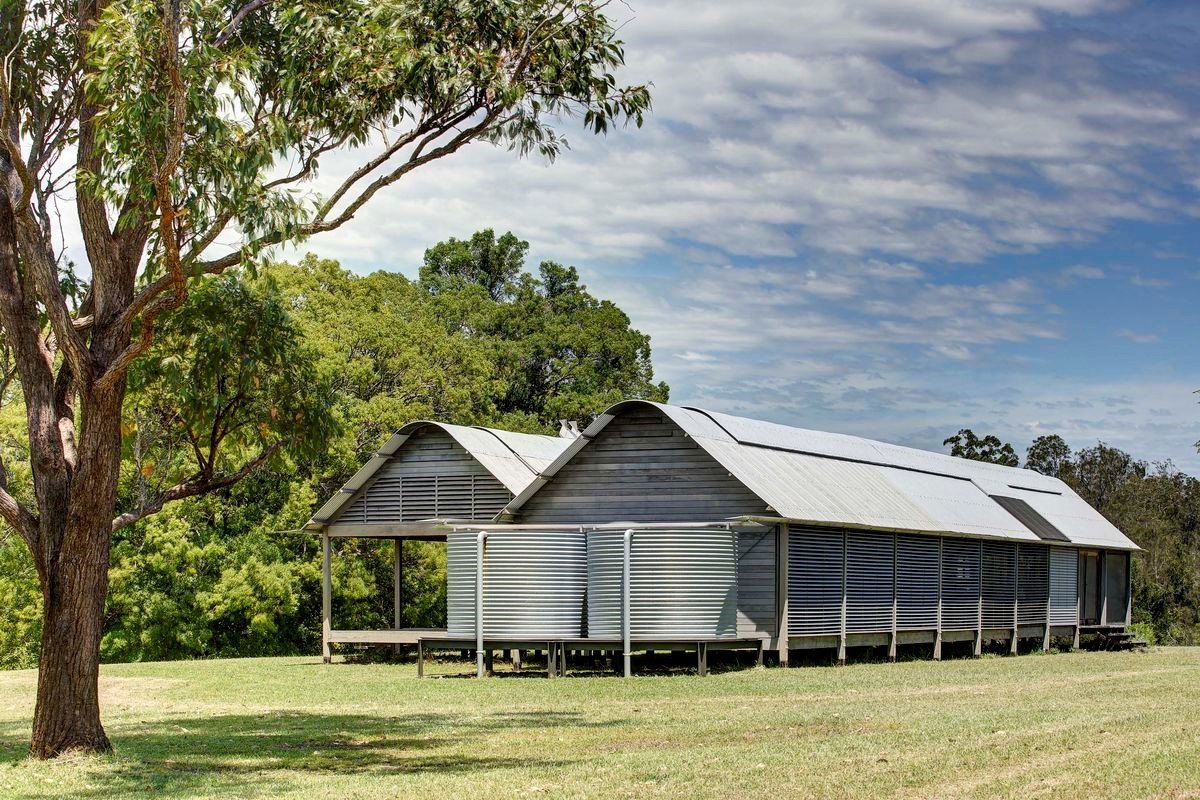
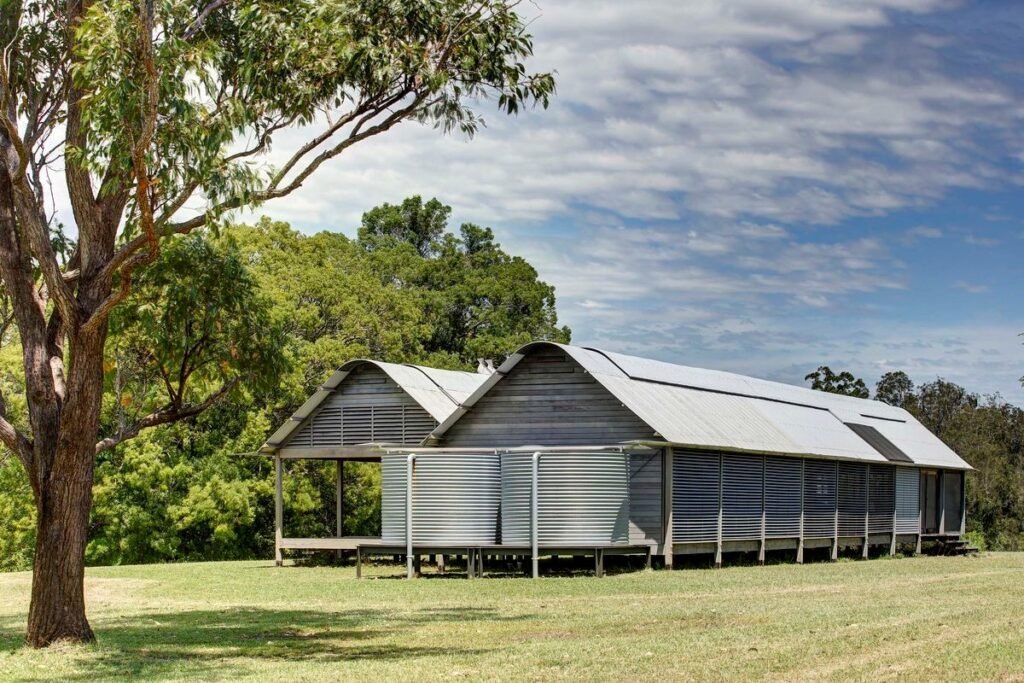
Table of Contents
- The Making of a Philosophy
- Architecture as Listening
- The Marie Short House: A Dialogue with Climate
- The Magney House: A Symphony of Wind, Light, and Water
- The Marika-Alderton House: Architecture as Cultural Dialogue
- The Arthur and Yvonne Boyd Education Centre: Architecture as Landscape
- The Essence of Restraint
- Light, Wind, and Water: The Invisible Materials
- Influence and Legacy
- The Moral Dimension of Architecture
- Lessons from the Land
- The Beauty of Modesty
- A Universal Lesson
- Conclusion: The Gentle Architecture of Presence
In an age of architectural spectacle, where skyscrapers pierce clouds and façades glimmer with technological bravado, one man has quietly and consistently defied the noise. Glenn Murcutt, the celebrated Australian architect and Pritzker Prize laureate, has spent his entire career crafting buildings that whisper rather than shout. His works do not seek to dominate landscapes but to belong to them. His architecture speaks a language of humility, ecology, and profound respect for the natural world.
His lifelong motto, “Touch the Earth Lightly,” has become not just a design principle but an environmental philosophy a moral stance about how humans should inhabit the planet. For Murcutt, architecture is not about leaving a grand mark on the earth but about understanding its rhythms and responding gently to them. Each of his buildings is a dialogue with the land, a listening exercise in form, climate, and spirit.
This essay explores Glenn Murcutt’s philosophy of minimal intervention and environmental sensitivity, tracing how he creates profound meaning from simplicity. It looks at his most significant works from the Marie Short House to the Magney House and the Marika-Alderton Hous each serving as a meditation on living lightly, honestly, and harmoniously within nature’s embrace.
The Making of a Philosophy
Glenn Murcutt was born in London in 1936 to Australian parents but spent his early childhood in Papua New Guinea, where he developed an instinctive respect for natural environments and indigenous living. Surrounded by tropical forests, open skies, and the rhythmic simplicity of vernacular huts, he absorbed lessons about how architecture could coexist with its surroundings rather than disrupt them.
When his family moved back to Australia, he studied architecture at the University of New South Wales and was drawn to the works of European modernists such as Mies van der Rohe and Le Corbusier. Yet, unlike many modernists who were seduced by abstraction and industrial uniformity, Murcutt filtered their rational principles through a distinctly local and ecological lens. He admired Mies’s precision and lightness, but he was equally inspired by the Australian bush, the way the light shifted across eucalypt leaves, and how vernacular farm buildings responded naturally to weather.
Out of this unique synthesis arose his mantra: Touch the Earth Lightly. It was not a slogan; it was a way of life. It meant designing with restraint, building with awareness, and always recognizing that humans are temporary guests in the landscape.
Architecture as Listening
At the heart of Murcutt’s approach is listening to the site, to the climate, and to the people who will inhabit his spaces. He believes that architecture must begin not with form but with understanding. Before sketching, he studies the movement of the sun, the direction of prevailing winds, the patterns of rain, and the textures of soil. For him, these are not constraints but opportunities.
His buildings emerge as elegant responses to these conditions. They are shaped by climate rather than style. They breathe, shade, and adapt like living organisms. Rather than imposing themselves upon a place, they seem to grow out of it.
Murcutt’s deep sensitivity to environment makes his architecture feel simultaneously modern and timeless. There is steel, glass, and corrugated iron materials often associated with industrial utility yet they are handled with such care and balance that they evoke poetry rather than machinery.
This deliberate listening gives his works a serenity that transcends aesthetics. To “touch the earth lightly” is, in essence, to build in conversation with it.
The Marie Short House: A Dialogue with Climate
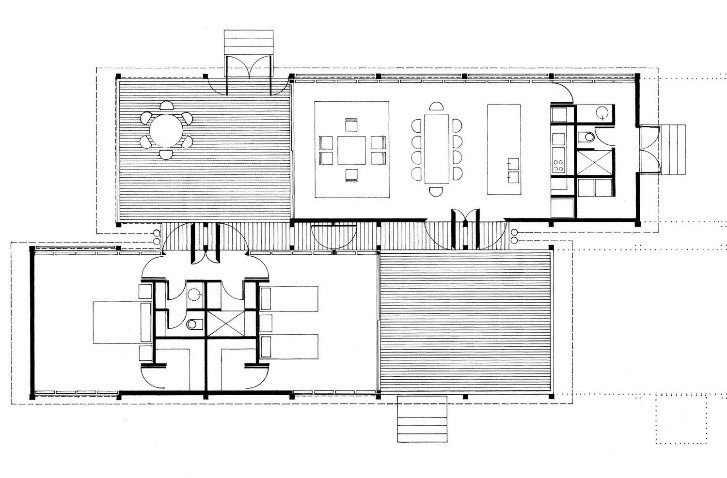
One of Murcutt’s earliest and most celebrated works, the Marie Short House in New South Wales (1974–1975, later modified by Murcutt himself), encapsulates his emerging philosophy. Set amid the hot, humid climate of Kempsey, the house draws inspiration from the local vernacular of rural sheds and farmhouses.
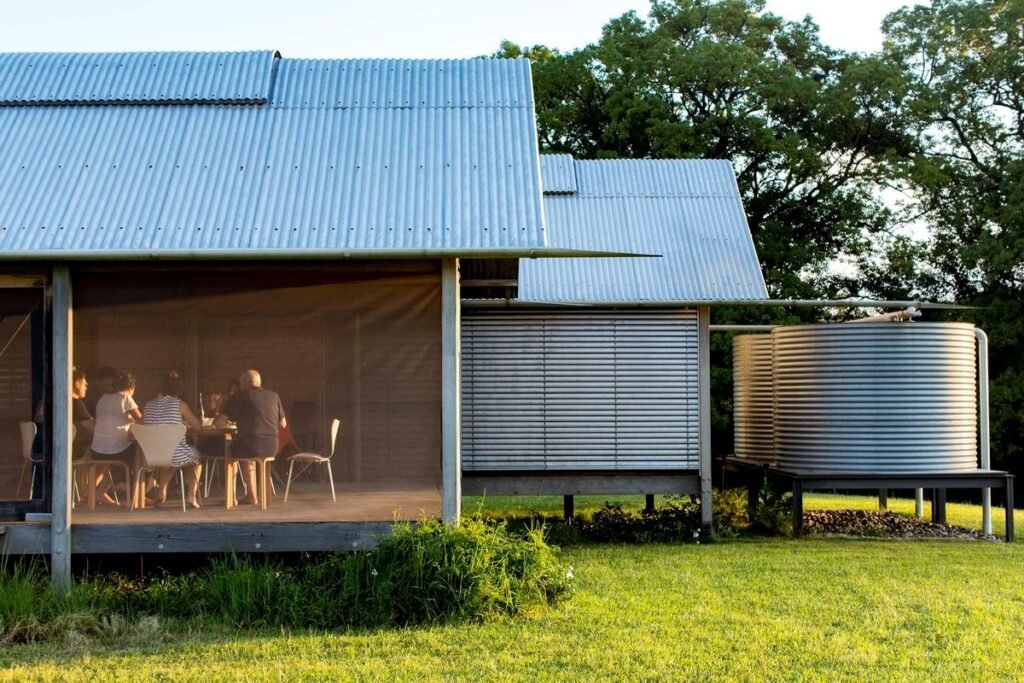
Constructed primarily from lightweight steel framing, timber, and corrugated iron, the building rests gently on stilts, allowing air to circulate beneath the floor. This elevation helps prevent moisture buildup while offering a visual sense of lightness. The house’s long, narrow form encourages cross ventilation, while operable louvers and sliding panels regulate air and light according to the season.
Murcutt used prefabricated and simple materials not out of necessity but conviction. He believed that architecture should respect both economy and ecology. The Marie Short House is proof that restraint can yield elegance. Its strength lies in its adaptability, its openness to the environment, and its quiet refusal to dominate.
Every design decision in the Marie Short House is guided by climate. In summer, the deep eaves provide shade and the breezes sweep through. In winter, sunlight floods in to warm the interiors. There is no air conditioning, no mechanical intervention, just intelligent design shaped by local knowledge and observation.
This house was an early experiment in environmental sensitivity long before sustainability became a global concern. It exemplified the ethic of minimal intervention: use what is needed, design with intelligence, and let nature do most of the work.
The Magney House: A Symphony of Wind, Light, and Water
If the Marie Short House announced Murcutt’s philosophy, the Magney House on the New South Wales south coast (1984) solidified it into architectural poetry. Perched on a dramatic site overlooking the Pacific Ocean, the house faces a harsh, shifting climate sea winds, sun, and salt-laden air. Rather than resisting these forces, Murcutt designed the building to dance with them.
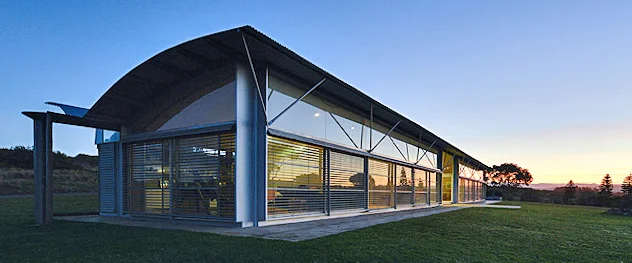
The Magney House’s most striking feature is its wing-shaped roof, a graceful arc that captures rainwater and channels it into storage tanks. This gesture transforms a functional need into a sculptural form, embodying the perfect union of utility and beauty. The roof also facilitates natural ventilation, allowing warm air to rise and escape while cooler breezes circulate through the living spaces.
Built from corrugated steel, glass, and concrete, the house reflects the tones of the landscape silver, grey, and muted green blending almost camouflaged into the coastal terrain. It feels like an organic outgrowth of the earth, a shelter that belongs utterly to its place.
Inside, the experience is one of lightness and intimacy. Spaces open to both the ocean and the inland hills, connecting inhabitants to the rhythms of the environment. The house does not shield its occupants from nature but invites them to live with it to hear the rain on the roof, to feel the sea breeze, to see the light shift with the passing clouds.
The Magney House is an embodiment of touching the earth lightly: it harnesses nature rather than conquers it, standing as a serene partnership between human ingenuity and the wild coastal landscape.
The Marika-Alderton House: Architecture as Cultural Dialogue
Murcutt’s respect for nature is matched by his respect for people. One of his most remarkable projects, the Marika-Alderton House (1994) in Arnhem Land, Northern Territory, reveals how his philosophy extends to cultural understanding and social sensitivity.
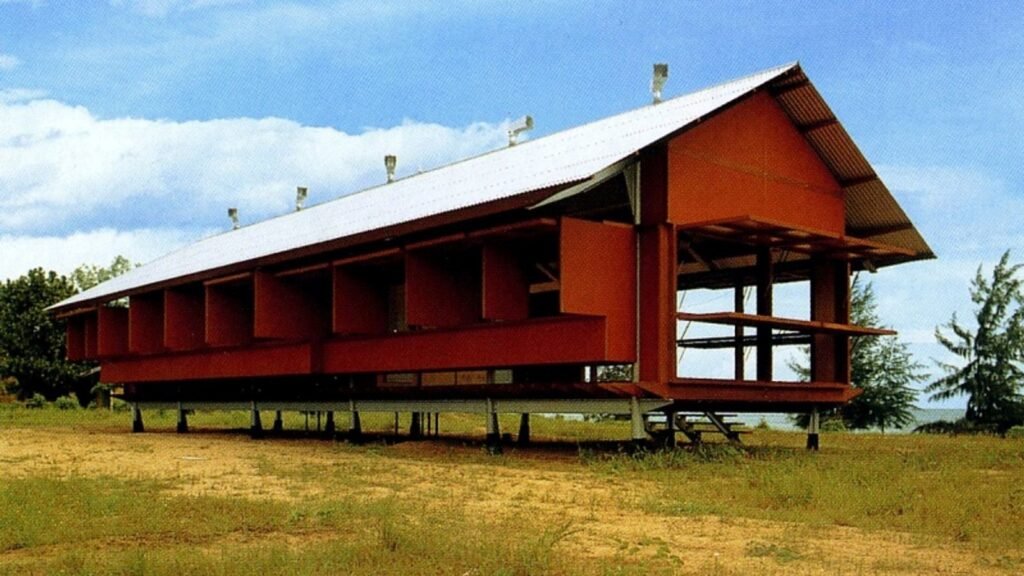
Commissioned for the Aboriginal artist Banduk Marika and her family, the house presented both environmental and cultural challenges. The tropical climate of the region demanded a design that could handle heat, humidity, and cyclonic winds. At the same time, it needed to align with the values and lifestyle of its Indigenous inhabitants, for whom openness, community, and connection to land are central.
Murcutt approached the project with humility. He spent time with the Marika family, learning about their traditions and daily rhythms. The result was a house that embodies both climate responsiveness and cultural resonance.
Raised off the ground on stilts, the structure allows air to flow beneath it and provides a shaded space for outdoor living a feature common in traditional Aboriginal shelters. The lightweight steel frame and adjustable louvered panels enable cross-ventilation and flexible shading. The walls can be opened entirely to connect the interior with the surrounding landscape, echoing the family’s desire for fluidity between indoor and outdoor life.
The building is demountable and transportable, reflecting the traditional mobility of Aboriginal culture. Its materials corrugated steel, plywood, and glass are durable yet modest. In this project, Murcutt demonstrated how architecture can act as a respectful bridge between modern technology and ancient wisdom.
The Marika-Alderton House is not only an environmental success; it is a statement of ethical architecture. It respects land and culture simultaneously, showing that to touch the earth lightly also means to tread carefully upon its cultural ground.
The Arthur and Yvonne Boyd Education Centre: Architecture as Landscape
While Murcutt is renowned for his small-scale houses, his collaboration with architects Wendy Lewin and Reg Lark on the Arthur and Yvonne Boyd Education Centre at Riversdale (1999) expanded his ideas to a larger public setting without losing intimacy.
Located on the Shoalhaven River, the centre serves as a residential retreat for artists and students. It sits in a landscape of extraordinary beauty rolling hills, the shimmer of water, and vast Australian skies. Murcutt approached the project with reverence, ensuring the building did not compete with its surroundings but became part of them.
The structure is long and linear, following the contours of the site. Its materials concrete, timber, and metal — echo the textures of the environment. The roof hovers delicately, extending beyond the walls to create shaded verandas and to frame views of the landscape.
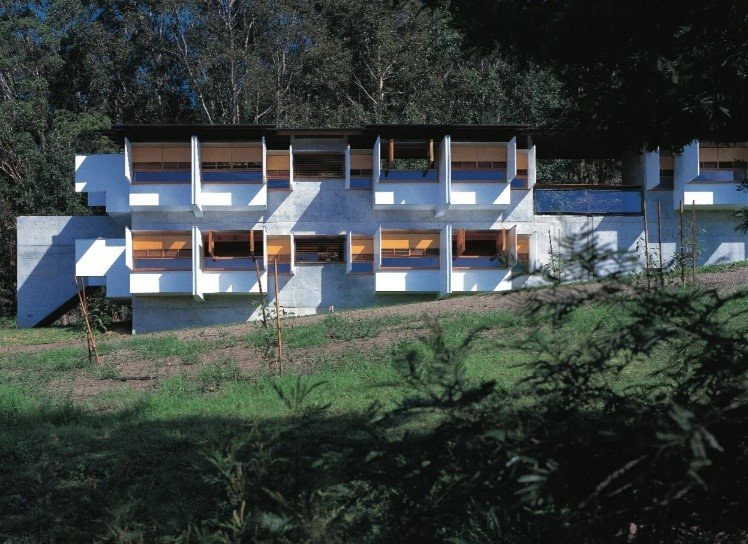
Inside, the architecture dissolves into light. Open corridors and transparent facades make the boundaries between interior and exterior almost vanish. One has the sense of being both sheltered and exposed, protected yet part of the wilderness.
The education centre represents Murcutt’s ability to translate his philosophy of minimal intervention into a communal context. It remains one of the purest examples of his belief that architecture should serve the spirit of a place, not overwhelm it.
The Essence of Restraint
In an era obsessed with technological innovation and visual spectacle, Glenn Murcutt’s work stands as an antidote to excess. He builds almost entirely in Australia and works without a large staff, preferring to focus on one project at a time. He does not maintain a global practice or pursue massive commissions. This self-imposed simplicity allows him to remain intimately connected to each site and client.
For Murcutt, architecture is a moral act. To touch the earth lightly means to recognize the fragility of our environment and the temporary nature of human presence. His restraint is not aesthetic minimalism alone; it is ethical minimalism. It asks: how can we build without harm, without arrogance, without unnecessary consumption?
This philosophy manifests not only in the materials he chooses but in how he approaches the very idea of shelter. He designs buildings that can adapt, breathe, and age gracefully. They do not require constant energy input to remain comfortable. They exist in balance with their surroundings, using nature as an ally rather than an adversary.
The restraint in Murcutt’s architecture produces a quiet beauty that grows deeper over time. His houses are not glossy or ostentatious. They acquire character through weathering, through the way light caresses their surfaces at dawn or dusk. They are alive to change, just as all living things are.
Light, Wind, and Water: The Invisible Materials
If one were to list Glenn Murcutt’s building materials, they would include corrugated metal, timber, concrete, and glass. Yet, his most important materials are invisibl light, wind, and water.
He treats sunlight not as an enemy to be blocked but as a companion to be guided. Louvers, screens, and roof angles choreograph light throughout the day, transforming interiors into living paintings of shadow and reflection.
Wind is another collaborator. Murcutt’s buildings breathe naturally. Through orientation, operable panels, and careful planning, he harnesses breezes to maintain comfort without mechanical systems.
And then there is water. Many of his roofs are shaped to collect and channel rainwater, turning a necessity into poetry. The gentle arc of a roofline becomes both functional and expressive.
By working with these elements rather than against them, Murcutt elevates sustainability from a technical concern to an artistic and spiritual principle. He reminds us that the elements themselves are part of the architecture.
Influence and Legacy
Murcutt’s influence extends far beyond Australia. His work has inspired generations of architects to rediscover the relationship between architecture and environment. He teaches that sustainability is not an add-on or an afterthought; it is the foundation of design.
Despite his modest practice, he has received global recognition, including the Pritzker Prize in 2002, the Alvar Aalto Medal, and the Australian Institute of Architects Gold Medal. These honors acknowledge not only his design excellence but his unwavering integrity in a profession often driven by commercial ambition.
What makes Murcutt exceptional is that he has never sought fame. He has no desire to build monuments or skylines. Instead, his legacy lies in the values he embodies: humility, responsibility, and care. His architecture is a lesson in how to live thoughtfully on the earth how to build not as conquerors but as participants in the natural order.
The Moral Dimension of Architecture
Murcutt’s philosophy resonates deeply in a world confronting climate crisis, ecological degradation, and overconsumption. His work poses a quiet but urgent question: can we, as a species, learn to inhabit the planet more gently?
To touch the earth lightly is to accept limits something modern culture often resists. It means understanding that resources are finite, that every action leaves a footprint, and that beauty lies not in abundance but in balance.
Murcutt’s houses invite reflection on what we truly need to live well. They suggest that comfort and harmony do not depend on size or luxury but on relationship to place, to climate, to community. His architecture embodies an ethic of sufficiency rather than excess.
In this sense, his philosophy transcends architecture. It becomes a worldview, one that could equally apply to agriculture, urban planning, or everyday living. It reminds us that restraint can be a form of respect respect for the planet, for others, and for ourselves.
Lessons from the Land
Australia’s harsh and diverse landscapes have been Murcutt’s greatest teacher. From arid outback plains to tropical coasts, he has learned that every environment holds its own intelligence. To build well, one must first observe.
This attentiveness to context sets Murcutt apart from many global architects who impose universal solutions on local problems. He insists that every site deserves a unique response. He designs for specific winds, specific sun paths, specific ecosystems.
His process is almost meditative. He spends long periods visiting the site, sketching, and absorbing its atmosphere. By the time construction begins, the building already feels inevitable not as an intrusion but as a natural evolution of the place.
This patient listening is at the core of “touching the earth lightly.” It is not about technology or aesthetics alone; it is about cultivating empathy with the land.
The Beauty of Modesty
In many of Murcutt’s projects, there is a rare and quiet modesty. He avoids grand entrances, ornamentation, or excessive gestures. His architecture does not demand attention but earns admiration through honesty.
The forms are often simple rectangles, linear in plan, elevated slightly above the ground. Yet within this simplicity lies depth. The proportions are refined, the details meticulous. Every joint, every overhang, every shadow is considered.
This modesty extends to his relationship with clients. Murcutt listens closely, guiding them toward simplicity and environmental awareness. He often jokes that he designs houses people did not know they wanted houses that teach them to live differently, more in tune with their surroundings.
There is a deep generosity in that. He gives his clients not just a shelter but a philosophy of living.
A Universal Lesson
Glenn Murcutt’s work may be rooted in Australia, but its lessons are universal. In every climate and culture, architecture can either exploit or enhance its environment. Murcutt shows us what happens when we choose the latter.
His philosophy is not about copying his style but adopting his mindset one of humility, observation, and care. Whether designing a rural hut or an urban building, the principle remains: understand the place, respect its rhythms, and build with lightness.
In this way, Murcutt stands as a moral compass in contemporary architecture. He reminds us that progress is not measured by size, cost, or technology but by harmony. To touch the earth lightly is to honor its fragility, to build as a custodian rather than an owner.
Conclusion: The Gentle Architecture of Presence
Glenn Murcutt’s architecture does not seek to impress; it seeks to belong. His buildings breathe, shimmer, and adapt, becoming part of the living world rather than mere objects within it. Through his quiet practice, he has redefined what it means to be an architect in the modern age not a creator of monuments but a steward of place.
“Touch the Earth Lightly” is more than an environmental slogan. It is an ethical call to action, a reminder that our relationship with the planet must be one of reverence and restraint. In every corrugated roof that catches the rain, in every louver that welcomes the breeze, Murcutt teaches us to see architecture as an act of care.
In a century driven by consumption and speed, Glenn Murcutt’s work stands as a meditation on slowness, simplicity, and grace. He shows that true beauty lies in listening to the wind, the sun, the land, and the human heart.
His buildings, modest yet profound, embody a timeless truth: to touch the earth lightly is not to build less, but to live more fully within the delicate balance of nature.