Architecture at its best transcends shelter. It becomes a language one that speaks of place, people, light, and life. Few contemporary architects embody this belief with such grace and conviction as Yvonne Farrell and Shelley McNamara, the Irish duo behind Grafton Architects. Their work radiates a quiet strength and an unmistakable humanism. For Farrell and …
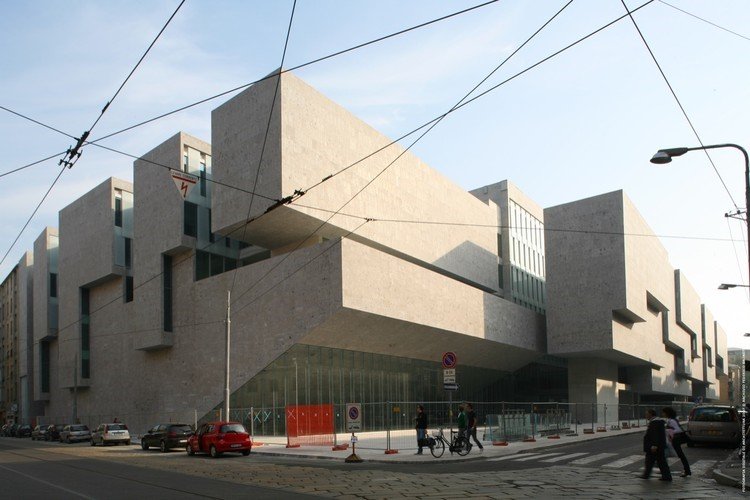
Table of Contents
- Beginnings: The Soul of Irish Modernism
- The Architecture of Generosity
- UTEC, Lima: A Vertical Campus in the Sky
- Università Luigi Bocconi: Civic Gravitas in Milan
- The School as Landscape: Limerick and Lima
- The Poetics of Light and Shadow
- Teaching, Thinking, and the Ethics of Architecture
- The Architecture Biennale: “Freespace”
- The Pritzker Prize and Recognition
- The Irishness of Their Vision
- The Moral Dimension of Space
- The Quiet Power of Their Architecture
- Conclusion: Building with Light, Building with Love
Architecture at its best transcends shelter. It becomes a language one that speaks of place, people, light, and life. Few contemporary architects embody this belief with such grace and conviction as Yvonne Farrell and Shelley McNamara, the Irish duo behind Grafton Architects. Their work radiates a quiet strength and an unmistakable humanism.
For Farrell and McNamara, architecture is not an act of self-expression but of generosity. It is the art of giving giving space, light, dignity, and belonging. Their buildings open themselves to the city, the climate, and the community, allowing life to unfold naturally within them. Every beam, void, and wall seems to ask: how can we make more of the world rather than take from it?
Their philosophy, honed over decades of practice and teaching, finds expression not in flamboyant forms but in the subtle orchestration of light, material, and proportion. Their architecture feels rooted in landscape, in history, and in the human experience of space. It is not architecture that dazzles; it embraces. It does not proclaim; it listens. And in this quiet listening, it achieves something rare: generosity made visible.
Beginnings: The Soul of Irish Modernism
Yvonne Farrell and Shelley McNamara met as architecture students at University College Dublin in the 1970s, a time when Ireland was beginning to rediscover its cultural voice after decades of economic hardship and emigration. The Ireland of their youth was modest, textured, and close to the ground an environment that left deep imprints on their sensibilities.
In 1978, they founded Grafton Architects, named after Grafton Street in Dublin where their first office stood. The firm began humbly, with small projects that demanded care and resourcefulness rather than grand gestures. Their early experiences taught them to find poetry in constraint to see opportunity in the ordinary.
The Irish landscape itself became their greatest teacher. The play of Atlantic light on stone, the resilience of structures against wind and rain, the tactile relationship between architecture and weather these became the foundations of their aesthetic. For Farrell and McNamara, architecture was never about abstraction but about responding, adapting, and giving form to the invisible qualities of place.
Over time, their work evolved from local buildings to international projects, yet their sensibility remained deeply Irish: grounded, tactile, and generous. They learned to translate the intimacy of small spaces into the scale of large civic buildings, without losing warmth or humanity.
The Architecture of Generosity
Generosity is a word they return to often. In their eyes, a generous building is one that offers more than it takes. It shapes not only interior life but the public realm around it. It shares its light, its shade, and its sense of welcome.
For Farrell and McNamara, this generosity begins with attention the act of truly seeing and understanding the context in which a building will live. They approach each site as a dialogue, listening to its history, its geography, its rhythms of light and shadow. Architecture, in their philosophy, is not imposed but drawn out of place, like a story waiting to be told.
Their generosity also extends to the users to students, workers, or citizens who inhabit their buildings daily. They speak of “the gift of space,” the idea that architecture can uplift ordinary life by making people aware of their surroundings, their community, and even themselves.
Their buildings are never about control. They allow freedom spaces where people can gather, linger, and look outward. They resist spectacle and instead nurture curiosity. In a world of consumption and speed, Grafton Architects remind us that the truest luxury is spaciousness not in size, but in spirit.
UTEC, Lima: A Vertical Campus in the Sky
Perhaps the most celebrated embodiment of their philosophy is the University of Engineering and Technology (UTEC) in Lima, Peru a project that earned them the inaugural RIBA International Prize in 2016.
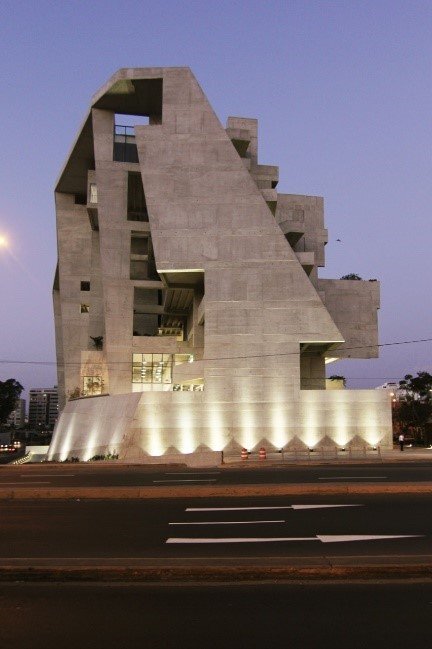
Lima is a city built on the edge of desert cliffs overlooking the Pacific Ocean, where fog often softens the horizon and the air feels dense with salt. Farrell and McNamara’s challenge was to create a new kind of university for this unique geography one that responded to both the social and environmental conditions of the place.
Instead of designing a traditional campus spread horizontally across land, they conceived UTEC as a vertical campus, a kind of “man-made cliff” that rises in layers against the steep site. The building feels both monumental and porous, with terraces, ramps, and open platforms carved into its concrete body.
But what makes UTEC extraordinary is not its scale, but its generosity. The building opens itself to the city, allowing air and light to flow freely through its volumes. Classrooms are not sealed boxes but open-air spaces protected by deep overhangs. Students move between floors along sculptural ramps, always connected to the sky and the landscape beyond.
The architecture becomes an extension of the terrain a continuation of the cliff, shaped by gravity and light. Its raw concrete expresses honesty, while its spaces offer freedom and dignity. UTEC is not a fortress of knowledge but a civic mountain, a place where education and environment intertwine.
Farrell and McNamara described it as “a new landscape for learning.” In Lima’s harsh, dry climate, the building breathes, shades, and shelters. It gives back to the city the gift of openness a public generosity that transcends its academic function.
Università Luigi Bocconi: Civic Gravitas in Milan
Another masterpiece that captures the essence of Grafton Architects’ philosophy is the Università Luigi Bocconi building in Milan, completed in 2008. It was this project that brought them global recognition, showcasing their ability to merge cultural context with architectural depth.
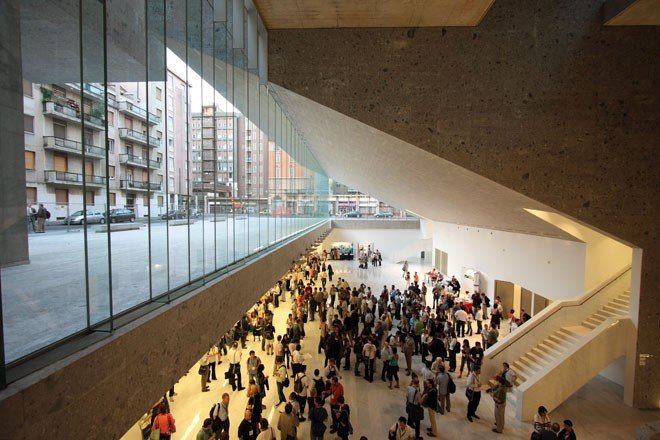
Located in a dense urban fabric, the Bocconi building houses the university’s School of Economics and Management. Instead of creating a sealed institution, Farrell and McNamara envisioned a public building that participates in the life of the city. The design establishes a dialogue between academia and the urban street.
At street level, a deep, shaded portico extends along the facade, inviting passersby to pause, rest, or look inward. The interior unfolds as a vast, light-filled atrium that connects classrooms, auditoriums, and offices. The use of concrete here is monumental yet soft massive forms floating gently above transparent spaces.
Light is the invisible protagonist. It filters from skylights, reflects off pale surfaces, and animates the raw materiality of the structure. The play of shadow and glow transforms the building throughout the day, turning weight into grace.
The architects described their vision as “a suspended piece of city.” Indeed, the building feels civic rather than institutional, blending solemnity with openness. It offers a sense of dignity without arrogance, echoing the timelessness of Milan’s stone streets while introducing a new language of transparency and connection.
Bocconi is an architecture of generosity not only in scale but in spirit. It gives the city a new public room a space of intellectual and social exchange, where light becomes a democratic medium shared by all.
The School as Landscape: Limerick and Lima
Farrell and McNamara have often said that educational buildings hold a special meaning for them. They see schools and universities as microcosms of society places where architecture can shape the way people think, meet, and imagine.
In Ireland, their University of Limerick Medical School exemplifies this belief. Here, the building is not an isolated object but part of a larger landscape. Its stepped forms follow the contours of the site, merging with the terrain. The facade, made of limestone and glass, seems to shift between solidity and lightness, echoing Ireland’s changeable weather.
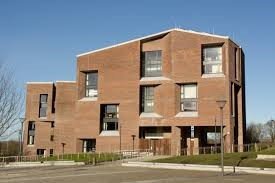
Inside, generous atriums and stairways create informal meeting spaces that encourage interaction among students and faculty. Light wells and windows bring daylight deep into the interior, creating a sense of calm and vitality.
The building feels both grounded and uplifting a place that nurtures learning through atmosphere, not just function. The generosity lies in how it frames views, distributes light, and invites movement. It reminds students that knowledge, like architecture, grows through openness and connection.
This sensitivity to education as a social landscape resonates across all their academic work. In both Limerick and Lima, they reimagine the university as a living organism, not a machine a porous structure that breathes and belongs.
The Poetics of Light and Shadow
Light is not decoration in their architecture; it is the medium of meaning. Whether in the soft grey skies of Dublin or the blinding sun of Lima, Farrell and McNamara treat light as a sculptural force that defines material and emotion.
They understand that light reveals the soul of a space. It animates surfaces, deepens shadows, and creates rhythm. Their buildings often frame light in deliberate ways filtering, reflecting, or capturing it through apertures and courtyards.
In the Bocconi building, light moves through vertical slots, washing concrete with silvery softness. In UTEC, it floods terraces and staircases, turning circulation into a dance between brightness and shadow. In smaller projects, like their offices and schools in Ireland, it glows gently through thick walls, as if distilled from the landscape itself.
This mastery of light gives their architecture a spiritual undertone. It recalls the work of Louis Kahn, whose influence they often acknowledge, but their interpretation is distinctly their own rooted in empathy, not abstraction. Light becomes a language of care, revealing the generosity of both space and intention.
Teaching, Thinking, and the Ethics of Architecture
Farrell and McNamara are not only practitioners but also teachers. Both have taught for decades at University College Dublin and various international institutions. Their lectures are as much about ethics as about design. They speak of the architect’s responsibility to society, to the environment, and to the future.
For them, teaching is another form of generosity the passing of knowledge, the cultivation of curiosity, and the nurturing of sensitivity. They urge students to slow down, to observe, to listen. They teach that architecture begins not with ambition but with awareness.
Their educational philosophy mirrors their built work: thoughtful, patient, and grounded in humanity. They remind young architects that the smallest gesture a well-placed window, a shaded threshold, a moment of pause can change how people live and feel.
They reject the idea of architecture as ego or spectacle. Instead, they advocate for buildings that serve, that give more than they demand, and that enrich the everyday. In this, they align with a lineage of architects like Alvaro Siza, Glenn Murcutt, and Peter Zumthor those who understand that humility can be heroic.
The Architecture Biennale: “Freespace”
In 2018, Farrell and McNamara were appointed as curators of the Venice Architecture Biennale, one of the most prestigious roles in the profession. Their chosen theme, Freespace, perfectly encapsulated their philosophy.
They defined Freespace as “a generosity of spirit and a sense of humanity at the core of architecture’s agenda.” It was a call to rediscover the values that give architecture its meaning beyond economics or spectacle the simple act of creating space that is open, free, and shared.
Their Biennale exhibition celebrated architecture that gives more than it takes that offers delight, shade, and surprise. It included projects from around the world that embodied this ethos, from modest rural schools to vast civic institutions.
Through Freespace, Farrell and McNamara reminded the world that architecture is not only about solving problems but about creating joy. The theme resonated deeply in a time when cities were becoming increasingly privatized and impersonal. Their message was clear: true architecture expands the human horizon; it does not constrict it.
The Pritzker Prize and Recognition
In 2020, Yvonne Farrell and Shelley McNamara were awarded the Pritzker Architecture Prize, often described as the Nobel of architecture. The jury cited their “integrity in approach, excellence in architecture, and unwavering commitment to humanity.”
What made their recognition especially meaningful was that their work stands apart from the mainstream narrative of global architecture. They do not design skyscrapers or museums for fame. Their buildings are mostly schools, universities, and cultural centers the quiet infrastructure of civic life.
Their architecture speaks not through grandeur but through care. It restores faith in the idea that thoughtfulness can be powerful, that humility can inspire awe. The Pritzker Prize was not just a celebration of their achievements but a validation of their values that generosity, empathy, and light are as essential to architecture as form and function.
The Irishness of Their Vision
Though their projects span continents, Farrell and McNamara remain deeply connected to their Irish roots. Ireland, with its mutable weather and lyrical landscapes, taught them to appreciate nuance, shadow, and texture. Its vernacular architecture modest, resilient, handmade shaped their sense of proportion and honesty.
They often speak of the Irish relationship to light how it shifts constantly, how it softens edges and reveals color with tenderness. This awareness infuses all their work, even in distant climates. Their buildings, wherever they stand, carry something of that Irish temperament: openness, humor, melancholy, and warmth.
In a sense, they have turned Ireland’s humility into a universal language. Their architecture feels at home in both the wet green fields of Limerick and the dry cliffs of Lima because it speaks to the fundamental human need for comfort, clarity, and connection.
The Moral Dimension of Space
What ultimately distinguishes Yvonne Farrell and Shelley McNamara is the moral clarity of their architecture. Their buildings are not just aesthetic compositions; they are ethical statements about how we should live together.
They believe that architecture has a civic duty to shape not only buildings but relationships. A generous building invites encounter, dialogue, and community. It frames not only views of the world but possibilities within it.
Their work teaches that space has moral weight. How a room admits light, how it opens to the street, how it protects from rain these are not technical matters alone; they are acts of care. Through design, they express empathy for the user and respect for the environment.
In this way, their architecture becomes an ethics of presence a practice of seeing, giving, and being attentive. It restores the human dimension to a discipline that often forgets its own heart.
The Quiet Power of Their Architecture
Standing inside one of their buildings, one feels a particular kind of calm. It is the calm of balance between mass and lightness, enclosure and openness, intellect and emotion. Their architecture does not overwhelm; it steadies.
You might walk through the Bocconi atrium and feel the rhythm of light guiding you upward. Or wander along a UTEC terrace and feel the ocean air brushing against concrete. You might pause under a portico and sense how the weight of a beam defines a patch of shade just large enough for thought.
These are not dramatic moments, yet they stay with you. They reveal how architecture, when made with care, can touch the soul in the simplest ways.
Farrell and McNamara often say that architecture should “hold the world together.” Their buildings do just that not by force, but by harmony. They remind us that generosity is not about abundance but about awareness, not about giving more but about giving better.
Conclusion: Building with Light, Building with Love
Yvonne Farrell and Shelley McNamara have given the world a vision of architecture rooted in empathy and light. Their work stands as a testament to what happens when design is guided by conscience and care rather than ego or spectacle.
They show us that architecture is not a matter of style but of spirit that to build generously is to believe in humanity’s capacity for goodness. Through concrete and glass, they craft spaces that breathe, listen, and give.
In their hands, light becomes a metaphor for generosity itself something that can be shared infinitely without diminishing. Their buildings, whether in Ireland, Italy, or Peru, carry this same luminous humility.
In a century obsessed with speed, size, and visibility, Farrell and McNamara remind us that architecture’s deepest power lies in patience, in attention, and in the quiet art of giving.
Their legacy is not merely a collection of buildings, but a philosophy an invitation to imagine an architecture that is as compassionate as it is intelligent, as grounded as it is transcendent.
They have built not just with light but with love, and in doing so, they have illuminated what architecture can still be: a gift to the world, freely given.