Material innovation in sustainable façades has moved from the margins of architectural experimentation into the mainstream of design decision making because the selection, processing and assembly of façade materials exerts a decisive influence over both embodied carbon and operational performance across a building’s lifespan, and because emerging social, regulatory and market pressures increasingly demand that …
Material innovation in sustainable façades has moved from the margins of architectural experimentation into the mainstream of design decision making because the selection, processing and assembly of façade materials exerts a decisive influence over both embodied carbon and operational performance across a building’s lifespan, and because emerging social, regulatory and market pressures increasingly demand that façades do more than simply enclose space; they must store and sequester carbon where possible, minimize the energy and pollution associated with manufacture and transport, facilitate repair and disassembly, and enable long-term adaptability in service. The contemporary discourse recognizes that the environmental impacts of façades are twofold: the upfront embodied impacts associated with extraction, fabrication and installation and the downstream operational impacts related to thermal performance, solar control, daylighting and maintenance. Material innovation therefore pursues two parallel goals: to reduce embodied impacts by developing or selecting lower carbon, recycled or bio-based materials, and to enhance operational efficiency by integrating materials and assemblies that improve insulation, thermal inertia, and daylight modulation without incurring excessive lifecycle burdens. Achieving meaningful reductions in whole life carbon requires a systems view that compares tradeoffs across these temporal scales and that privileges solutions offering robust operational savings while avoiding perverse outcomes where low operational carbon is offset by high embodied emissions. This systems view also emphasizes the necessity of designing façades for circularity from the outset, selecting materials and connection systems that enable future reuse, refurbishment, and straightforward separation of components at end of life. Circular strategies include designing for disassembly through bolted rather than welded or permanently bonded connections, choosing modular elements that can be replaced individually, specifying materials with known recycling pathways, and prioritizing local supply chains to minimize transport emissions and support circular economies at the regional scale. Designing for circularity also means asking questions at the product level about content, durability, repairability and recyclability, and at the assembly level about how components are joined and whether removal can be performed without destructive demolition. Such considerations influence the choice between façade systems that appear superficially similar; for example, a metal rainscreen with high recycled content and reversible fixings can be far more circular than a composite panel whose layers are indissolubly bonded and which requires energy intensive separation for recycling. The material palette for sustainable façades now spans a wide and growing range, from bio-based composites and engineered timber products to high-recycled-content metals, low-carbon concrete panels, advanced ceramics and terracotta rainscreens, and lightweight membrane systems such as ETFE. Each material family brings distinctive strengths, limitations and lifecycle implications that must be evaluated in context.
Bio-based materials and engineered wood products have seen rapid uptake because of their potential to sequester biogenic carbon and to replace more carbon intensive materials such as conventional steel and concrete in non-structural façade applications. Cross laminated timber and glued laminated timber enable prefabricated, dimensionally stable panels and façade modules that can be finished with a range of external claddings. When timber is sourced from responsibly managed forests and when end-of-life pathways are planned, the net carbon profile of timber façade systems can be favorable; the stored carbon in wood offsets a portion of the building’s embodied emissions, provided that issues such as forest management, transport distance and durability are addressed. Engineered timber can also reduce onsite waste through factory precision and can simplify insulation and airtightness detailing because CLT panels perform both structural and envelope functions, reducing the total quantity of ancillary materials. However, designers must remain attuned to potential tradeoffs: preservative treatments, laminated adhesives and non-recyclable finishes can complicate reuse and increase lifecycle impacts. To maximize benefits, timber façades benefit from detailing that minimizes the need for chemical preservatives, that uses reversible mechanical fixings, and that integrates protective overhangs and ventilation cavities to manage moisture and extend service life. Mass timber façades and curtain wall components also permit large, warm interior surfaces that contribute to thermal comfort and that can function within mixed passive strategies such as night purge and daytime thermal storage.
Bio-composites and natural fiber reinforced polymers represent another promising avenue, particularly for non-structural cladding panels and shading components. Composites made from cellulose, hemp, flax or agricultural residues bind natural fibers with bio-based resins to produce panels with competitive strength to weight ratios while potentially reducing dependence on fossil-based polymers. These materials can be used where lightweight, molded forms or complex curved geometries are required and where mass production on an industrial scale can drive down environmental footprints. However, the environmental credentials of bio-composites hinge on the life-cycle properties of the matrix resin as well as the fibers; fully bio-based resins that are readily recyclable or compostable will deliver superior outcomes compared with conventional resins that impair end-of-life options. Standardization, durability data and scalable supply chains remain challenges for bio-composites, but ongoing research and pilot projects are demonstrating routes toward commercially viable façade components that reduce both embodied carbon and reliance on virgin petrochemicals.
Recycled metals, particularly aluminum manufactured with high post-consumer recycled content, provide a pragmatic and widely deployable solution for rainscreen systems, curtain wall frames and sunshading elements. Because secondary aluminum production consumes a fraction of the energy required to produce primary aluminum, specifying extruded architectural sections and panels with high recycled content can dramatically reduce embodied carbon associated with metal façade systems. The recyclability of aluminum, its durability in weathering conditions, and the existence of mature recycling infrastructure make it a strong candidate for circular façade strategies where long service lives and eventual material recovery are priorities. The detailing challenge with metal systems is twofold: first, to ensure that material assemblies are separable so that aluminum components can be reclaimed without contamination from adhesives or incompatible composites; and second, to design for galvanic compatibility and long-term finish durability to minimize the frequency of replacement. Powder coatings and anodizing treatments extend the life of aluminum elements but must be specified with an eye to repairability; systems that allow local repainting or reanodizing without replacement will yield better lifecycle performance than coatings that are effectively sacrificial.
Low carbon concrete technology has advanced rapidly, offering façade options that preserve concrete’s desirable thermal mass and fire performance while reducing embodied carbon through a combination of blended cements, supplementary cementitious materials such as fly ash, slag and calcined clays, and carbon capture or sequestration during production. Precast concrete façade panels produced with low clinker cement blends reduce the carbon intensity per square meter and allow high precision fabrication and integrated thermal insulation. Concrete’s mass can be advantageous in temperate and diurnal climates where thermal storage reduces peak loads and smooths internal temperature swings, but the decision to use concrete must weigh embodied carbon against operational benefits; in some cases, less carbon intensive lightweight façades combined with active-passive strategies will provide superior whole life outcomes. Innovations such as geopolymers and carbonation curing are promising but still require broader commercial uptake and robust performance data. Designers must also consider end-of-life: concrete panels that are mechanically fixed and designed for deconstruction will be more easily recycled or repurposed than monolithic assemblies cast in place with intrusive services.
Terracotta façades and high-performance ceramic rainscreens are experiencing renewed interest as durable, low maintenance, and materially expressive options that can be produced from abundant natural clays and fired with increasingly efficient kilns. Terracotta panels provide a long service life with minimal maintenance and are often recyclable into aggregate or new ceramic products at end of life. When combined with appropriate backing insulation and ventilated cavity design, terracotta rainscreens can deliver excellent thermal performance and moisture resilience. Terracotta’s aesthetic warmth and tactile quality make it appealing for projects seeking both sustainability and enduring architectural character. The environmental profile improves when manufacturers source clay locally, optimize firing processes, and employ modular production that reduces waste. As with all heavy cladding systems, the embodied transport costs matter: local manufacture and installation typically produce better lifecycle carbon metrics than long-distance shipping of heavy ceramic panels.
Advanced membrane systems such as ethylene tetrafluoroethylene cushions (ETFE) provide interesting tradeoffs. ETFE membranes are exceptionally lightweight and allow large spans of translucent coverage with much lower material and support structure mass than glass. The low weight reduces the amount of structural steel required and therefore can lower embodied carbon at the system level. ETFE is also highly transmissive to light and can be used in multilayer cushion assemblies to provide thermal insulation through trapped air layers. However, ETFE is a fluoropolymer with specific end-of-life considerations; while cushions can be repaired on site and have long service lives when properly maintained, recycling infrastructure for ETFE is less mature than for metals or glass, and potential environmental concerns around fluorinated compounds require designers to consider reuse and maintenance strategies carefully. The Eden Project in Cornwall remains a canonical example of the use of ETFE in large-scale enclosures where lightweight membranes enabled dramatic spans, rapid installation and reduced steel framing compared with equivalent glass structures, but careful lifecycle accounting is required to compare ETFE’s benefits against potential end-of-life impacts and the performance of alternative glazing systems.
Beyond individual material choices, façade design strategies that materially improve lifecycle performance often combine materials in hybrid assemblies that exploit the strengths of each resource. For example, timber structural panels with low-carbon concrete podiums and recycled metal rainscreens can combine low embodied carbon structure with durable, recyclable cladding and robust fire and acoustic separation at the lower levels. Integrating insulation within prefabricated panel systems reduces onsite waste and improves airtightness, which in turn lowers operational energy use and reduces the total lifecycle carbon footprint. Prefabrication also shortens construction programs, which can reduce site disturbance and incidental emissions, and it enables quality control that minimizes the risk of poor installation undermining long term thermal performance.
Measurement and assessment are central to responsible material innovation. Embodied carbon accounting through recognized methodologies and tools such as life cycle assessment permits designers to quantify tradeoffs between material choices and operational strategies. Whole building LCA that includes cradle-to-grave impacts, transport, installation, maintenance and end-of-life scenarios produces more defensible decisions than focusing solely on upfront carbon or operational energy. In practice, this means specifying materials with Environmental Product Declarations where possible, benchmarking alternative assemblies with parametric LCA runs, and setting clear procurement requirements for recycled content, regional sourcing radii and end-of-life pathways. Embodied carbon targets should be realistic but ambitious, and they should be coupled with operational energy targets so that teams do not inadvertently optimize one metric at the expense of the other. Procurement contracts and specification documents can mandate reuse-friendly fixings, minimum recycled content percentages and transparency from suppliers, creating market incentives for low impact materials.
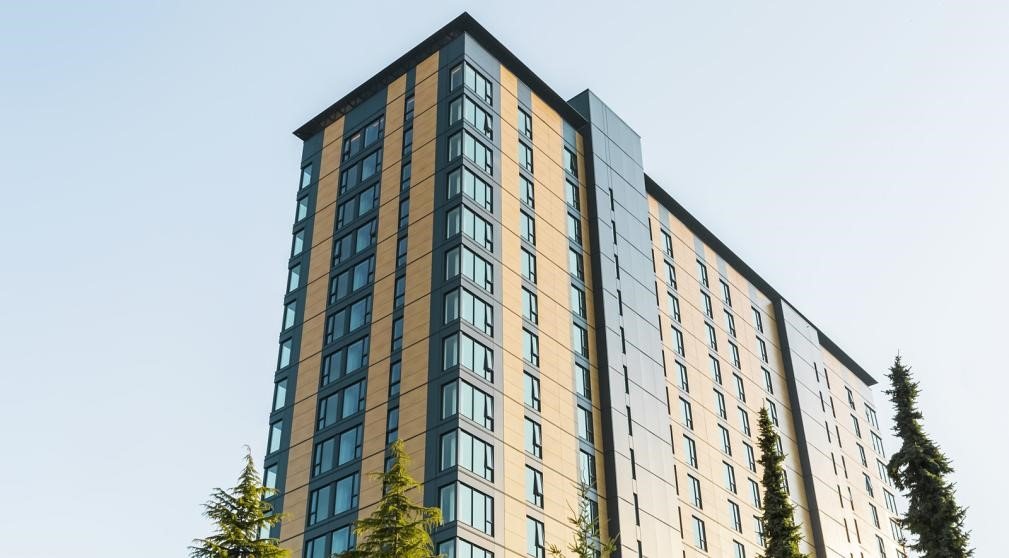
Two built projects illustrate how material innovation in façades can be implemented at scale and with demonstrable benefits. The first example is Brock Commons Tallwood House at the University of British Columbia in Vancouver, an 18 storey mass timber hybrid student residence that demonstrated the potential for mass engineered wood to serve as a lightweight, low embodied carbon alternative to conventional high rise construction systems. Brock Commons employs cross laminated timber floor panels and glued laminated timber elements above a concrete podium and core, and its prefabricated timber components allowed rapid on site assembly while minimizing construction waste and reducing the duration of heavy equipment use. The project was part of a national demonstration initiative to evaluate tall timber construction and has been studied for its embodied carbon benefits in comparison with steel and concrete alternatives. Mass timber systems such as those used at Brock Commons sequester biogenic carbon for the life of the building and, when sourced and certified responsibly, can contribute to significant reductions in upfront embodied emissions. At the façade level, the prefabricated timber panels were combined with high performance curtain wall and rainscreen details to ensure energy efficiency, moisture control and durability, illustrating that timber can be integrated into robust, code compliant envelope solutions even for tall buildings. Brock Commons exemplifies how engineered timber and offsite prefabrication reduce both embodied impacts and onsite disturbance and how careful integration with fire engineering, acoustic design and building services can unlock timber’s broader adoption in façade systems.
The second example is the Eden Project in Cornwall designed by Grimshaw Architects, whose iconic biomes are clad in hexagonal and pentagonal ETFE pillows supported by a lightweight steel frame. The Eden Project shows how a membrane-based façade can deliver a large, thermally efficient, and visually transparent enclosure with substantially less material mass than an equivalent glass structure. The ETFE cushions are extremely light relative to glass, which allowed the structural frame to be optimized and minimized and the panels themselves to be produced, installed and replaced with relative ease. The design enabled significant daylight transmission and created microclimates suitable for rainforest and Mediterranean plantings within the biomes, representing a bold example of material choice enabling both architectural program and environmental performance. The Eden Project also underscores the importance of maintenance and supply chain relationships for novel façade materials; the ETFE system requires long term management and repair strategies to realize its lifecycle benefits.
These exemplars reveal broader lessons for practitioners. First, integration matters: material innovation is most effective when it is married to considered assembly design, robust detailing, and operational strategies that exploit the material’s intrinsic properties. Timber’s thermal and carbon virtues are only fully realized when combined with airtightness, moisture control and protective geometry; ETFE’s lightness yields material savings only when structural optimization is pursued rather than defaulting to conservative overdesign. Second, scale and prefabrication are powerful levers: factory produced modules reduce waste, enable tighter tolerances and create opportunities to combine disparate materials into composite panels that perform multiple functions. Third, lifecycle thinking must be embedded early: specifying reclaimed or recycled content late in the process may be technically possible but will often incur higher costs and coordination burdens; early procurement strategies that secure low carbon inputs and local suppliers are more likely to yield successful outcomes. Fourth, maintenance and adaptability cannot be afterthoughts: the most sustainable façade is one that endures, is serviceable, and can be upgraded or partially replaced without whole system demolition.
From a technical perspective there are several material strategies that designers should consider routinely. Specifying high recycled content in metals and engineered products wherever functional requirements permit reduces embodied carbon with minimal technical risk. Where aluminum is selected for frames or sunshades, insisting on a high percentage of post-consumer recycled aluminum and clarifying recycling and reclamation pathways in the project brief will improve lifecycle outcomes. For concrete applications, choosing low clinker binders and using supplementary cementitious materials in precast panels reduces carbon intensity; where possible, specifying precast panels with integrated insulation and mechanical fixing details that allow panel removal and reuse should be prioritized. For ceramic and terracotta systems, evaluating local manufacture and the efficiency of firing processes is critical; selecting modular panel systems with reversible fixings enables long term reuse. For timber and bio-based systems, prioritizing certified sustainable sourcing, low toxicity treatments, and adhesive systems with lower environmental footprints will maximize the climate benefits of bio-based materials; combining timber façade systems with protective overhangs, ventilated cavities and exterior rainscreen principles will extend service life and reduce maintenance burdens.
Innovation in coatings, finishes and surface treatments also matters to lifecycle performance. Durable, repairable finishes extend maintenance intervals and reduce replacement frequency, and the selection of low VOC coatings and finishes supports indoor air quality and occupational health. For metal systems, specifying finishes that are repairable in situ rather than requiring wholesale replacement helps preserve embodied investments. For timber, natural oil finishes that can be reapplied locally are preferable to finishes that require full replacement. Where paints and sealants are necessary, sourcing products with transparent ingredient lists and established recycling or recovery options supports a circular approach.
Regulatory frameworks and standards are evolving to incentivize lower embodied carbon and higher lifecycle performance, and designers should prepare for stricter disclosure and procurement requirements by collecting robust product transparency data early and by engaging with suppliers capable of providing Environmental Product Declarations and chain of custody certification. Green building rating systems increasingly weight embodied carbon and material transparency, and clients are beginning to demand whole life carbon accounting; architects and façade engineers who can model and substantiate embodied carbon savings will have a competitive advantage in procurement and in delivering projects that meet future compliance thresholds.
The economics of material innovation are nuanced. Upfront costs for low carbon or novel materials can be higher, but these costs must be weighed against operational energy savings, potential reductions in mechanical system sizing, shortened construction programs due to prefabrication, and intangible benefits such as improved occupant wellbeing associated with natural materials and high quality daylight. Whole life cost modeling often reveals that modest premiums for sustainable materials are recouped over time through lower energy bills, reduced maintenance and enhanced asset value. Moreover, increasing demand and maturation of supply chains for low carbon materials are steadily reducing price differentials, making many innovative solutions economically viable without subsidy.
Finally, the human and cultural dimensions of material choice should not be neglected. Materials communicate meaning and shape user perceptions of quality, comfort and sustainability. Timber façades create warmth and a sense of natural connection that can positively influence occupant wellbeing, while materials that are visibly recycled or reclaimed can signal an ethical commitment that matters to stakeholders. At the same time, architects must avoid aesthetic choices that obscure poor lifecycle performance; demonstrating transparency about material origins, treatment and expected service life builds trust and supports informed civic discussion about sustainable urban development.
In conclusion, material innovation in sustainable façades is not a single technological fix but a strategic posture that integrates material selection, assembly design, circular procurement, and lifecycle assessment into a coherent design process. By prioritizing bio-based and recycled materials where appropriate, by adopting prefabrication and modular design to reduce waste and improve quality, and by insisting on transparency and performance data from suppliers, design teams can deliver façades that materially lower embodied carbon while enhancing operational efficiency and occupant wellbeing. Exemplary projects such as Brock Commons Tallwood House and the Eden Project illustrate the range of possibilities from mass timber façades that sequester carbon and enable rapid prefabricated construction to lightweight membrane façades that minimize structural mass and open new programmatic possibilities, but these projects also remind practitioners that long term maintenance, clear end-of-life strategies and careful lifecycle accounting are essential to realizing promised sustainability benefits. The path forward requires collaboration across disciplines and supply chains, regulatory incentives that reward whole life performance, and client leadership to embrace higher initial ambition in exchange for demonstrable lifecycle gains. When material innovation is pursued with rigor and humility, façades can become one of the most potent instruments for reducing the environmental footprint of the built environment while delivering resilient, beautiful and responsible architecture.