In a world where architecture often races toward the sky glass towers, concrete fortresses, sprawling cities that devour landscapes Nader Khalili turned his gaze downward, toward the earth beneath our feet. For him, the future of architecture lay not in conquering nature but in remembering our belonging to it. He believed that the very ground …
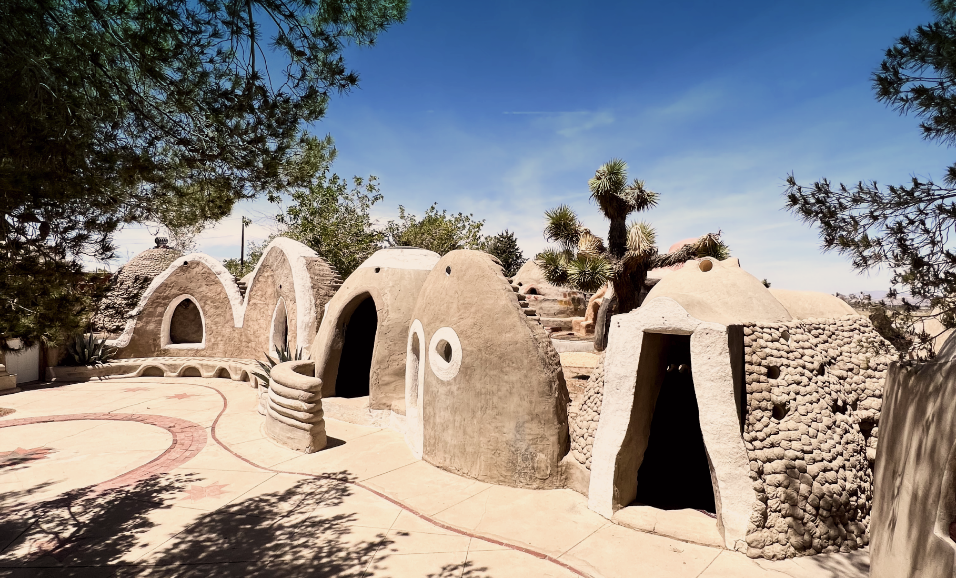
Table of Contents
- The Early Life of a Desert Visionary
- The Philosophy of Earth and Spirit
- The Birth of SuperAdobe
- Cal-Earth: A Laboratory of Hope
- Earth Architecture in Action: From Refugee Camps to Mars
- The Poetics of Form
- Fire and the Ceramic House
- Beauty, Dignity, and Empowerment
- Challenges and Criticism
- The Architect as a Humanitarian Poet
- Legacy: Building a Planet of Earth Homes
- The Eternal Shelter
In a world where architecture often races toward the sky glass towers, concrete fortresses, sprawling cities that devour landscapes Nader Khalili turned his gaze downward, toward the earth beneath our feet. For him, the future of architecture lay not in conquering nature but in remembering our belonging to it. He believed that the very ground we stand on holds the wisdom, the materials, and the spirit needed to build not only shelter but a more compassionate civilization.
Nader Khalili was not just an architect. He was a philosopher, a dreamer, and a poet who saw in clay and dust the building blocks of dignity. His vision was simple yet profound: that every human being, no matter how poor or displaced, deserves beauty, comfort, and safety and that such shelter could be created with one’s own hands, using the most ancient and abundant material of all, the earth itself.
Through his pioneering concepts of Earth Architecture and SuperAdobe, Khalili reimagined the relationship between humanity, nature, and technology. His work, embodied in his Cal-Earth Institute in California and his humanitarian projects around the world, continues to influence architects, environmentalists, and dreamers who seek to build a sustainable future rooted in both innovation and humility.
The Early Life of a Desert Visionary
Nader Khalili was born in Iran in 1936, into a culture where earth architecture had been practiced for millennia. The domes, vaults, and mud-brick cities of ancient Persia were living testaments to a tradition that balanced art, science, and environment. Growing up amid these forms, Khalili absorbed their quiet wisdom architecture that breathes, that responds to sun and wind, that ages gracefully.
After studying architecture in Istanbul and the United States, he built a successful career designing high-rise buildings in Iran and abroad. Yet, amid the concrete and steel, he felt an absence a disconnect between modern architecture and the human soul. He began to feel that architecture had lost its spiritual grounding, that it was more concerned with image and status than with the elemental human need for shelter and belonging.
His turning point came in the late 1970s, when he heard about a call from the United Nations for housing solutions for the world’s poor solutions that were sustainable, affordable, and could be built by the people themselves. Khalili was deeply moved. He left his comfortable position and set off alone into the Iranian desert, armed with little more than notebooks, sketches, and the determination to rediscover what he called “the architecture of humanity.”
For five years, he lived among the villages and deserts of Iran, observing, experimenting, and learning from traditional builders. He studied the geometry of domes, the strength of earthen walls, the way heat and light moved through simple spaces. He tested forms made of mud and clay, experimented with fire, and listened to the silence of the desert. Out of this solitude came a revelation: that the humble earth beneath our feet, when respected and understood, could become the foundation of a new architectural ethic one that served both people and planet.
The Philosophy of Earth and Spirit
Khalili’s philosophy was rooted in a profound sense of unity between humanity and nature. He saw the earth not as material but as a living partner. In his writings, he often spoke of building with love, of molding walls that carry the imprint of human hands, of creating spaces that breathe like the human body.
He believed that the art of building was inseparable from the art of living that architecture was a spiritual act, a form of prayer. In one of his essays, he wrote: “The hand that builds a home out of earth is the hand that touches eternity.” For him, architecture was not about perfection or style, but about sincerity and purpose.
Sustainability, in his view, was not a trend but a moral imperative. He saw wasteful construction as a form of violence against nature, and luxury without conscience as a betrayal of humanity. He urged architects to look beyond technology and return to essence to rediscover ancient wisdom and merge it with modern science.
His vision was not nostalgic. He did not wish to romanticize the past, but to learn from it. He often said that the solutions for the future could be found in the oldest materials, if only we learned to see them anew.
The Birth of SuperAdobe
During his desert years, Khalili began experimenting with ways to make earthen construction both stronger and easier to build. Traditional adobe and mud-brick methods, though beautiful, were often vulnerable to earthquakes and erosion. Khalili wanted to create a system that could be built by unskilled hands, withstand natural disasters, and use materials available anywhere on Earth.
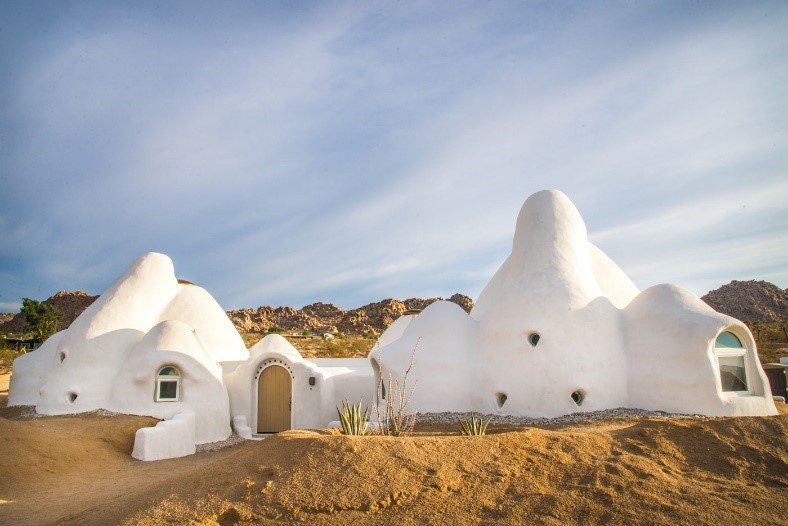
The breakthrough came with his SuperAdobe system a method of stacking long sandbags filled with earth in coils to form domes, vaults, and walls. The bags were laid in continuous loops, stabilized with barbed wire between each layer to add tensile strength and prevent slippage. The structure could then be plastered with mud or lime, blending seamlessly into the landscape.
What made SuperAdobe revolutionary was its simplicity and adaptability. It required no machinery, no expensive tools, and no prior experience. Anyone could learn it, and the materials earth, sandbags, and wire were inexpensive and often locally available.
The resulting structures were not only strong but astonishingly beautiful. Their curved forms echoed natural shapes the womb, the nest, the cave spaces that evoke safety and intimacy. The domes could withstand earthquakes, fire, and even bullets, as later tests and demonstrations would show.
Khalili saw in this system a path toward his dream of universal shelter. He imagined refugees, disaster victims, and poor families around the world being able to build their own homes using nothing but the soil beneath their feet and the knowledge of their hands.
Cal-Earth: A Laboratory of Hope
In 1986, Khalili founded the California Institute of Earth Art and Architecture, known as Cal-Earth, in the Mojave Desert near Hesperia, California. It became his living laboratory part research center, part school, part spiritual commune where students, volunteers, and visitors from around the world came to learn his methods and philosophy.
Cal-Earth was a place unlike any architectural school on Earth. The domes and vaults scattered across the desert looked like a colony from another planet, yet they felt deeply human. The smell of earth and straw filled the air. Workshops were conducted outdoors, with participants shaping clay, filling bags, and plastering domes under the sun.
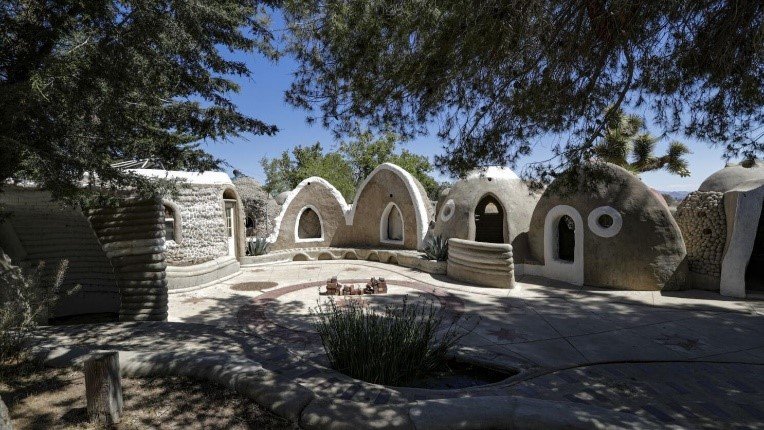
Khalili called the domes “earth one” prototypes designs that could be replicated anywhere. He and his team built and tested different forms: single-room shelters, clustered compounds, even multi-story vaults. They experimented with ventilation, thermal insulation, and water resistance, refining the technique through trial and error.
Visitors often described the experience of walking into one of these domes as entering a living organism. The walls seemed to pulse with warmth in winter and coolness in summer. The light filtered softly through oculi, casting shadows that changed with time. The sound inside was hushed, resonant an architecture of silence and breath.
Through Cal-Earth, Khalili turned architecture into an act of teaching, sharing, and empowerment. His dream was not to build thousands of homes himself, but to teach thousands of people to build their own.
Earth Architecture in Action: From Refugee Camps to Mars
Khalili’s vision extended far beyond the desert of California. He collaborated with the United Nations and NASA to explore applications of his SuperAdobe system in both humanitarian and extraterrestrial contexts.
For the United Nations Development Programme, he proposed his designs as emergency shelters for refugees and disaster victims. He demonstrated how domes could be built in days by small teams using only shovels and local soil. The resulting structures were durable, inexpensive, and thermally efficient far superior to tents or temporary metal shelters.
In parallel, NASA took interest in his work as a potential model for building habitats on the Moon or Mars. The concept was elegant: if humans could use the soil of another planet (regolith) in the same way they use Earth’s soil, they could create self-sustaining colonies without importing heavy materials from Earth.
For Khalili, the connection between refugees on Earth and future astronauts was symbolic as much as scientific. Both faced the challenge of survival in extreme conditions with limited resources. His architecture, born of compassion, became a bridge between the most ancient and the most futuristic forms of human existence.
The Poetics of Form
Khalili’s domes are not only functional; they are poetic. Their geometry reflects both structural efficiency and spiritual symbolism. The circle, the dome, and the arch have always represented unity and wholeness in human culture. By returning to these forms, Khalili reconnected architecture with universal archetypes of shelter and sacredness.
Inside a SuperAdobe dome, there are no corners, no sharp boundaries. The space feels organic, continuous, womb-like. The walls curve around the body, guiding the eye upward to the oculus the “eye of heaven,” as Khalili called it. Light pours in from above, creating a play of shadow and brightness that shifts throughout the day, marking the passage of time.
This choreography of light and form evokes emotion. Many visitors to Cal-Earth describe feeling a deep sense of calm and belonging inside these domes, as if returning to an ancient memory. Khalili himself believed that beauty was not a luxury but a necessity that even the simplest home should nourish the soul.
He often quoted Persian poetry in his teachings, blending architecture and mysticism. He saw no boundary between art and science, between engineering and spirituality. His designs were equations of both structure and soul.
Fire and the Ceramic House
One of Khalili’s most extraordinary experiments was his Geltaftan or “Ceramic Houses” project, in which he used fire to turn earth into a kind of natural ceramic. He constructed small domes out of raw earth, then built fires inside them to harden the walls from within effectively baking the structure into a single monolithic shell.
This process combined the ancient art of pottery with architecture, transforming a home into a living clay vessel. It was an act of alchemy, turning earth and fire into permanence.
For Khalili, this was not just a technical experiment but a spiritual one. The fire represented transformation of matter, of energy, of consciousness. The idea that a house could be “fired” like a pot symbolized the unity of all creative acts.
Though this method was not widely adopted, it remains one of the most poetic expressions of his belief that architecture should emerge directly from the elements.
Beauty, Dignity, and Empowerment
Central to Khalili’s philosophy was the belief that beauty and dignity are universal human rights. He was appalled by the way poverty was often associated with ugliness, as if the poor did not deserve aesthetic joy. His shelters, though simple, were crafted with grace curved walls, rhythmic patterns, and glowing interiors that celebrated the humanity of their occupants.
He rejected the idea of “cheap housing.” Instead, he spoke of “affordable beauty.” He wanted people to feel pride in their homes, not shame. He believed that when people participate in building their own shelter, they rediscover agency and self-worth.
In workshops at Cal-Earth, students from all over the world artists, engineers, refugees, and dreamers worked side by side, building domes and sharing meals. The act of construction became communal, healing. Khalili called this the “architecture of empowerment.”
Challenges and Criticism
Despite his brilliance, Khalili faced skepticism and resistance from mainstream architectural institutions. Many dismissed his methods as primitive or impractical. Building codes often failed to recognize earth structures, making permits difficult to obtain.
But Khalili persisted, arguing that progress should not be measured by complexity or cost, but by harmony and human benefit. Over time, as environmental awareness grew, his ideas began to gain recognition. Architects and humanitarian organizations now cite his work as a foundation for ecological and social design movements.
The Cal-Earth domes have since been tested for structural safety, earthquake resistance, and thermal performance, earning certifications in several regions. His once-radical vision is slowly becoming part of the global conversation about sustainable housing.
The Architect as a Humanitarian Poet
To understand Khalili fully, one must see him not only as a builder but as a poet. He wrote extensively, blending architecture with philosophy and Sufi-inspired mysticism. His books such as Ceramic Houses and Earth Architecture and Racing Alone read like meditations on life and purpose.
He saw the architect not as a designer of objects but as a servant of humanity. To build a home, for him, was to heal a wound in the world. He often said that “the greatest architecture is the architecture of compassion.”
Even in his later years, he continued teaching, drawing, and dreaming, surrounded by students and domes in the Mojave Desert. He passed away in 2008, but his work continues to inspire generations who believe that architecture can be both humble and heroic, both ancient and futuristic.
Legacy: Building a Planet of Earth Homes
Today, Cal-Earth remains active under the guidance of his family and former students. The institute continues to teach SuperAdobe construction to communities worldwide, from California to Nepal, from the Middle East to Africa. After earthquakes, floods, and conflicts, Khalili’s methods have provided quick, sustainable housing for thousands.
His influence can be seen in the growing global movement for natural building straw-bale homes, cob cottages, and earthen domes that echo his philosophy of harmony and minimalism. Architects now revisit his principles not as idealism but as necessity in a warming, crowded planet.
In an era facing both environmental crisis and social inequality, Khalili’s message rings more urgent than ever: that sustainability is not just about technology, but about ethics; not about luxury eco-villas, but about justice and empathy.
He once said, “The Earth turns to gold in the hands of the wise.” His life was proof of that truth.
The Eternal Shelter
To stand inside one of Khalili’s domes is to feel both protected and connected to sense that architecture can be both shelter and teacher. The thick earthen walls breathe with the rhythm of day and night. The air feels grounded, the light gentle. There is no pretense, no decoration, only the essence of what it means to inhabit the world.
In the silence of those domes, one can hear the whisper of the earth, the same whisper that guided Khalili through deserts and dreams. It tells us that we belong to this planet, that we have enough, and that beauty need not cost the earth.
Nader Khalili built not just homes but hope. He offered humanity a vision of architecture stripped to its soul an architecture that listens to the planet, honors the poor, and builds from the heart outward.
In the end, his greatest structure was not any single dome or prototype, but the invisible architecture of his philosophy an architecture made of love, patience, and the conviction that the humblest material can hold the highest dream.
He did not simply build with earth. He built for the earth. And in that act, he showed us what it means to touch eternity with our hands.